Neurographic Explosion Books
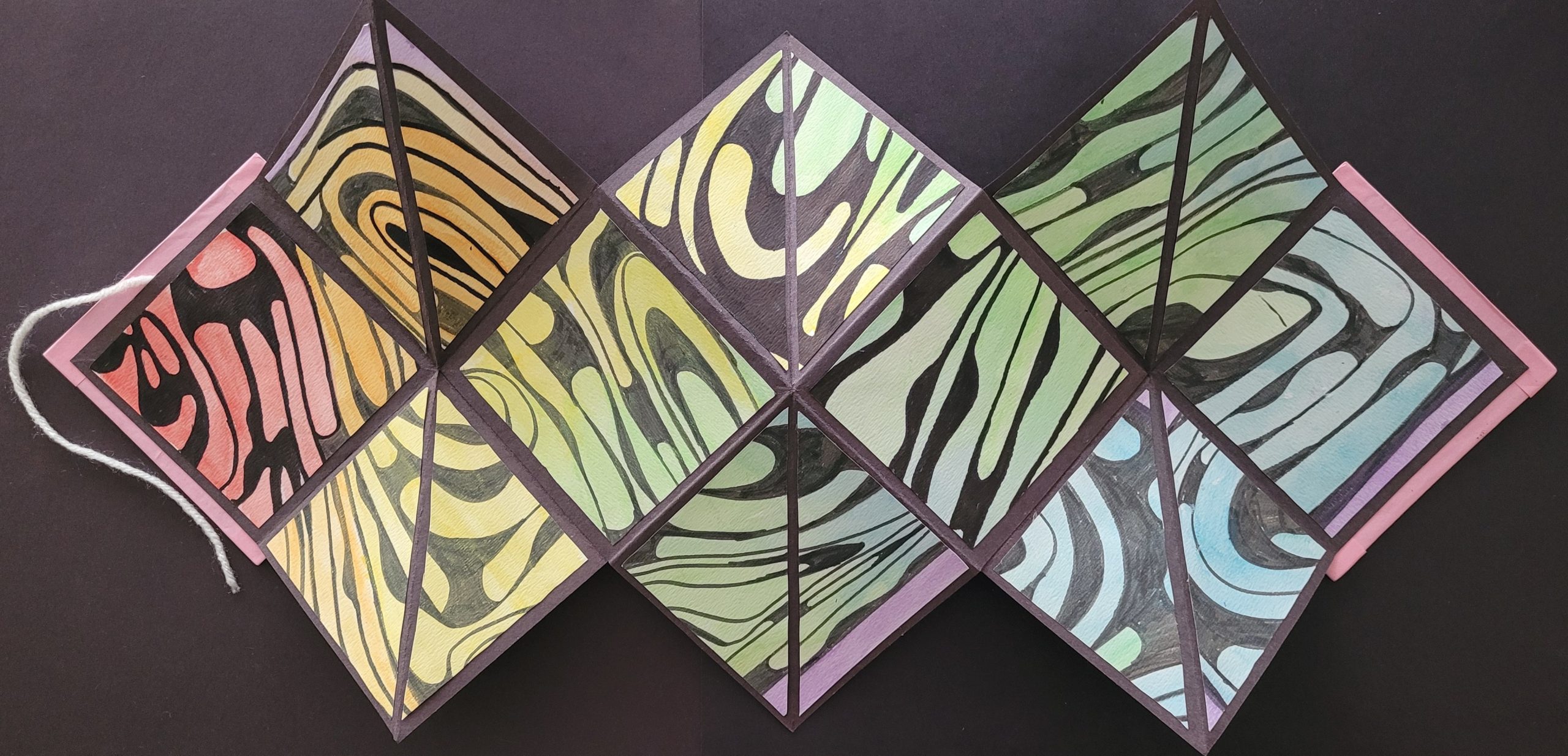
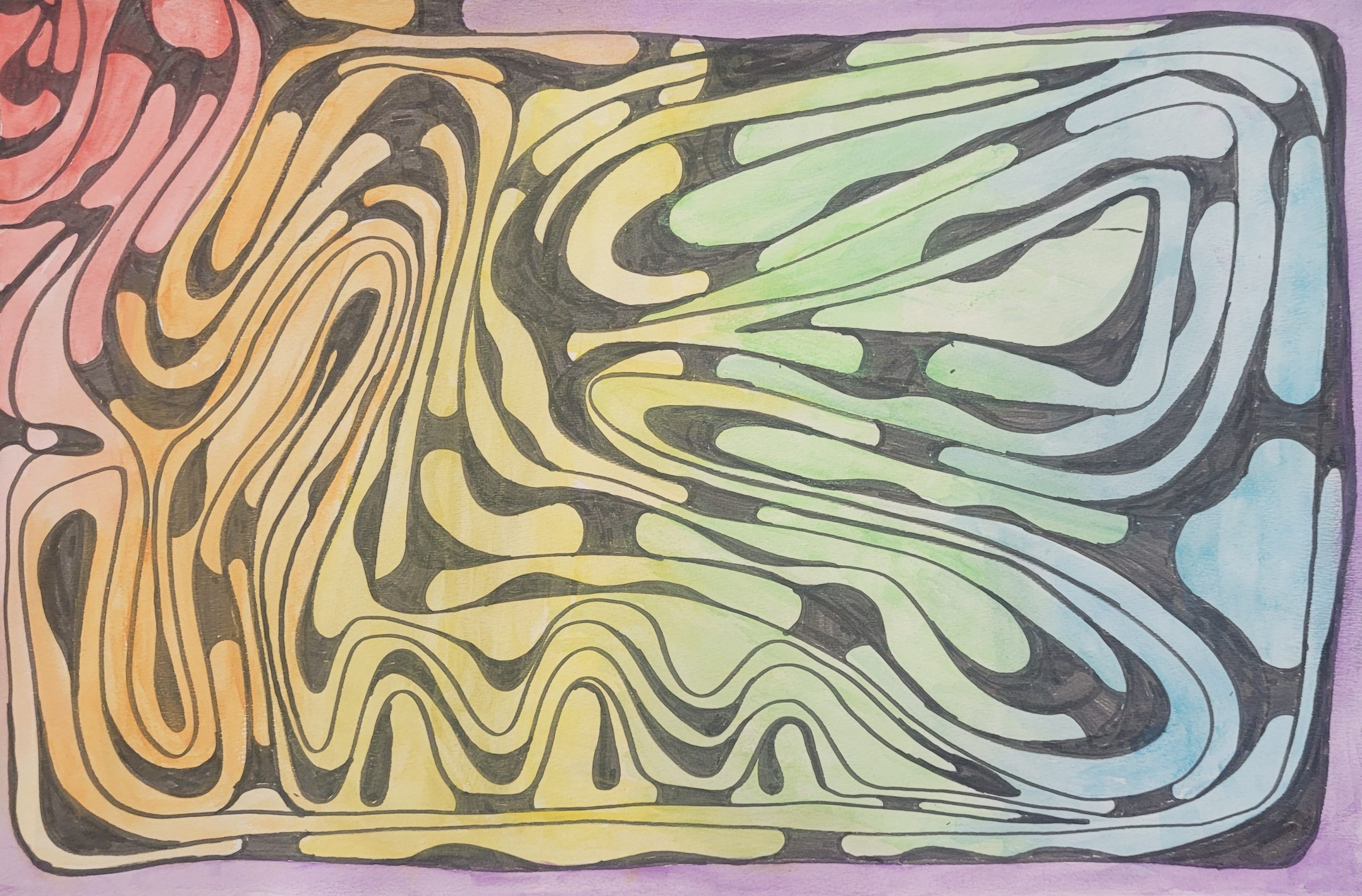
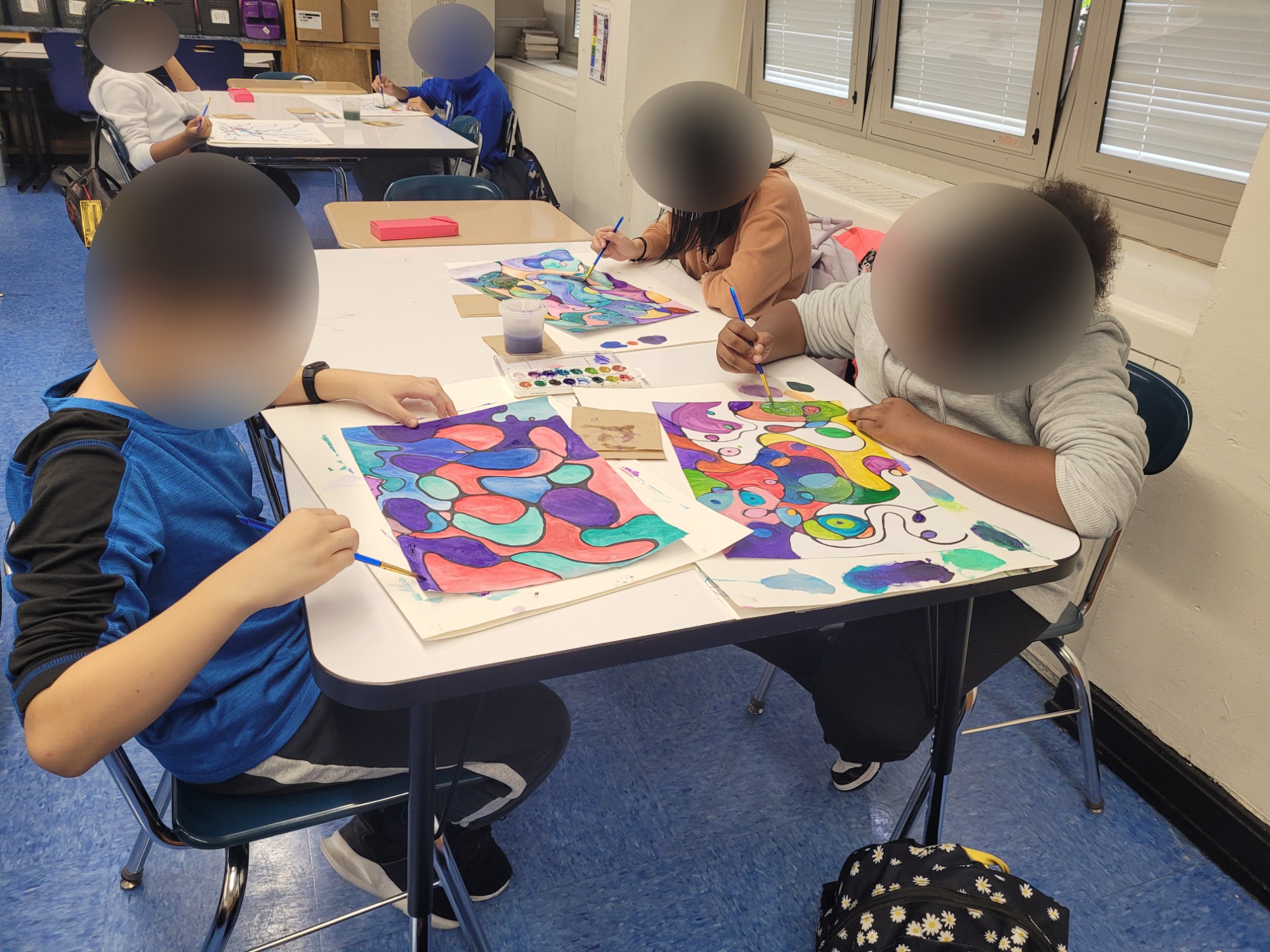
I first introduced students to Neurographic Art as a drawing process that helps reduce stress and was developed by Pavel Piskarev. It is a process that follows a specific algorithm that softens the edges of harsh thoughts, confusion, and fears through the rounding of intersections and sharp angles. I believe that this project is important for middle school students given the social and internal stressors they face and because they learn that art can be a healing tool in their lives. Looking at Neurographic art, students concretize it’s characteristics (organic lines and shapes) through comparison discussions and students determine whether the work belongs in the abstract or realism category. Students then put the method into practice drawing intersecting lines while having a challenge or problem they may be facing in mind. The lines are done in sharpie marker and may include loops and abrupt turns to represent the challenge. Next, students round out the intersections so that shapes no longer have sharp or pointy edges or corners. Select lines get thickened in the process and then watercolors are applied. They must mix colors for all the shapes. The next half of the project is the book creation and page creation by cutting into the neurographic work. Folding, tracing, cutting, and adhering of strings and paper are involved in the creation of the book. The art making process teaches students to trust the transformative process of art and be okay with change. Maybe mistakes are not “mistakes,” but are rather exciting opportunities. The book folds down into a square. Students are quite proud of their accomplishment, which can also become a nice gift for a loved one as well.
Student Work Examples
3. Book Open
3. Neurographic
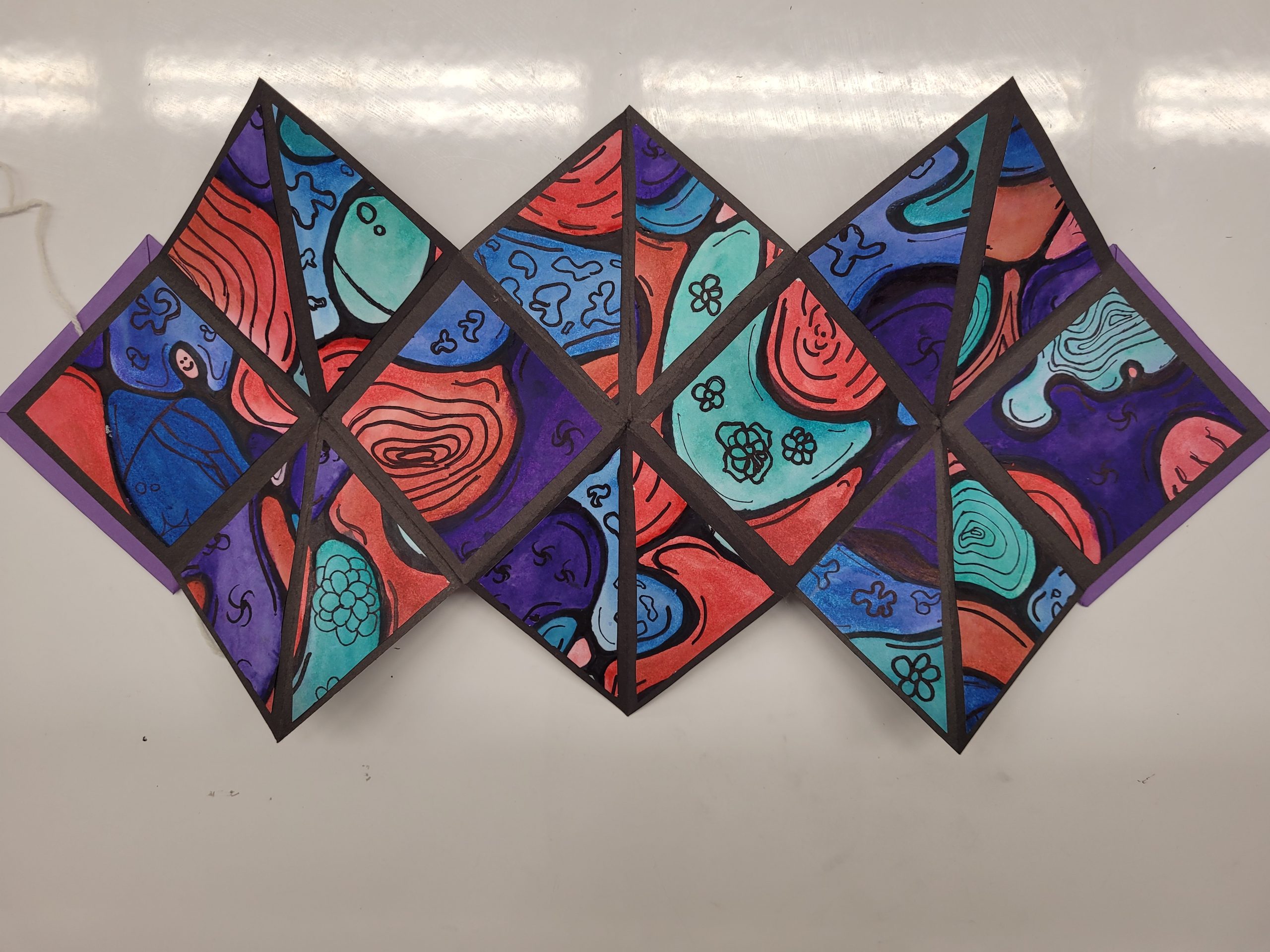
2. Open Book
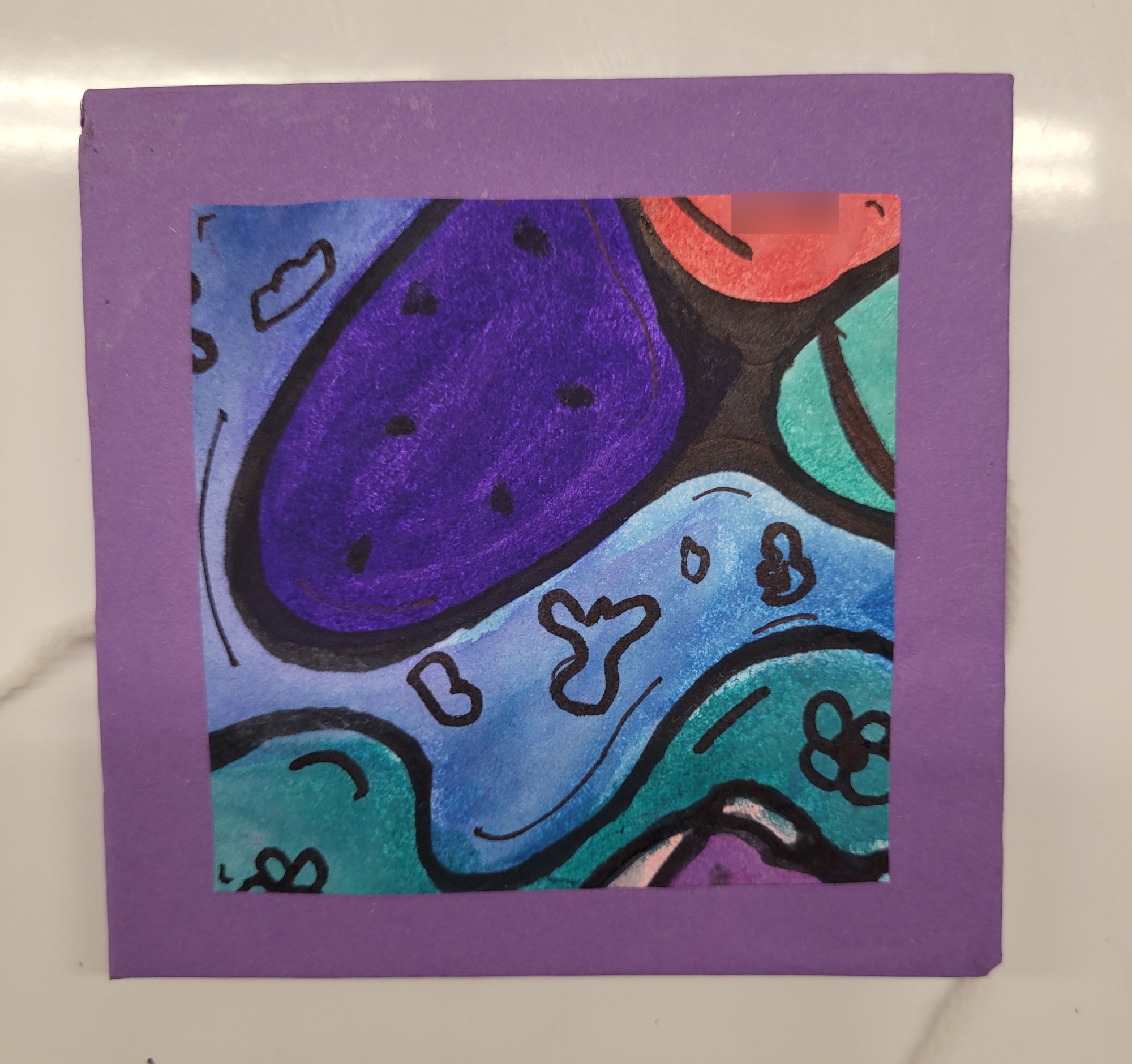
2. Book Cover
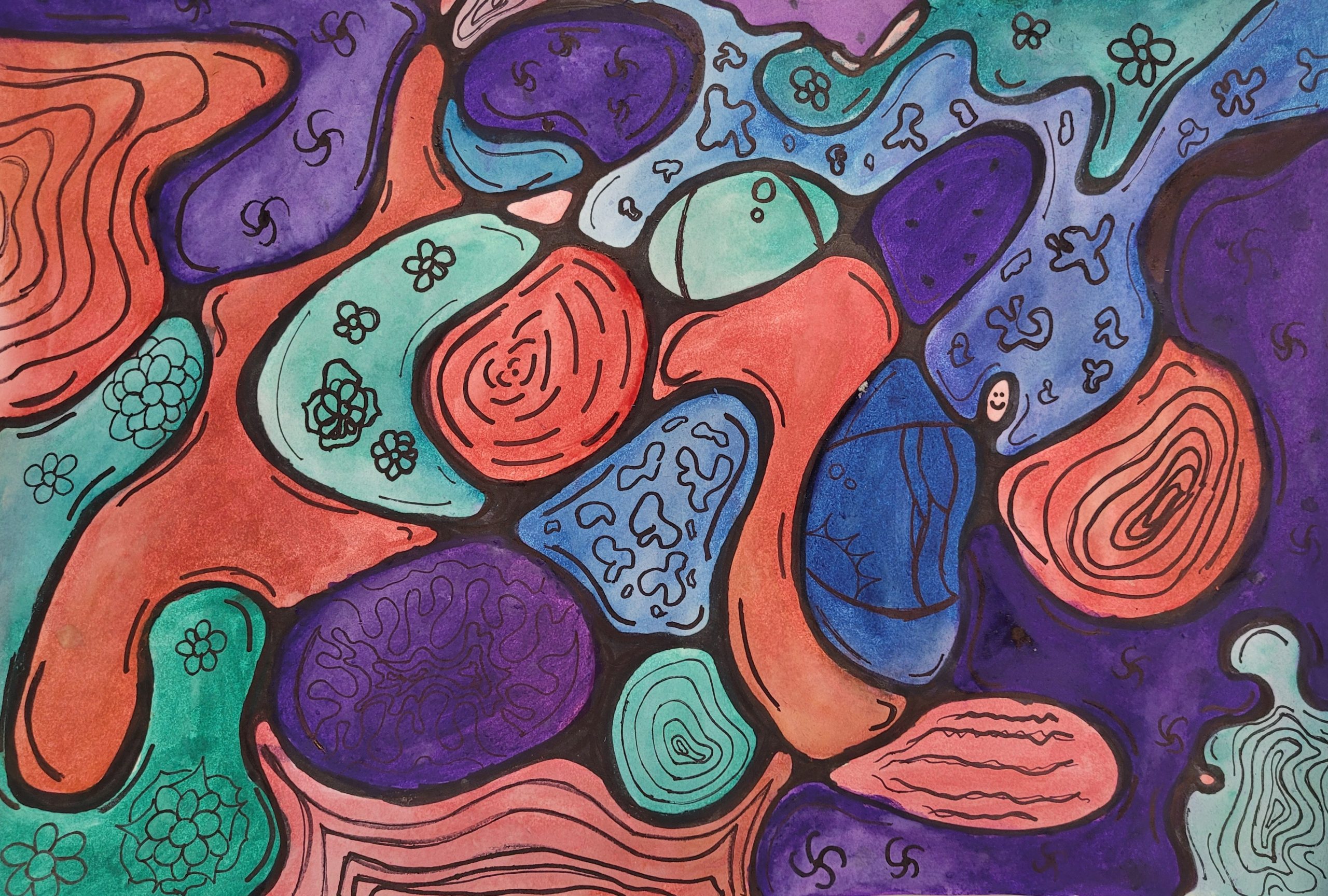
2. Neurographic
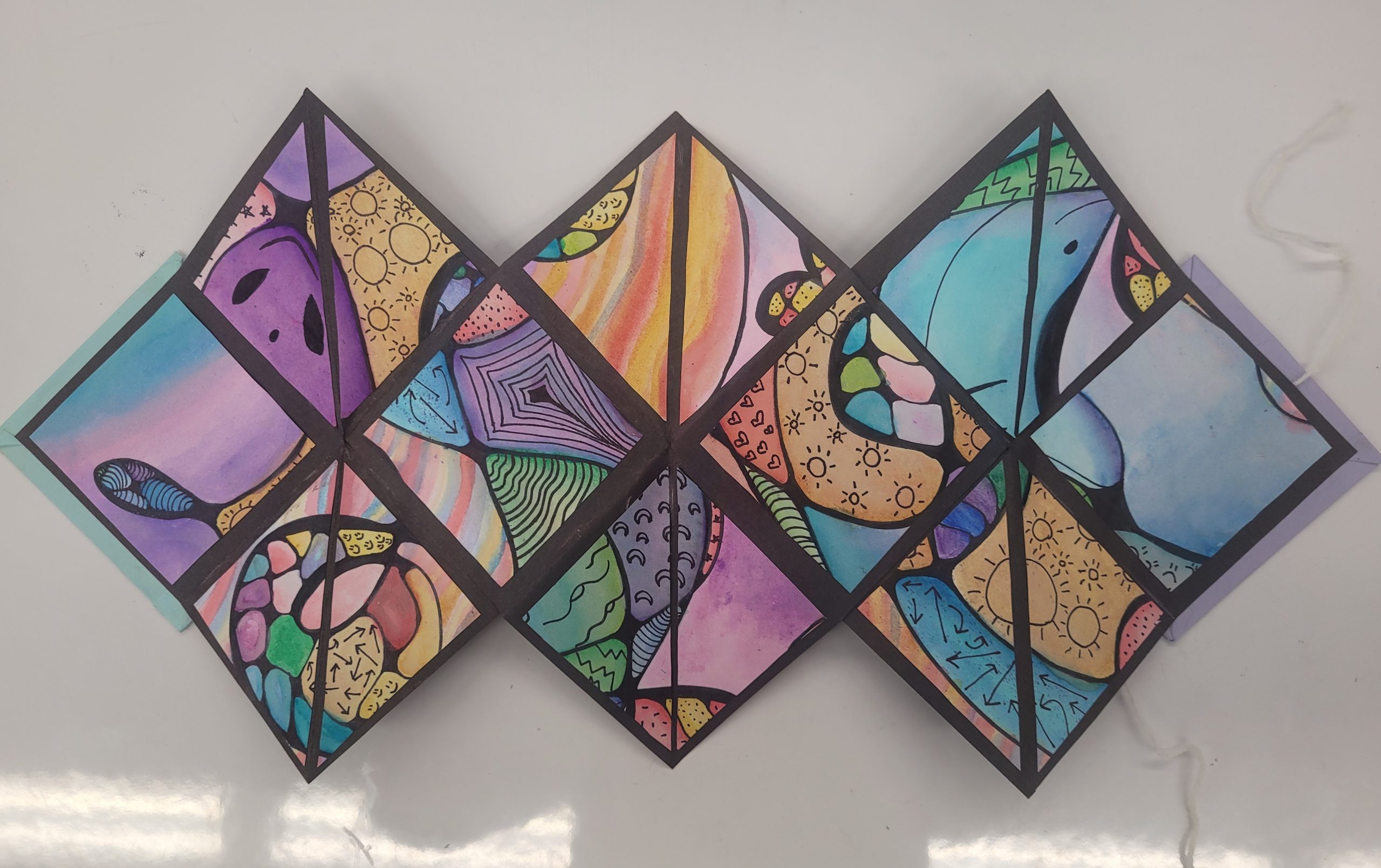
1. Open Book
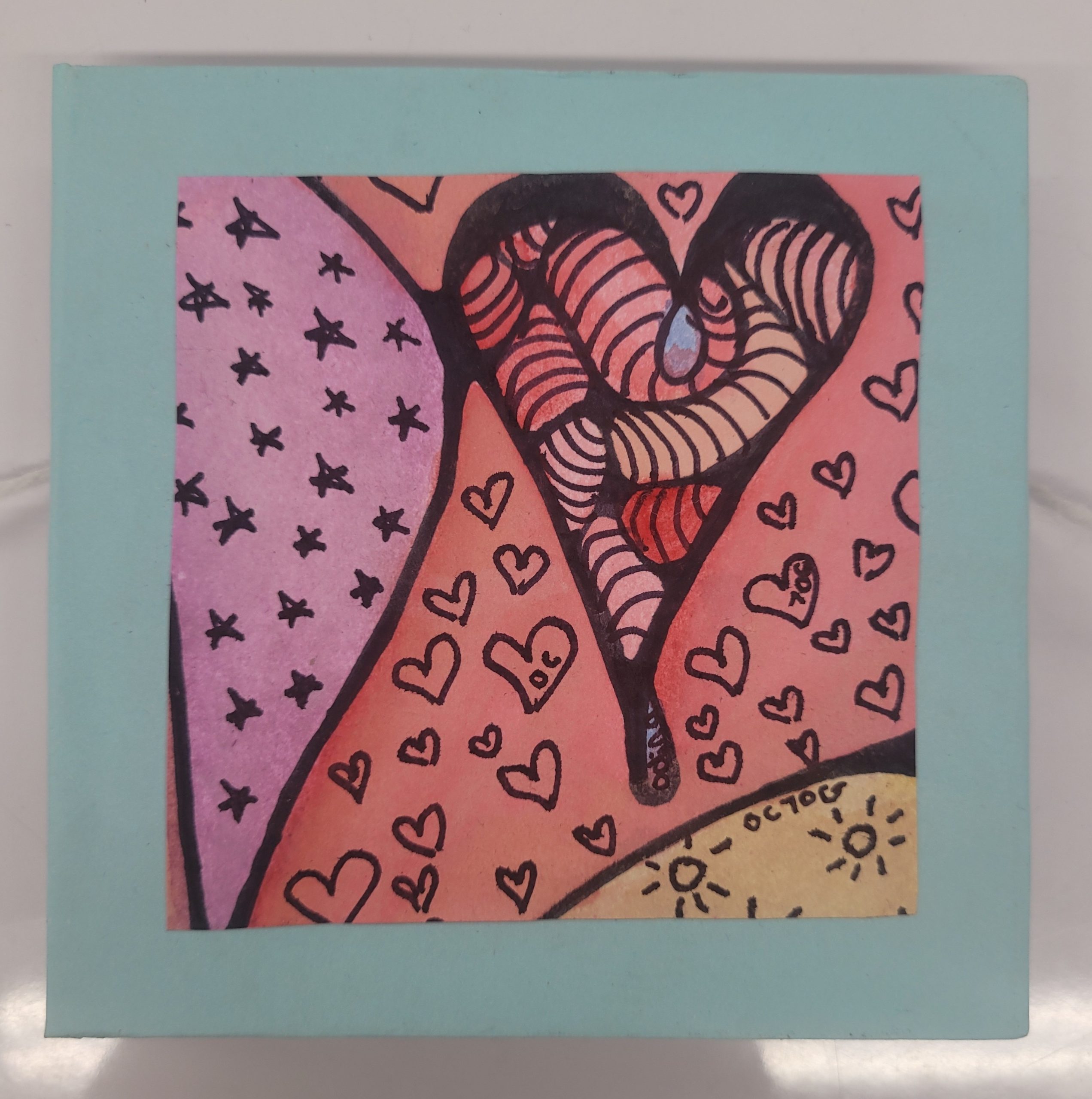
1. Book Cover
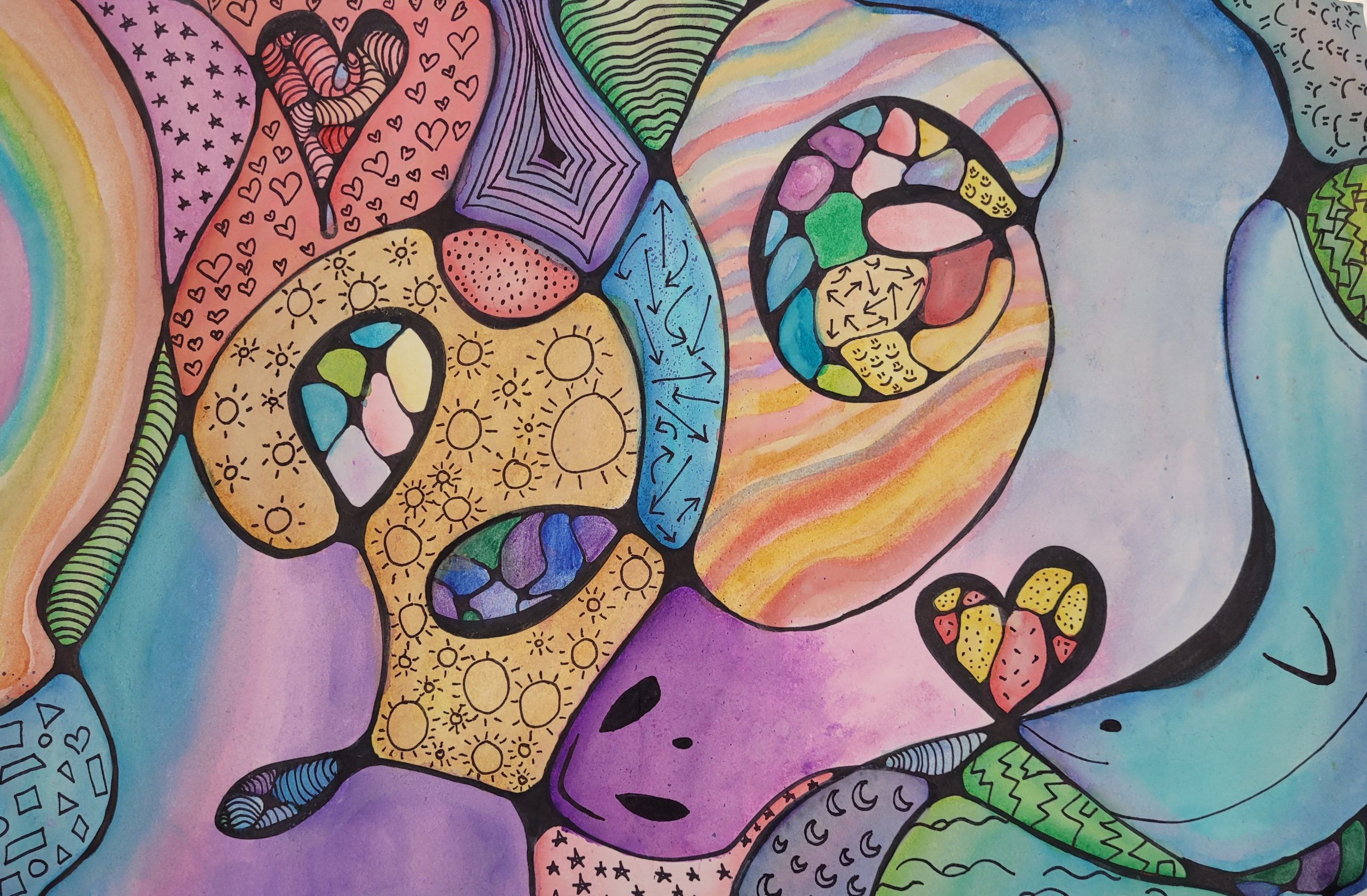
1. Neurographic
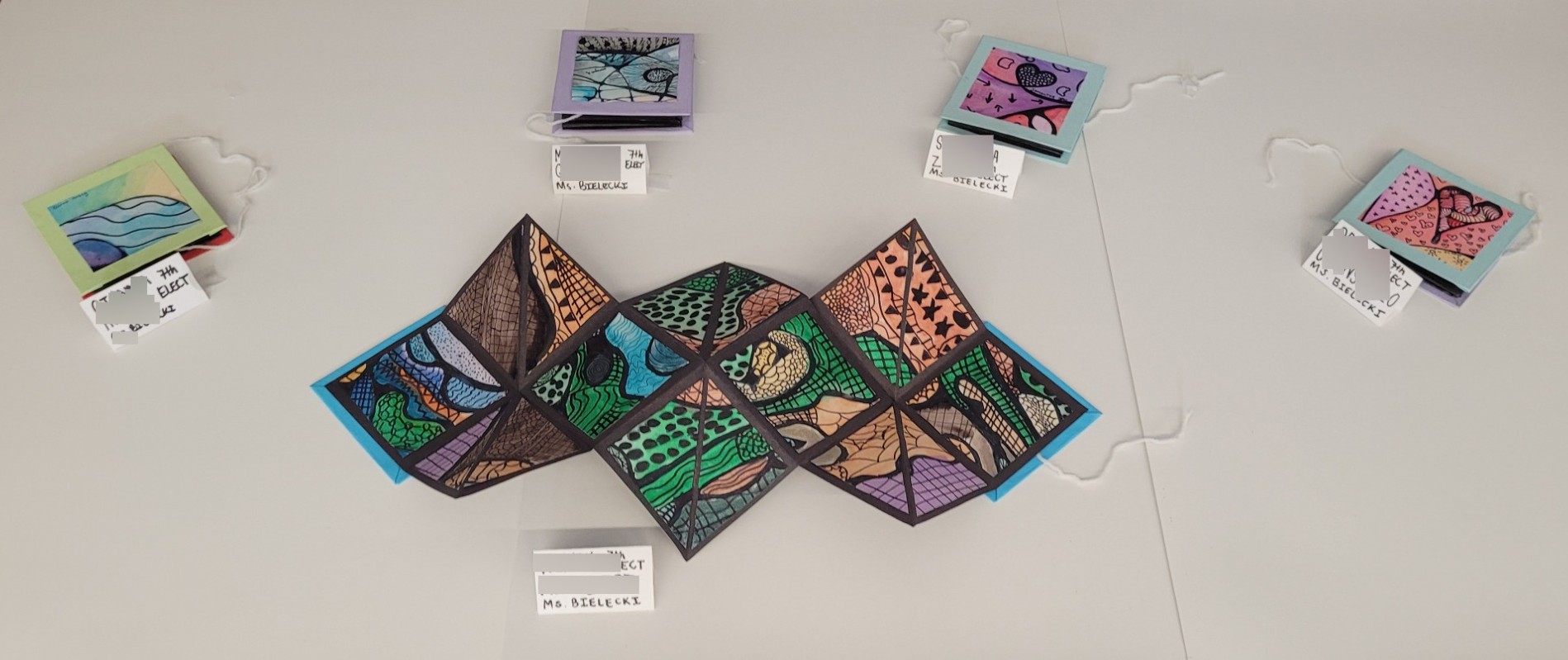
Book Display 1