
Teacher Practice
Below you will find evidence of my effective performance in planning and teaching as an art teacher.
This includes my Artist Portrait unit plan, formative and summative assessment tools, research and development presentations, observation reports, class environment artifacts, and behavior management tools.
Artist Portraits Unit & Supporting Materials
Below is my Artist Portrait unit plan with rubric, slide presentation with scaffolded visual steps, and guided self/peer assessment activity which contributes to overall positive classroom culture. I am particularly proud of this unit because I believe that my planning and my instruction gave students the support they needed through the process of creating, for many, their first observational portrait! I created the step-by-step face proportion visuals using Sketchbook Pro. I supported students through the process of respectful peer feedback, teaching students that good feedback is kind, specific, and helpful. I think that my unit thoughtfully integrates portrait drawing, cultural heritage, observational skills, and portfolio preparation, making it both rigorous and culturally meaningful. See student examples in Artist Portraits and Student Growth pages.
Artist Portraits Presentation Slides
Other Assessment Tools
Below are examples of different assessment tools besides rubrics that I use with my students such as goal setting, criteria checklists, and “See, Think, Wonder” activity for art analysis. Goal setting and criteria checklists are particularly useful as students are still working on their projects. It redirects their attention to their next steps and gives them an opportunity to make adjustments.
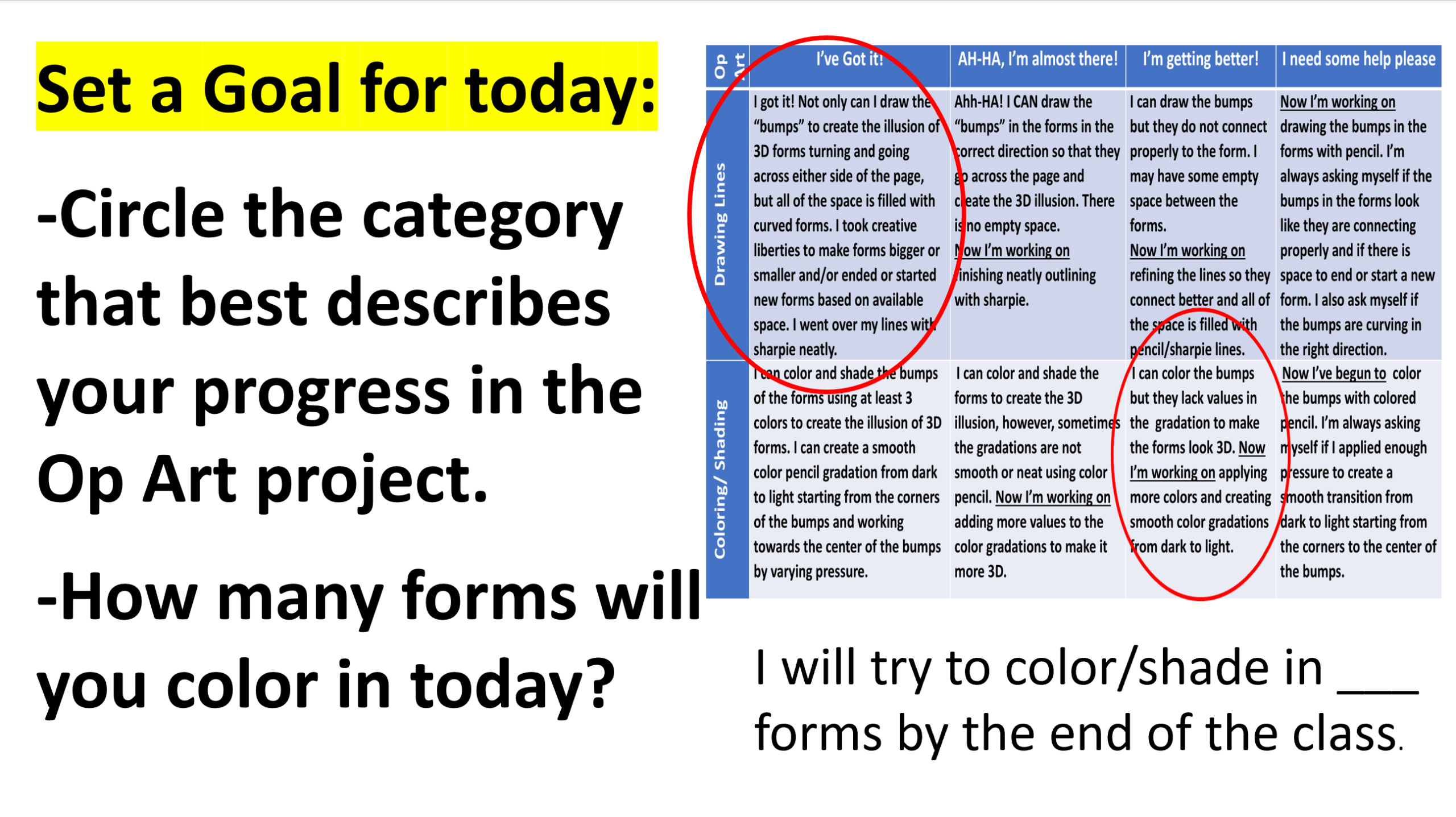
Goal Setting
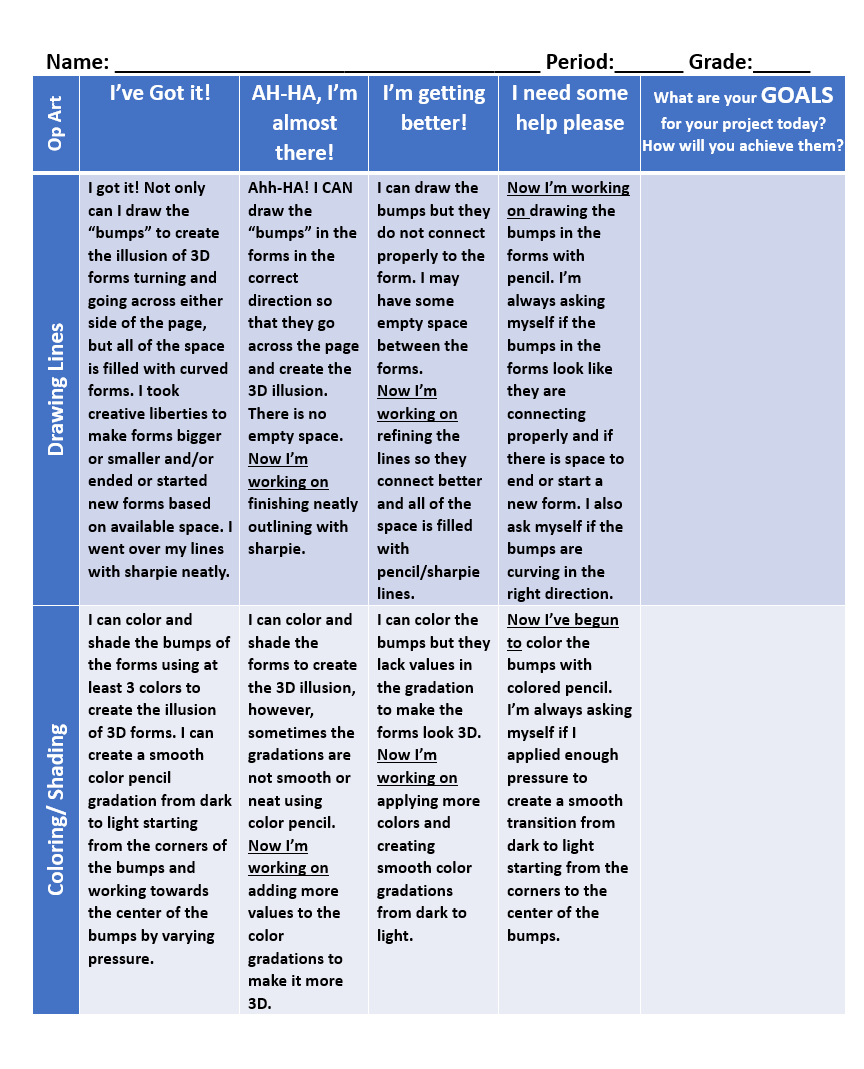
Goal Setting
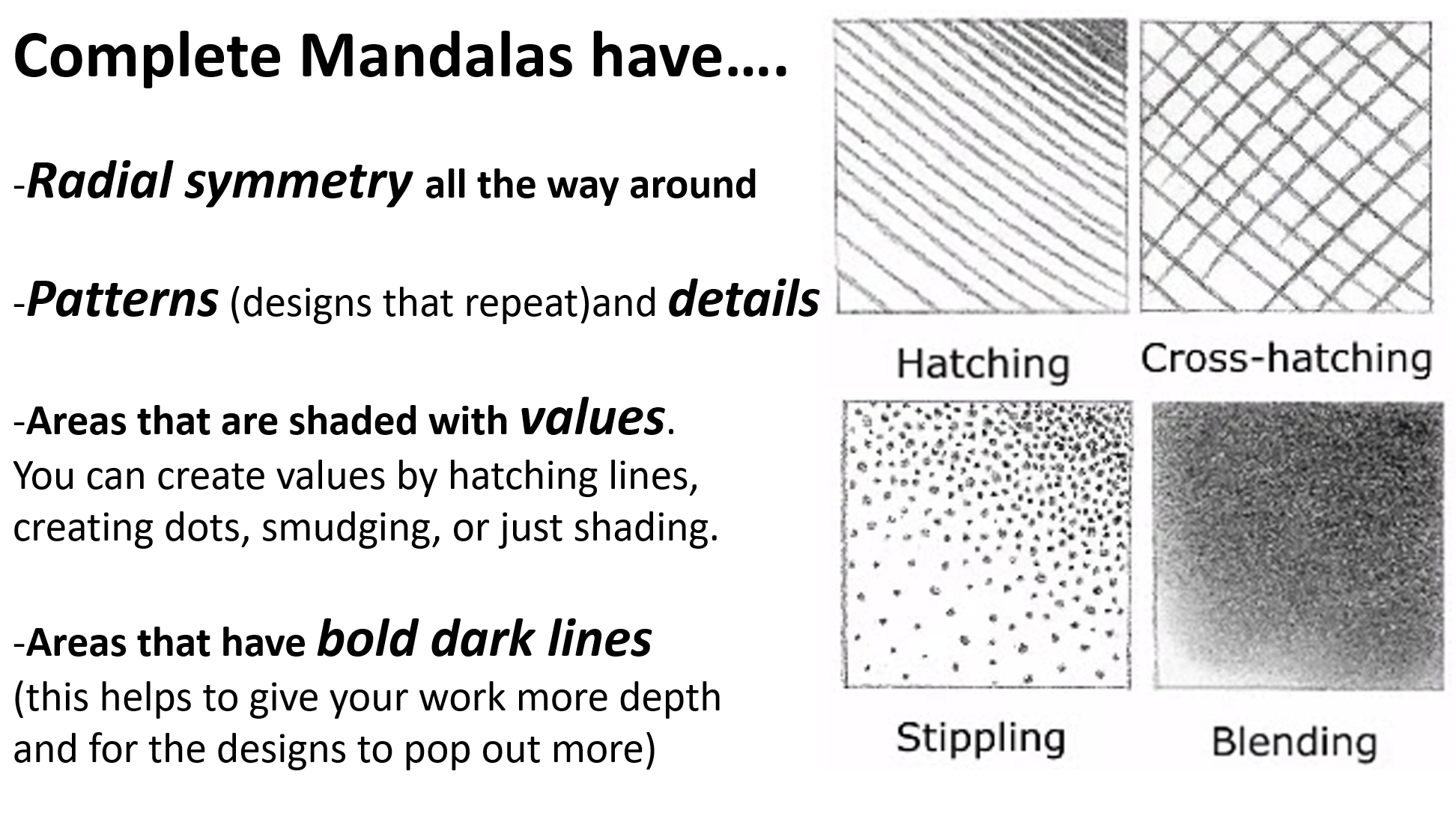
Criteria List
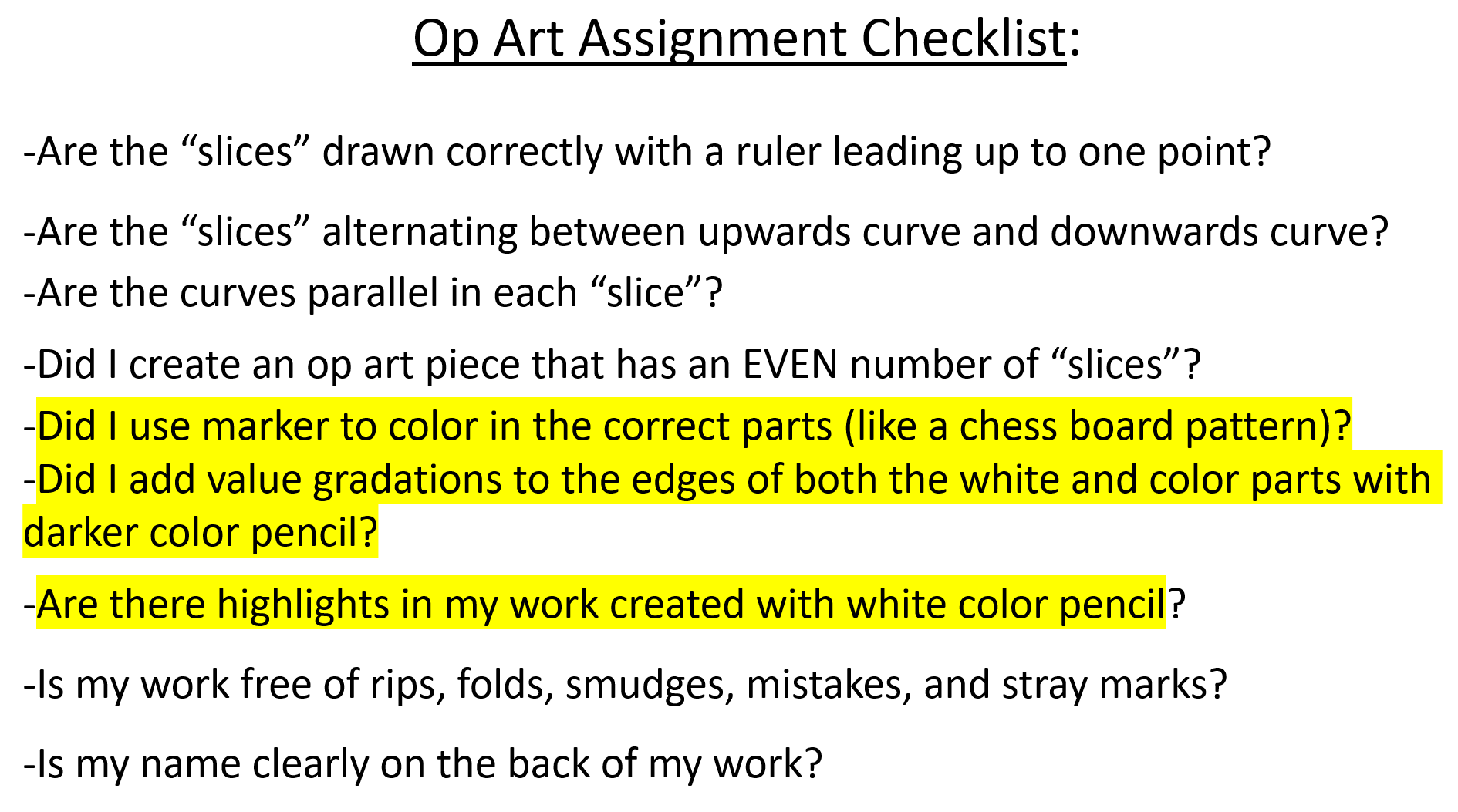
Criteria Checklist
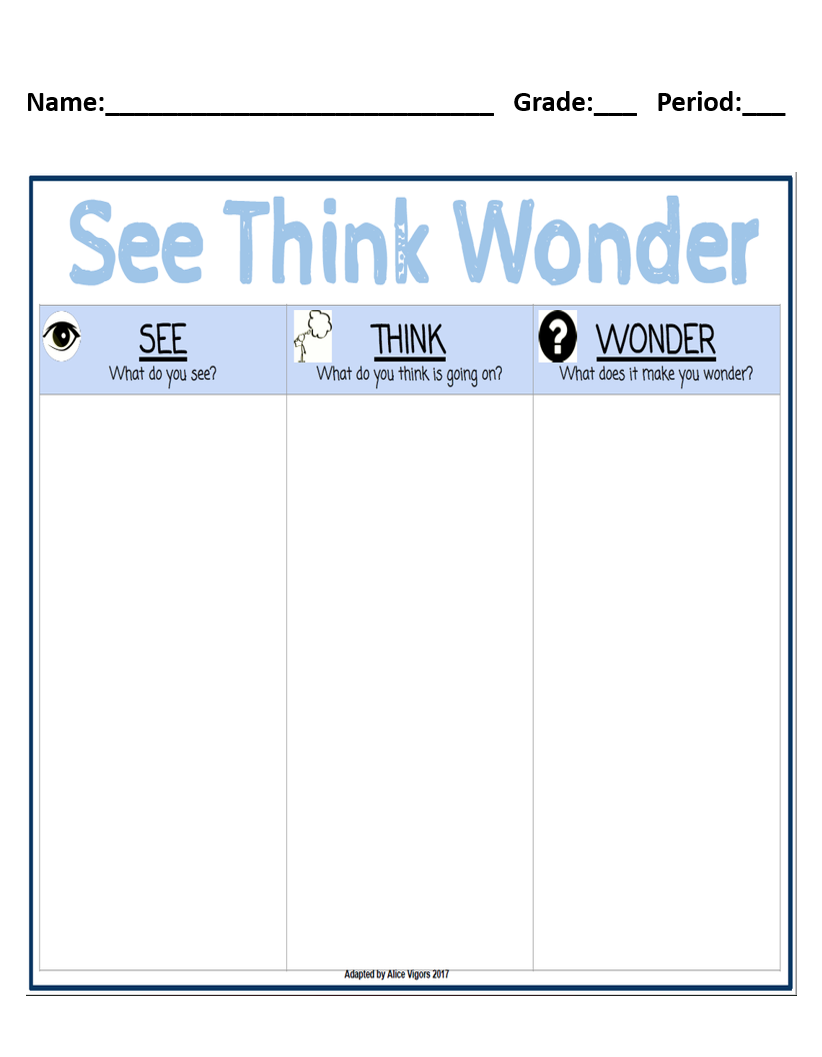
See Think Wonder
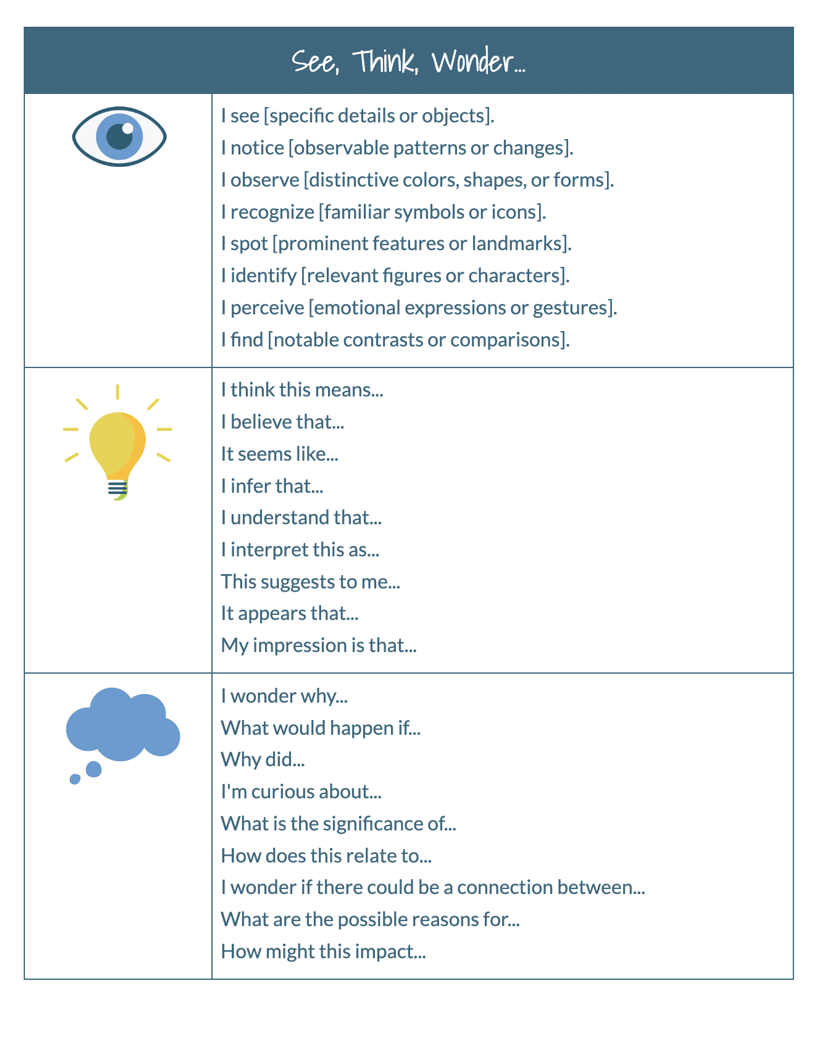
See Think Wonder Prompts
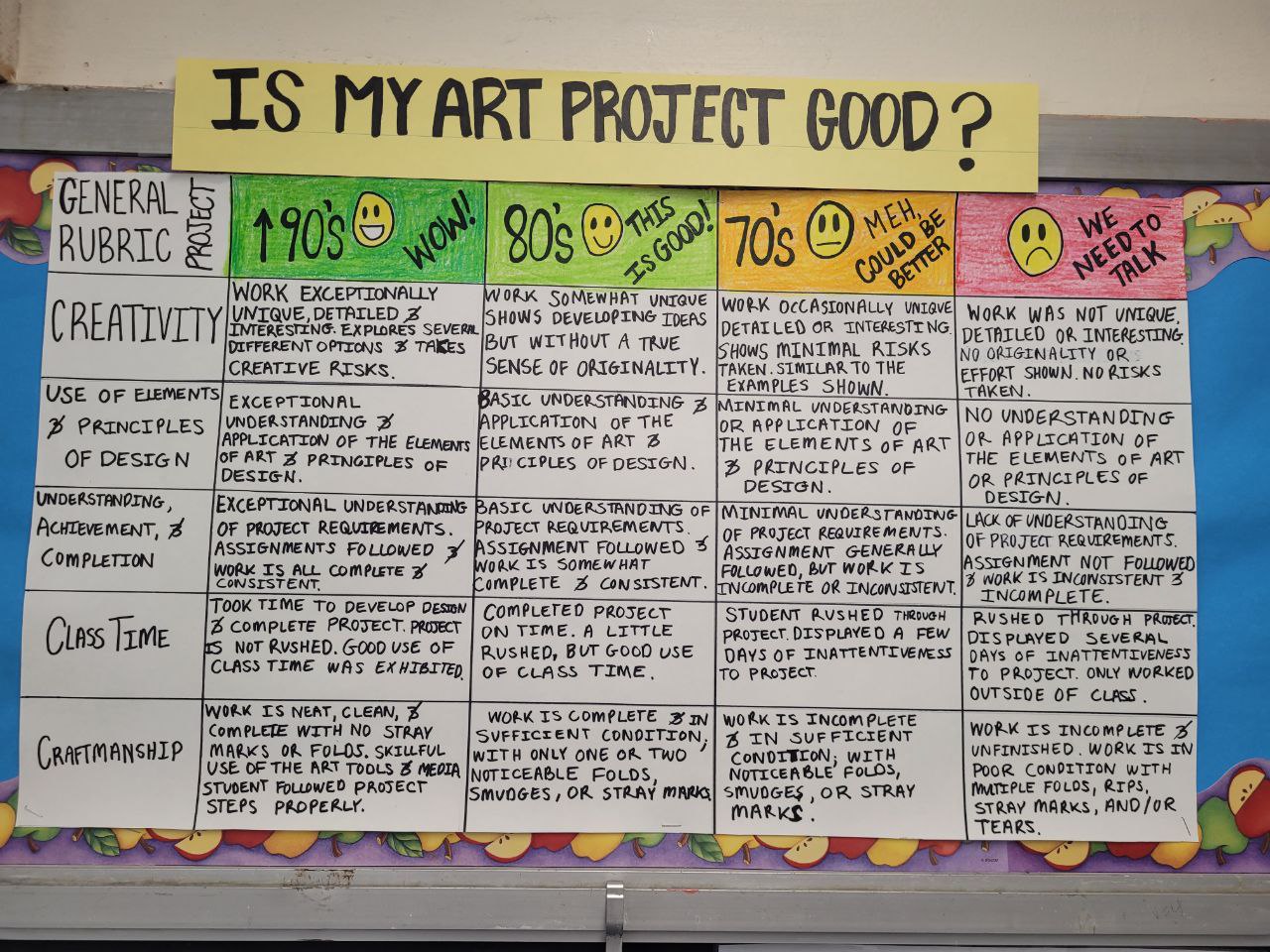
General Project Rubric
Do Now Drawing Prompts
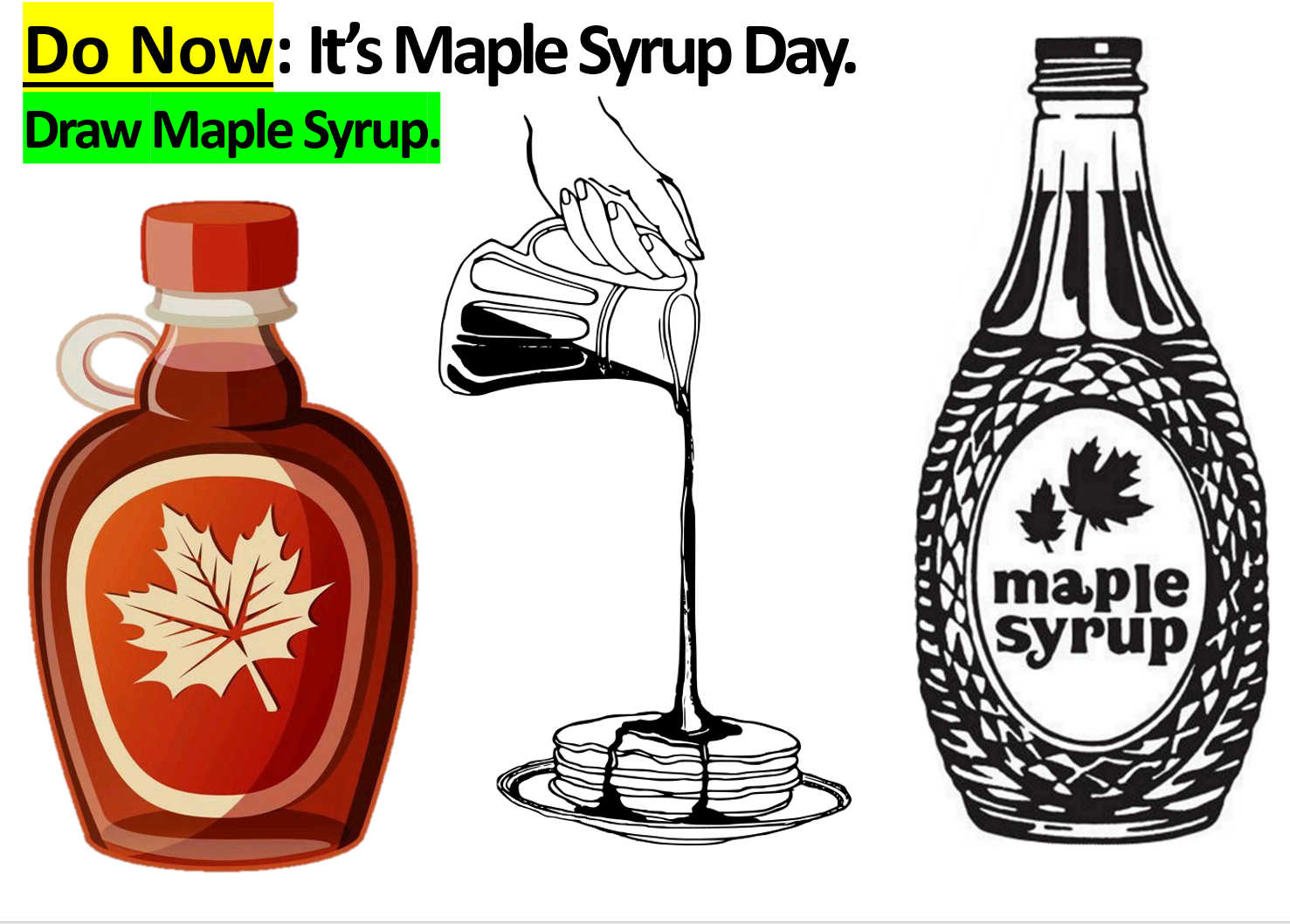
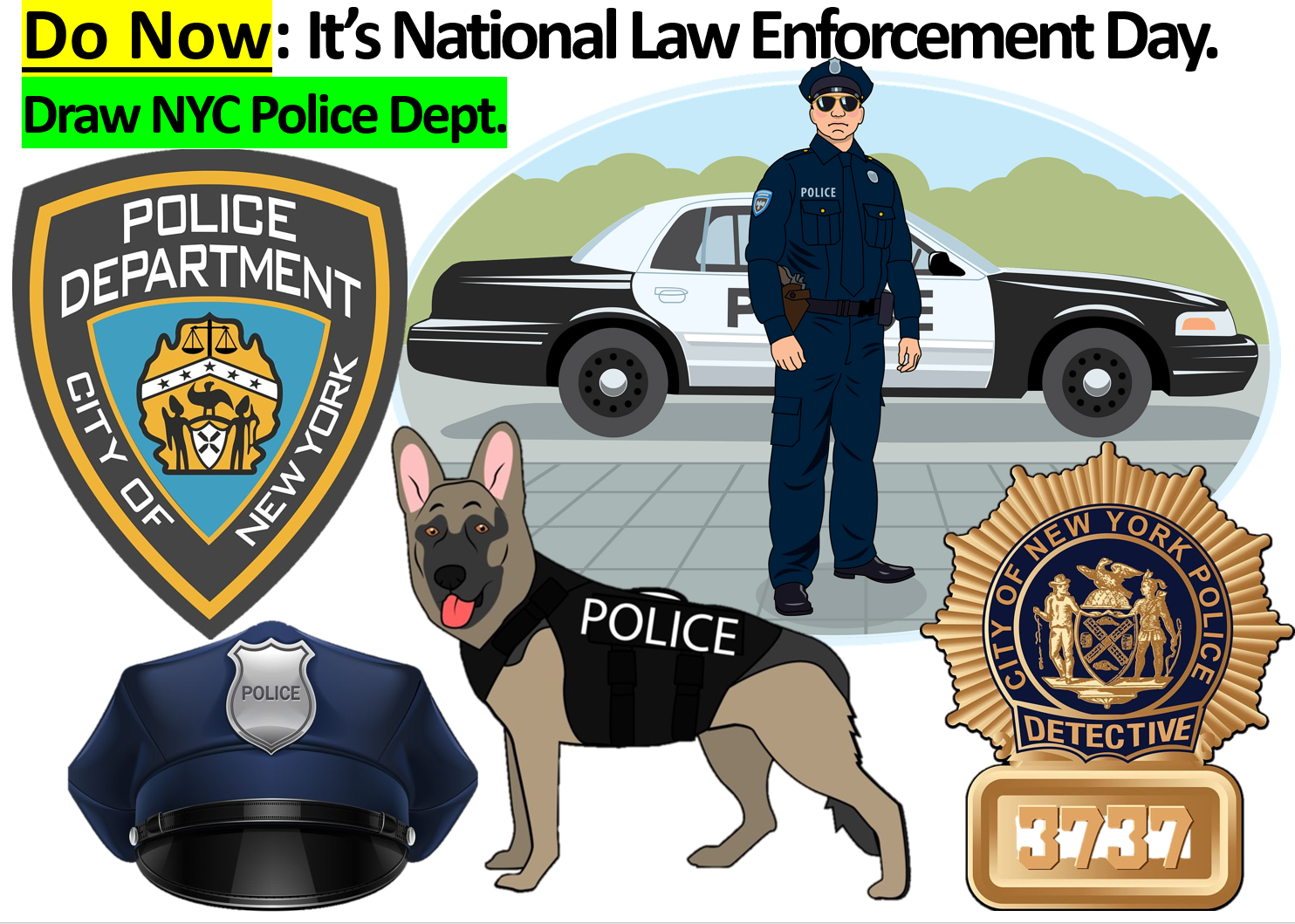
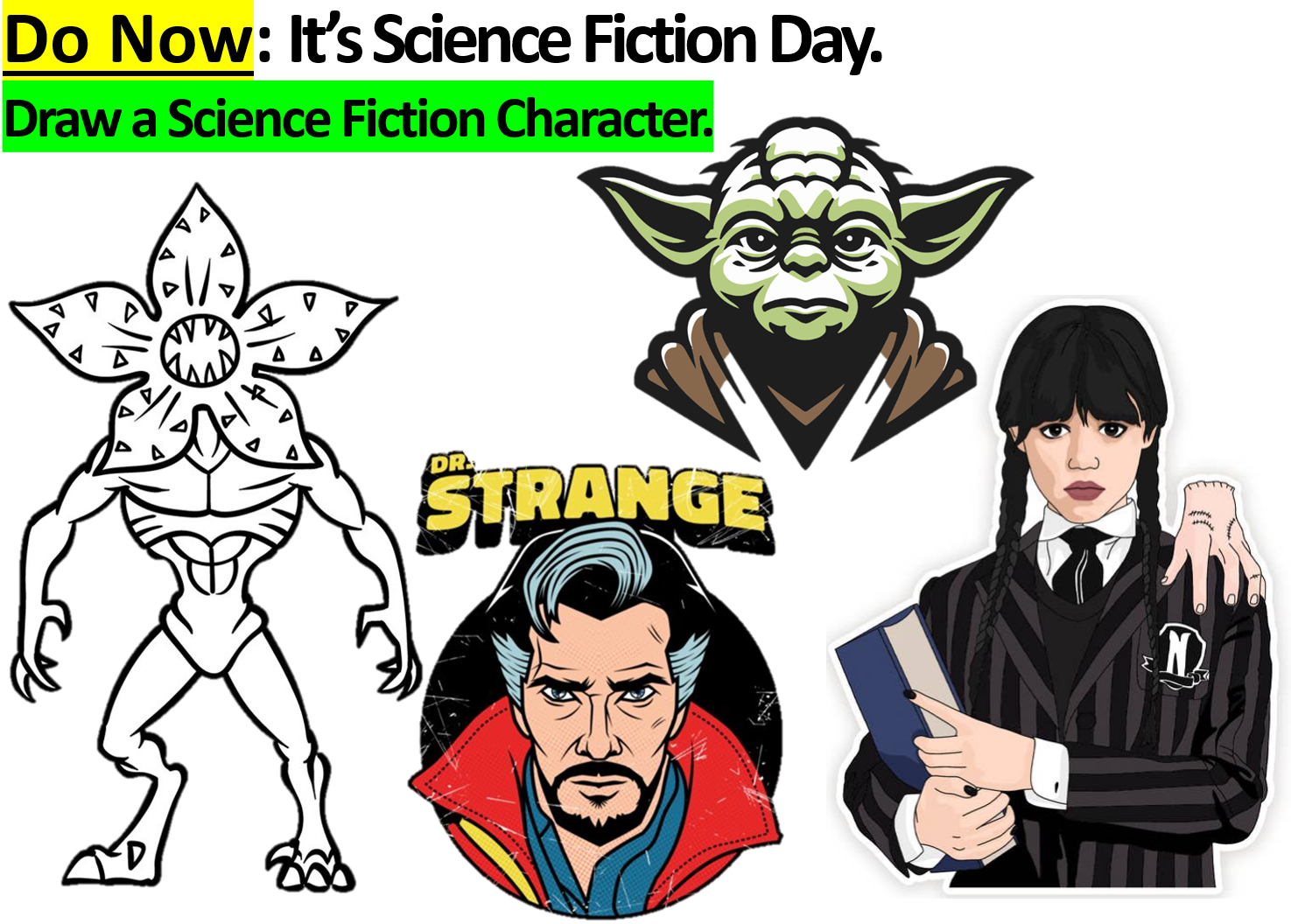
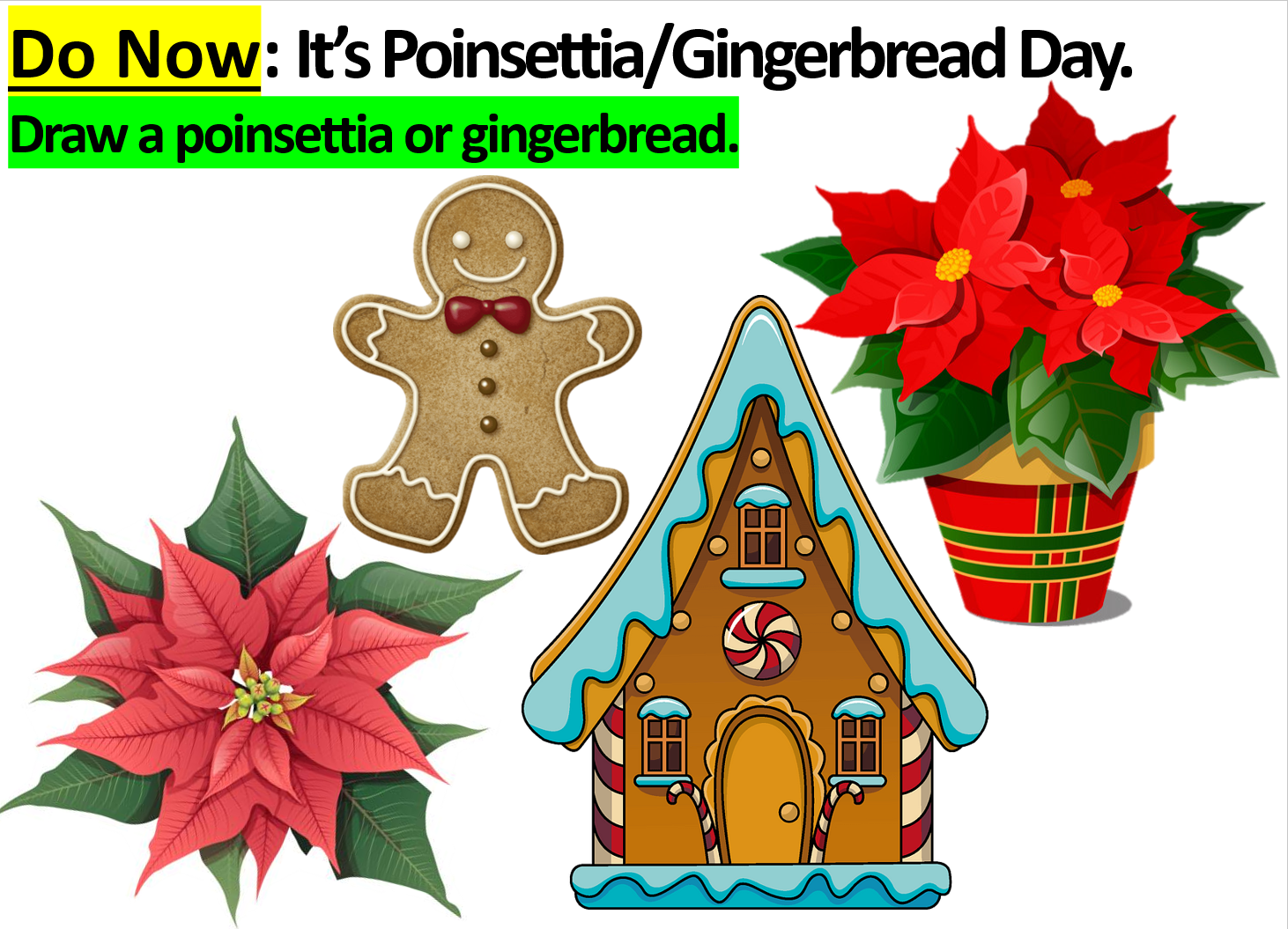
Students complete quick observational “Do Now” drawings at the start of class based on national holidays. I pick the holidays that seem the most interesting and appropriate to draw for each day. Multiple clipart images and drawings are displayed to choose from so that students have choice in difficulty and interest. Sometimes conversations about student interests are sparked by the Do Nows contributing to positive class culture. The Do Nows are drawn on small colored paper and turned in at the 10 min mark of class. It ensures that students practice observational drawing daily and serve as a formative assessment. This structured routine engages students at the start of class and aids with class transitions. While students work on the Do Now, I use the opportunity to handout projects and check in with students as the Do Nows are collected. Below you can see a sample of 9 Do Now prompts and a student’s response to those prompts. I set high expectations for the Do Now drawings by having a rubric displayed at the front of the room, and students understand that their Do Nows get factored into their overall grade.
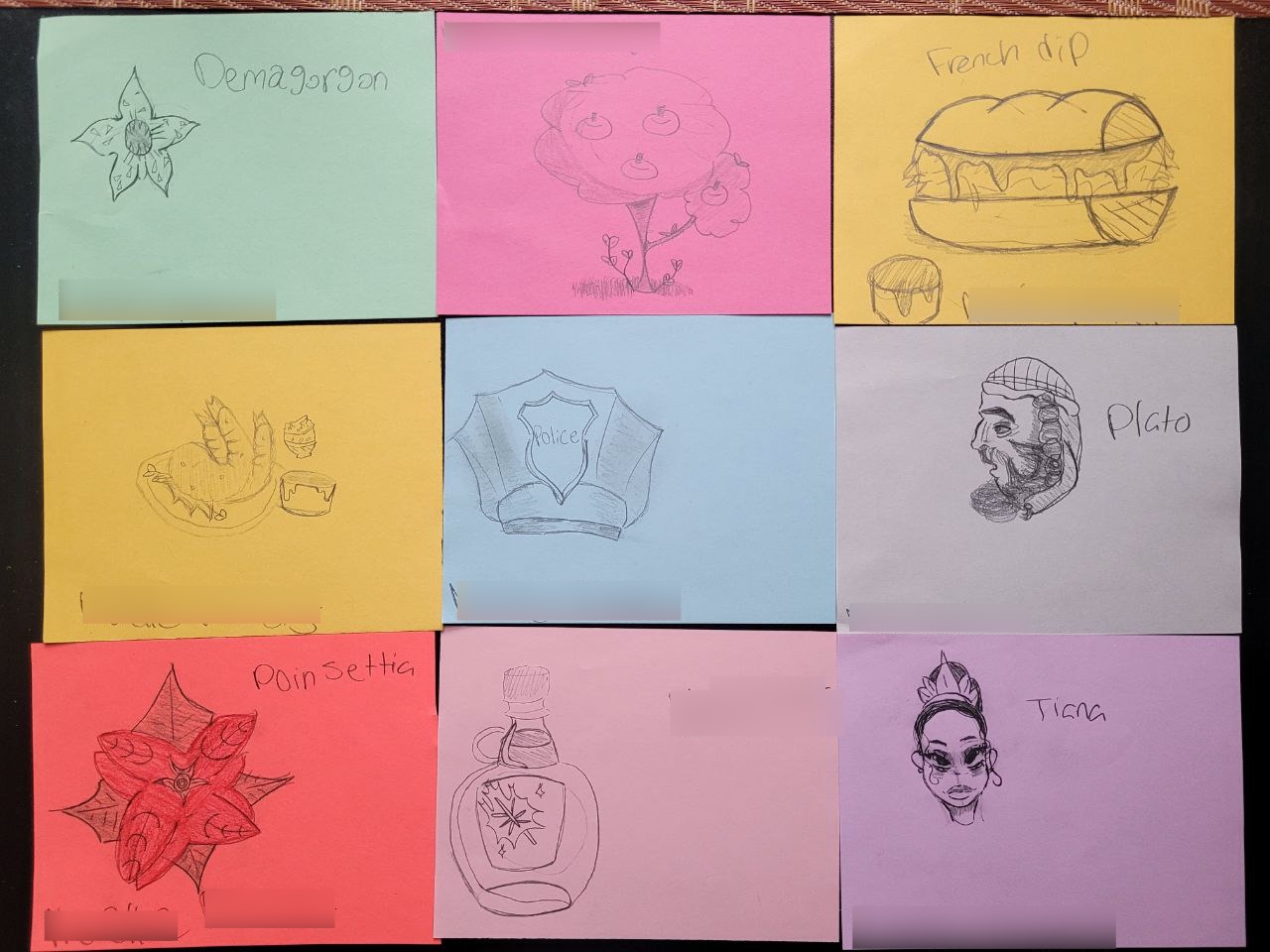
Student Sample Do Nows
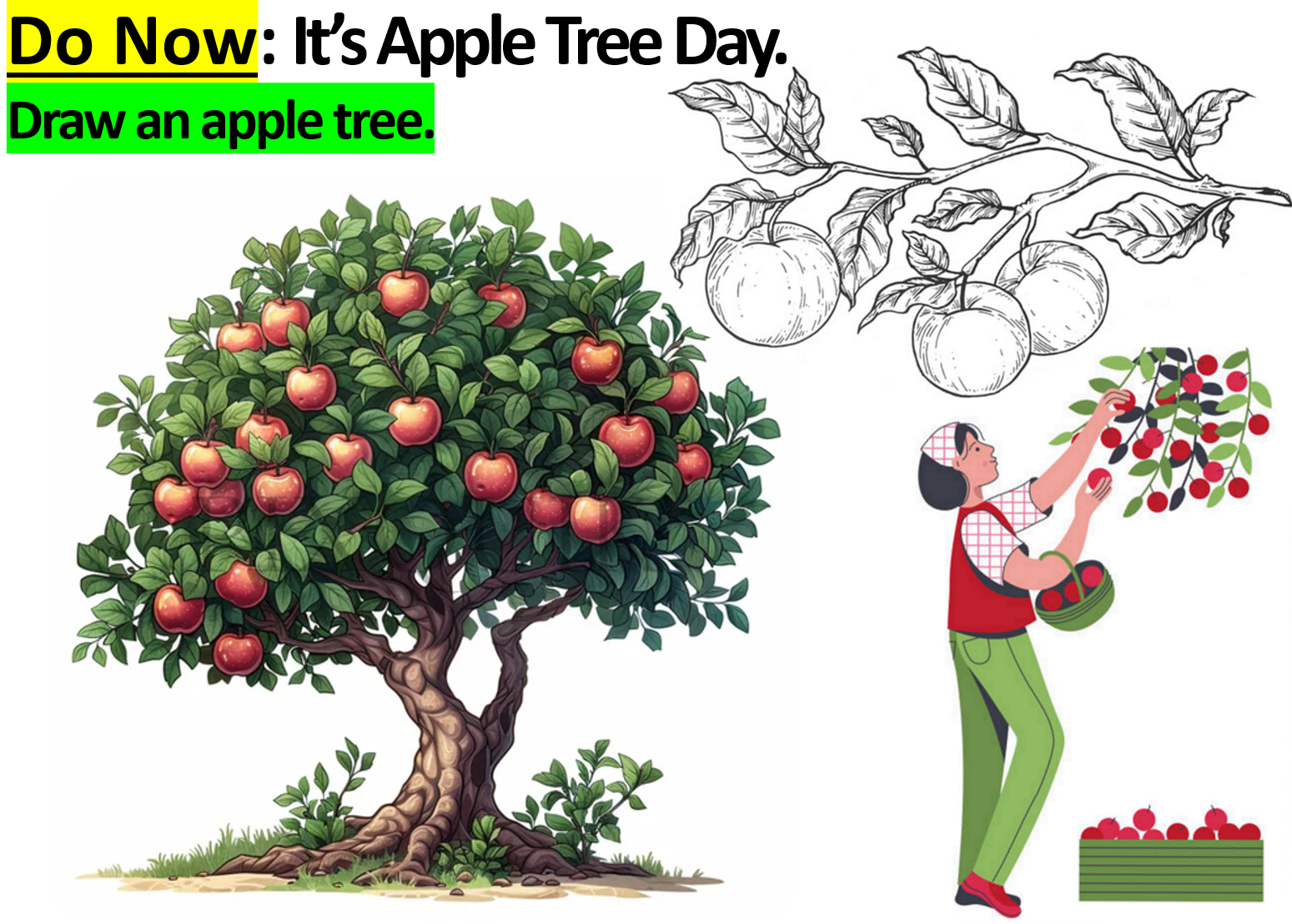
Do Now Example
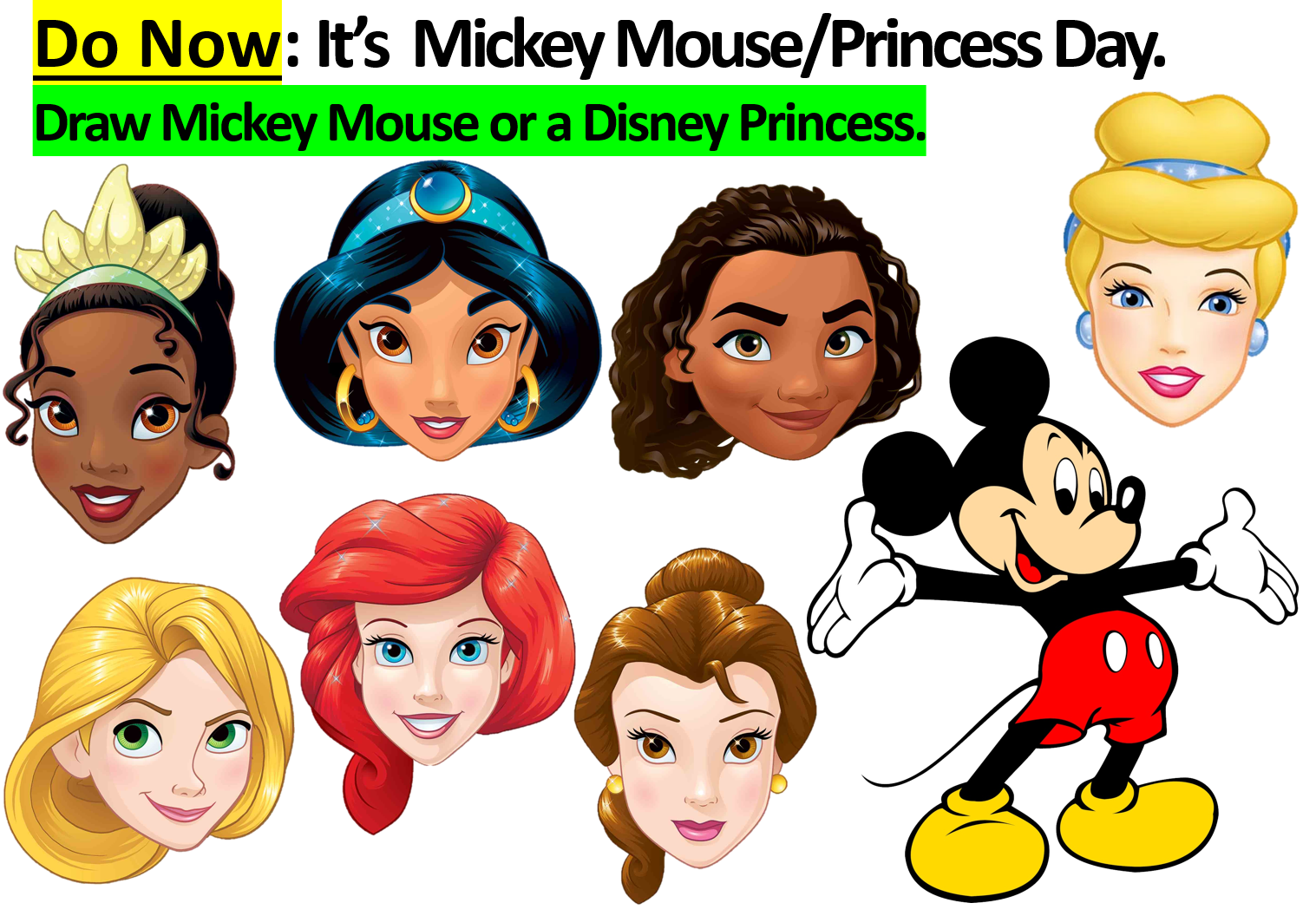
Do Now Example
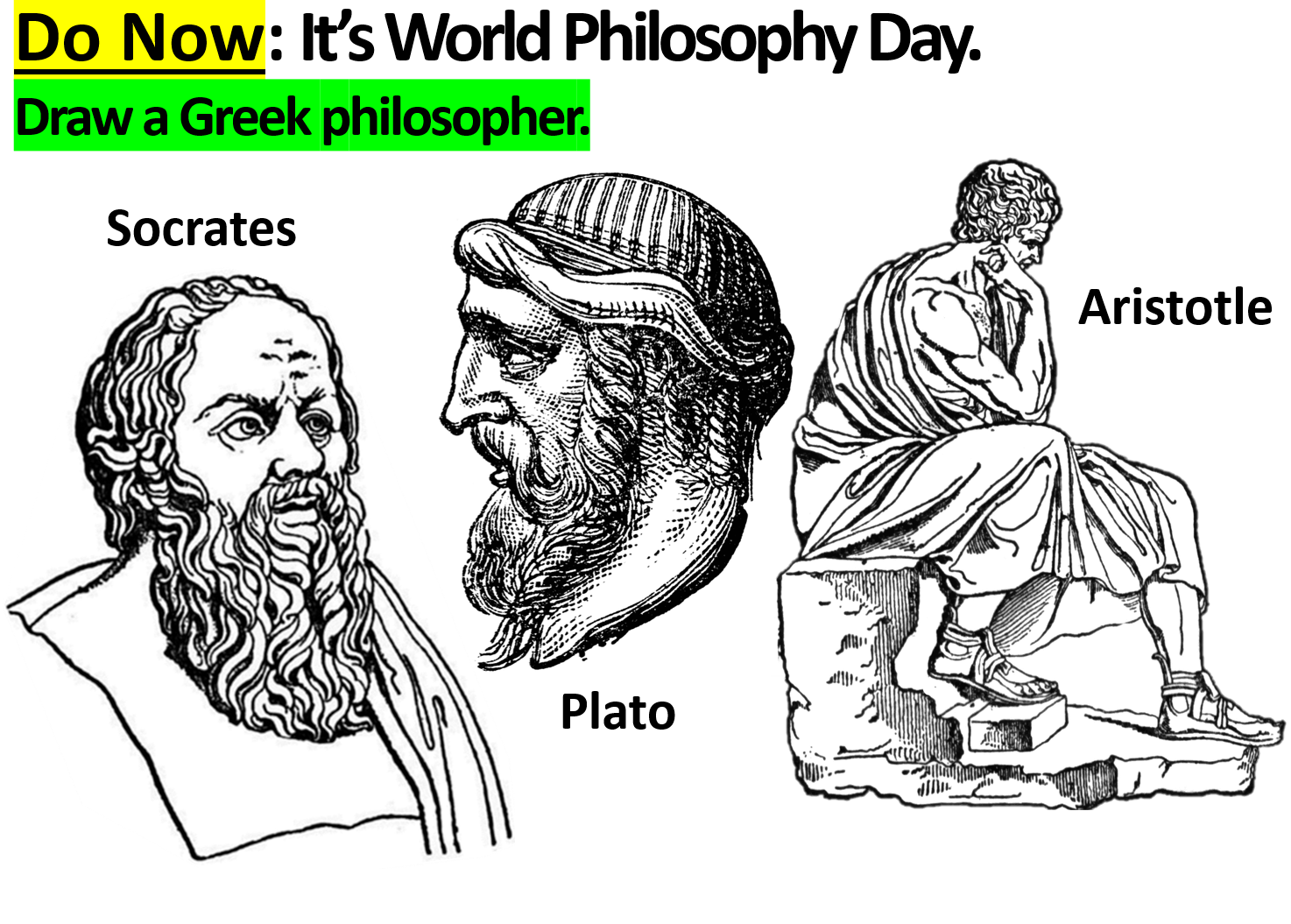
Do Now Example
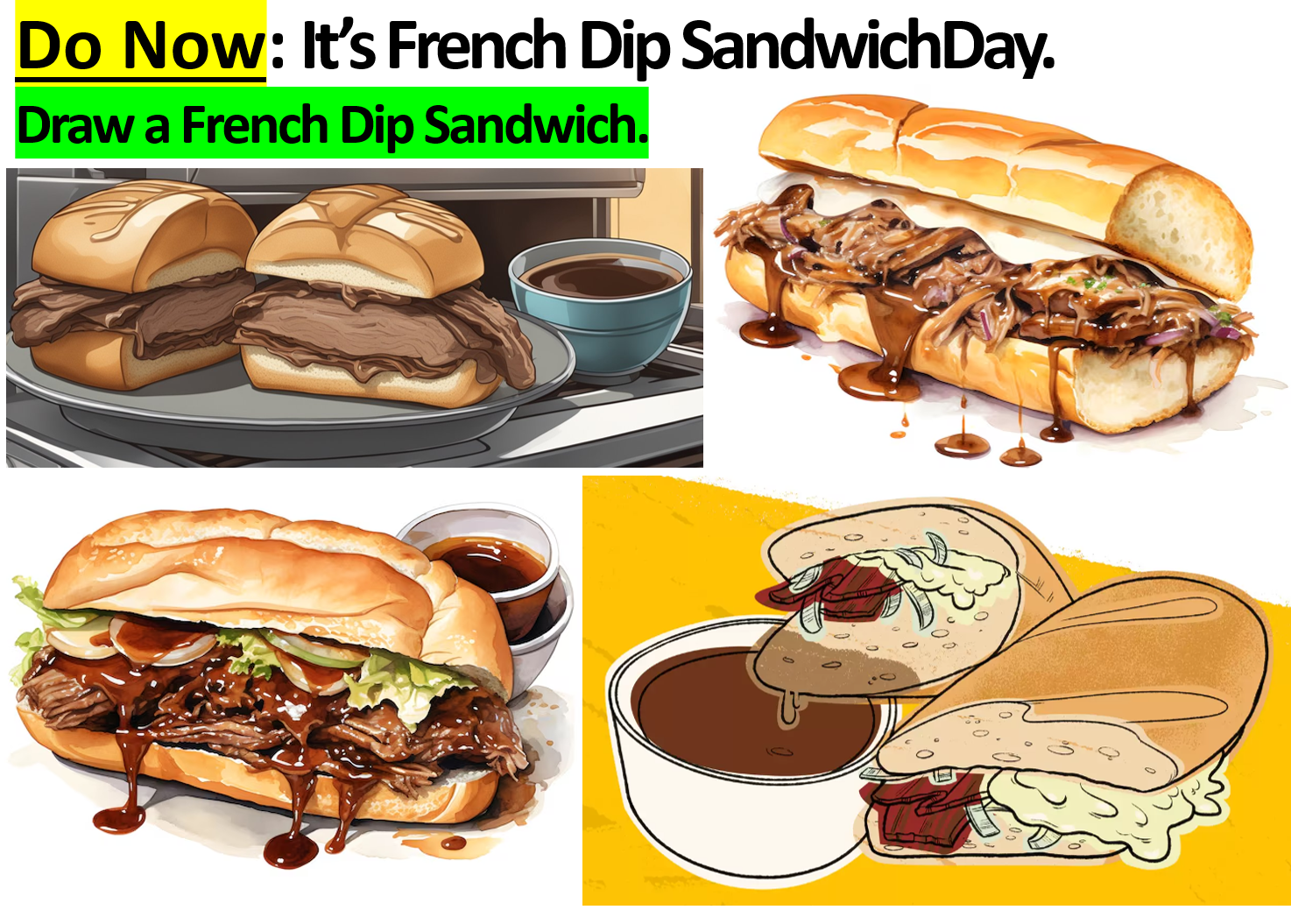
Do Now Example
Do Now Example
Do Now Example
Do Now Example
Do Now Example
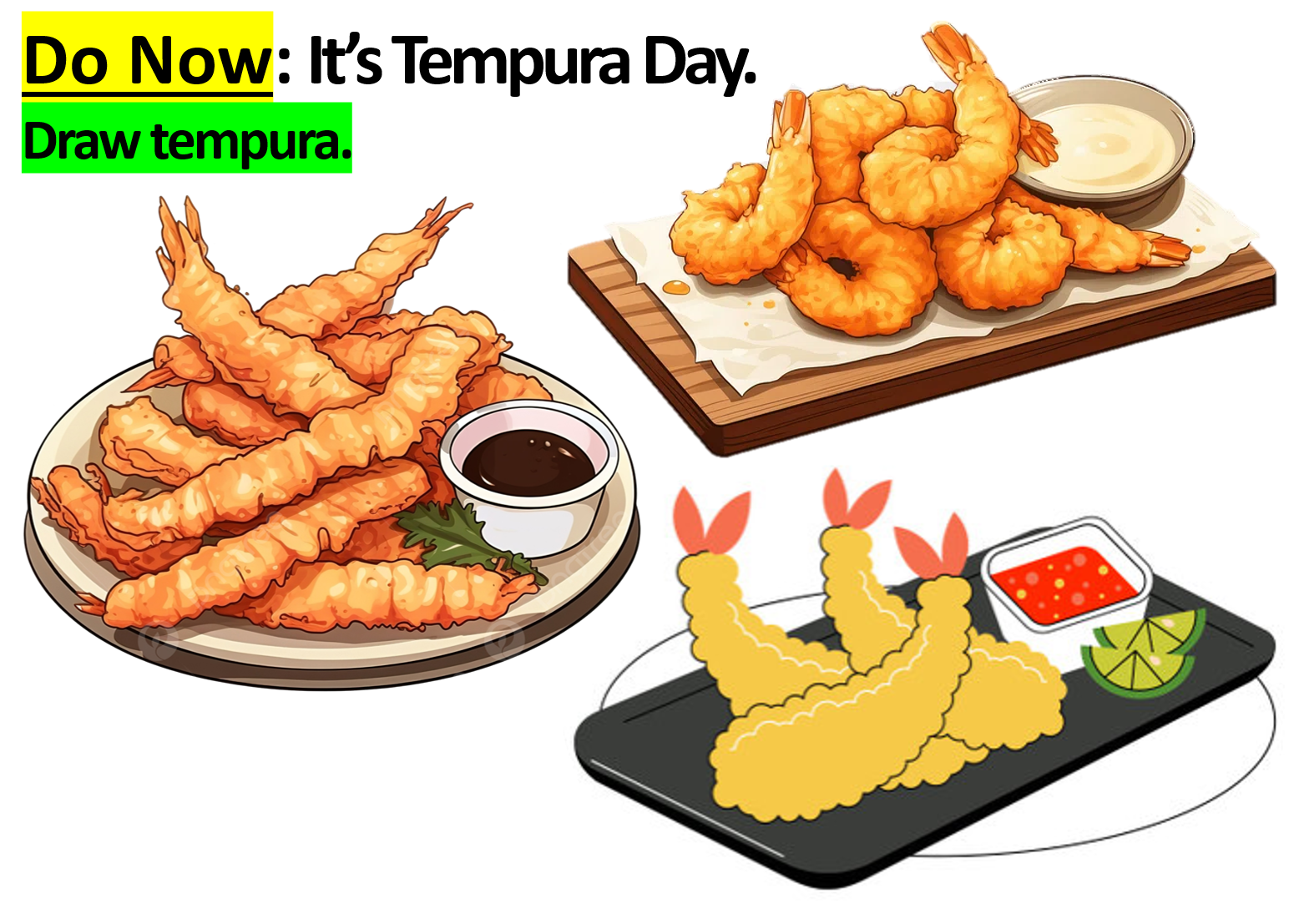
Do Now Example
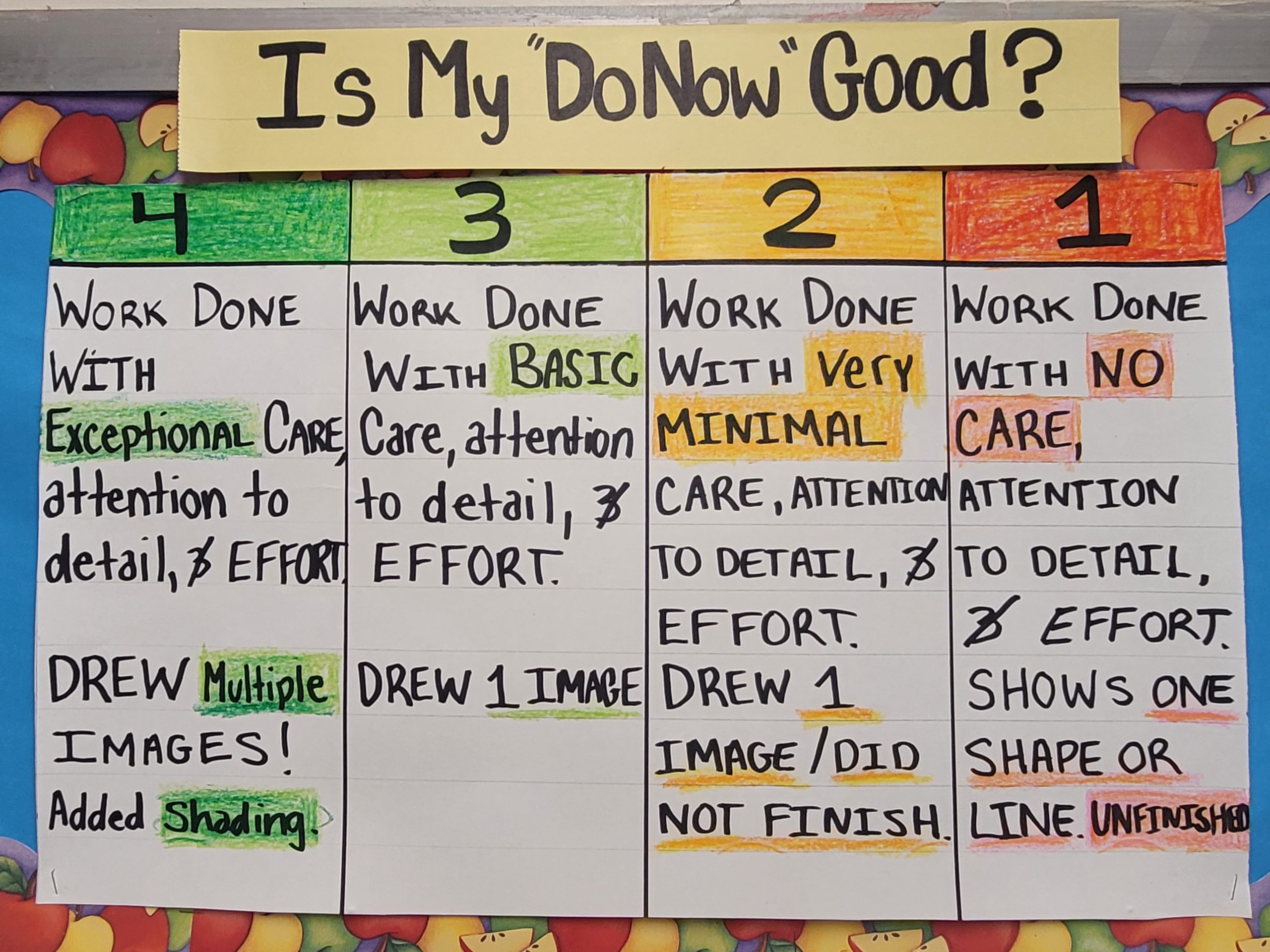
Do Now Rubric
Class Environment: Signage & Posters, Behavior Management, PBIS
Below are various tools that I intentionally use and display in my classroom. Hand signals are clearly displayed at the front of the room for students to use to minimize unnecessary disruptive vocalization of needs. To combat the dreaded “I can’t draw” and instill a positive mindset in students, I have the Art Mantra. The boundaries of personal space and use of objects is illustrated in the K.Y.H.F.O.O.T.Y poster. My voice level signs show what levels are appropriate in class and have artworks corresponding with the voice level. The Art Careers poster shows students there is a need for the skills that the arts teach and makes them more aware of a variety of creative fields. Elements of Art and Principles of Design are displayed in the room and referred to throughout the year. I incentivize good behavior particularly with distribution and collection of materials, cleaning of the room, and excellent class participation with the school PBIS tickets. When giving them out, I always make sure that students understand what behaviors earned them the ticket. When students feel overwhelmed, they may choose to do Box Breathing to calm down and it is illustrated on a poster. Sometimes a student may need more time to calm down and process their emotions through writing on a behavior reflection sheet. If the majority of a class necessitates a whole class intervention due to behavior, then the Ripple Effect worksheet may be used. At the front of the room, I always have the objectives and the essential questions displayed by grade.
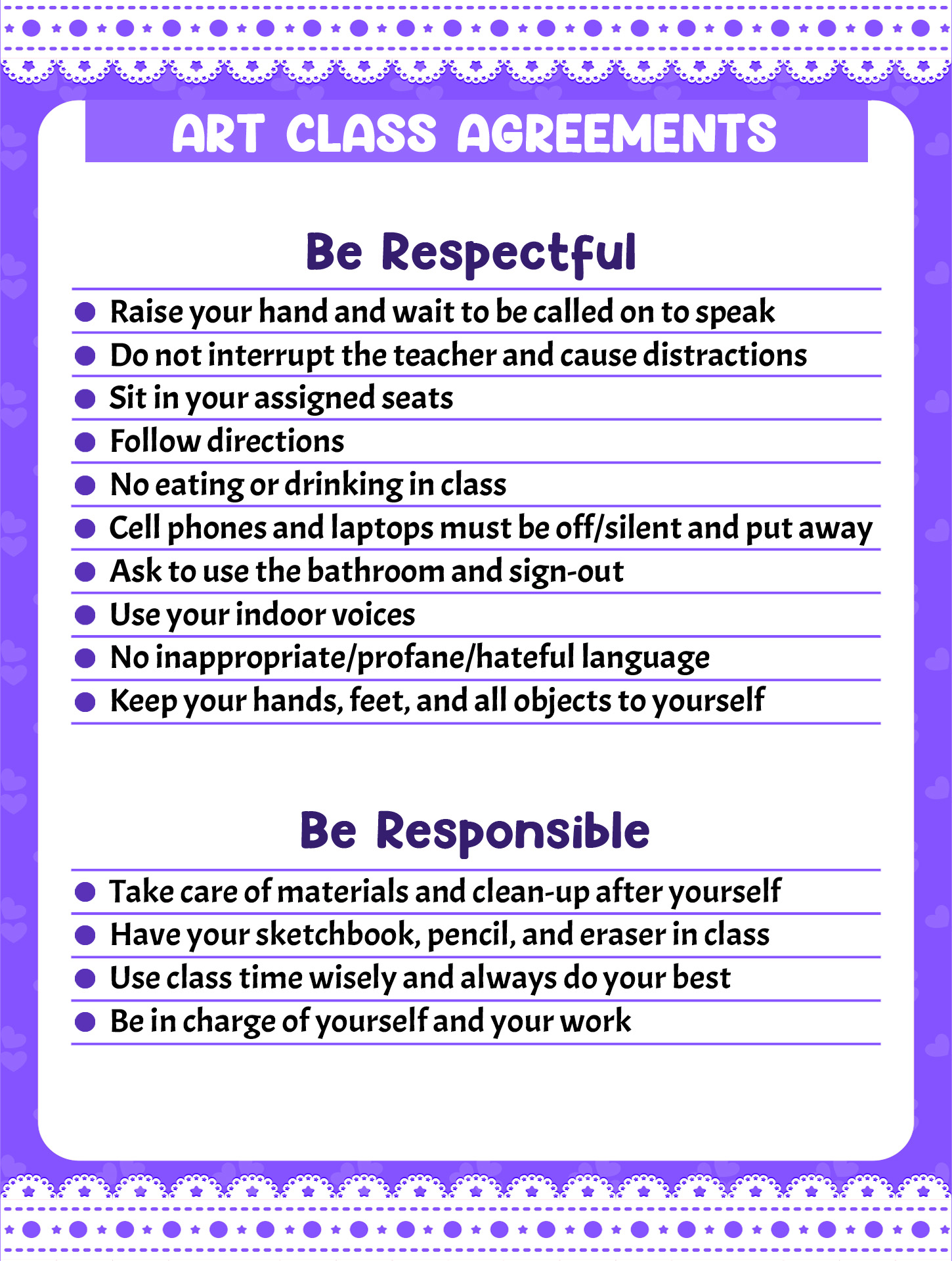
Art Class Agreements
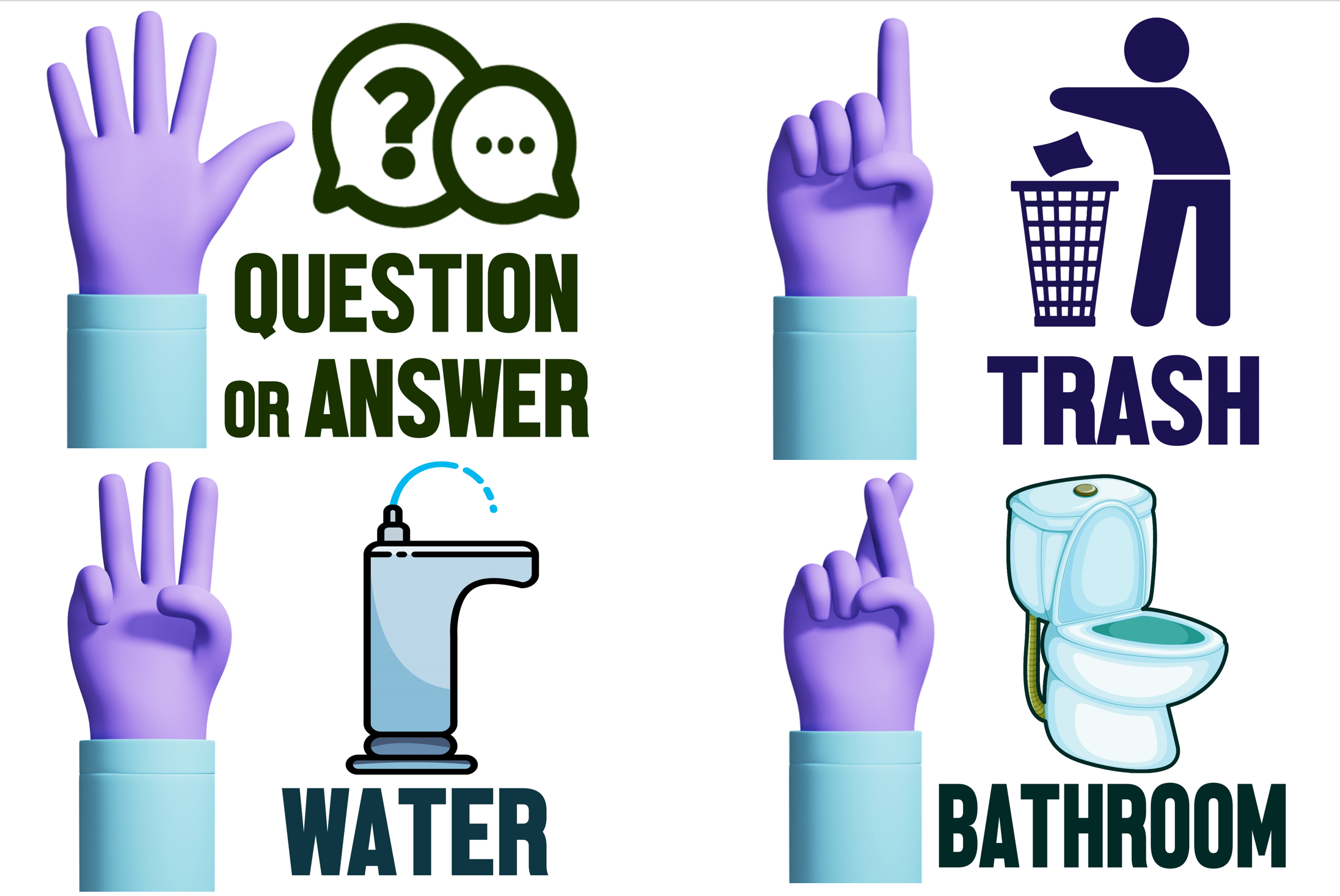
Hand Signals
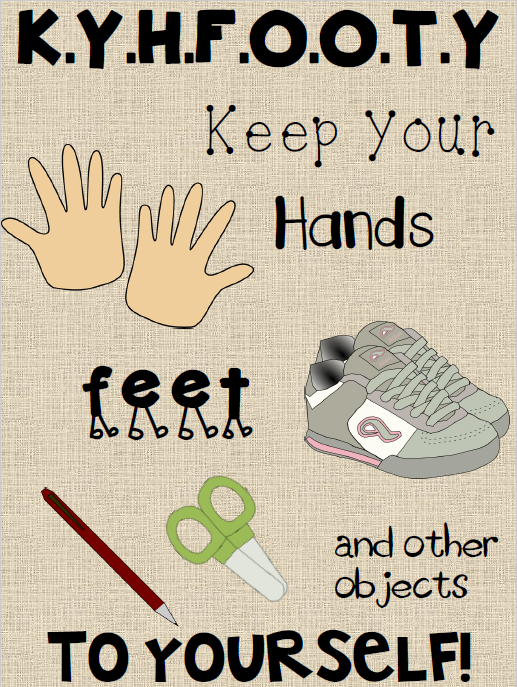
K.Y.H.F.O.O.T.Y
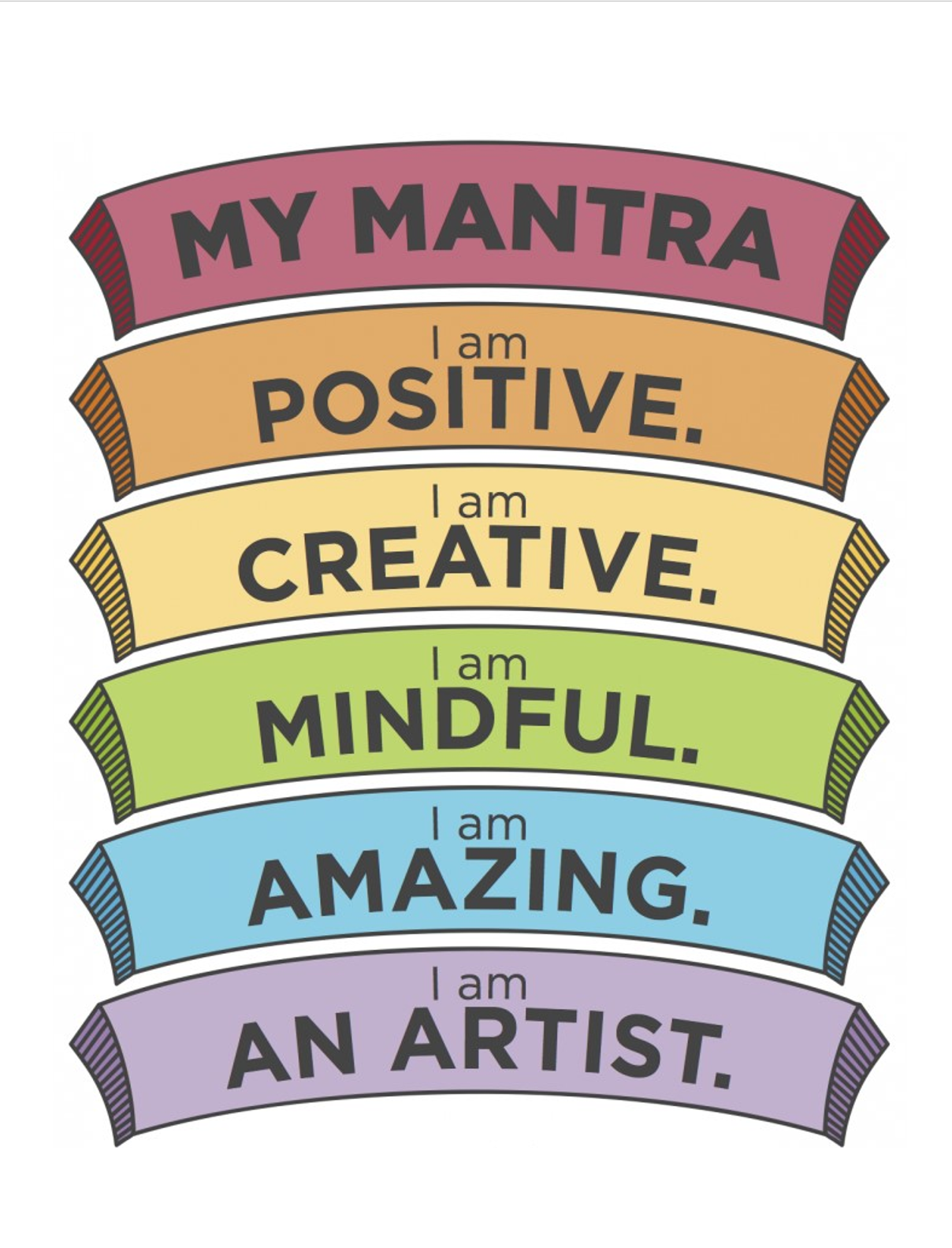
Art Mantra
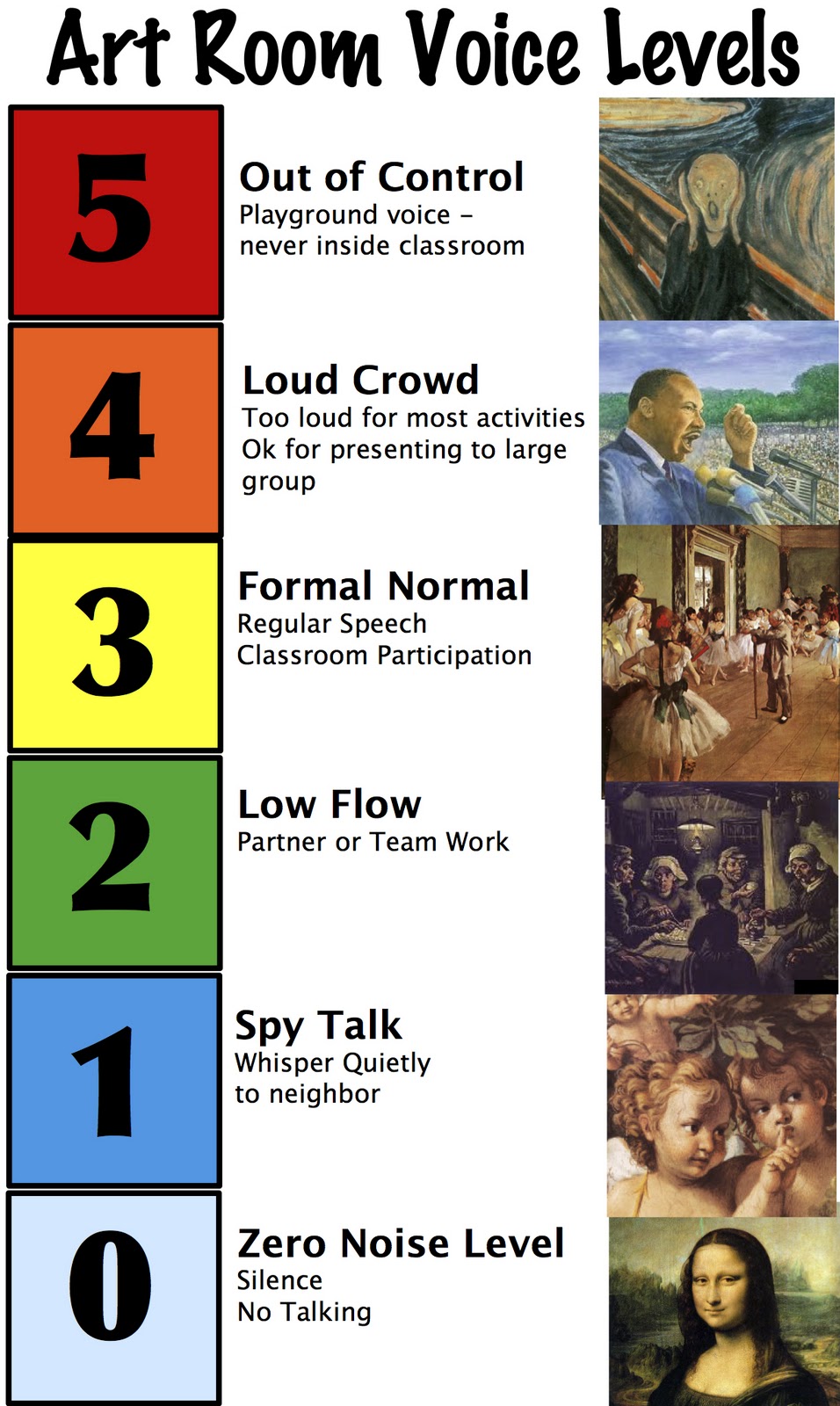
Voice level Sign
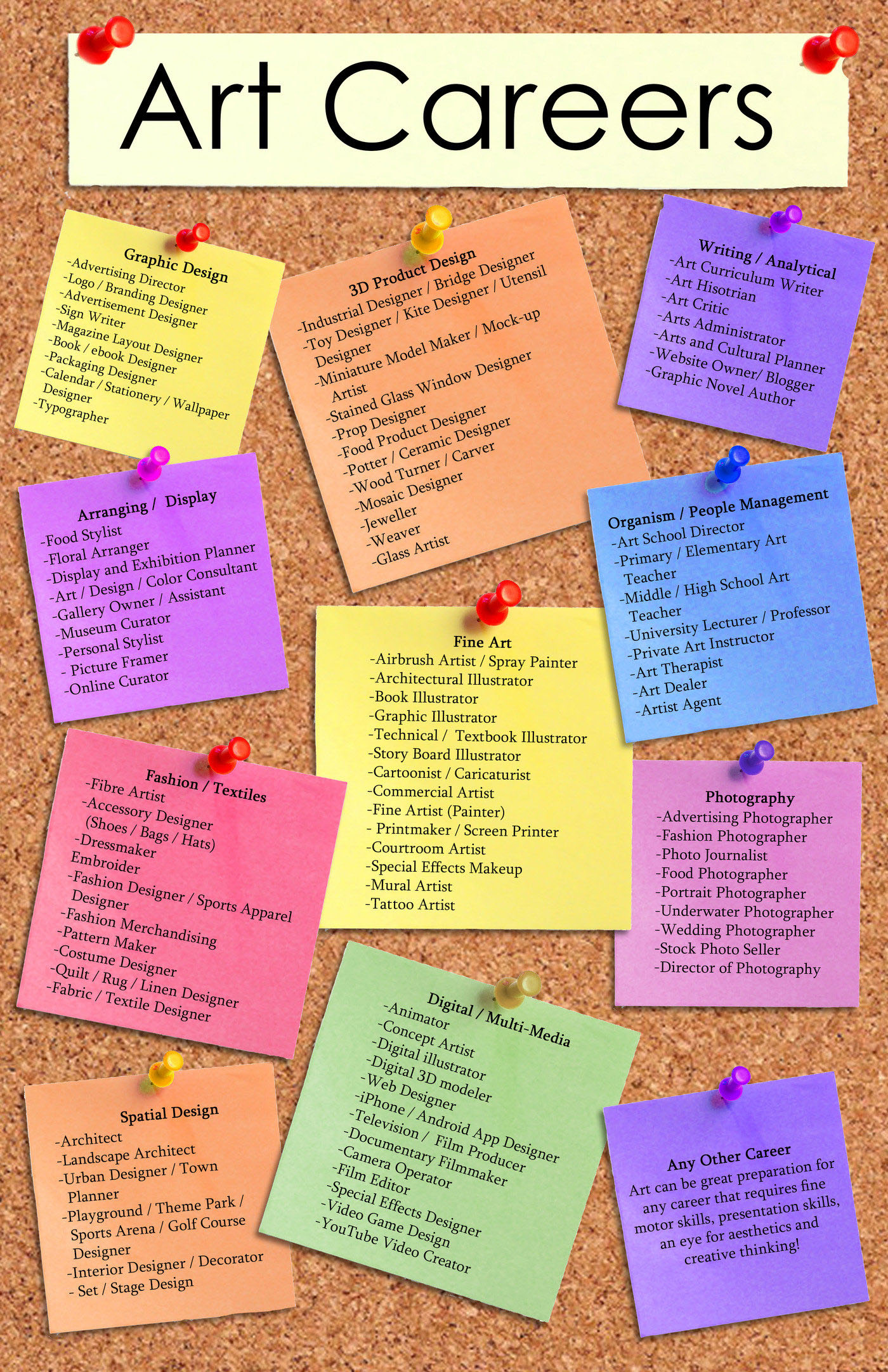
Art Careers Poster
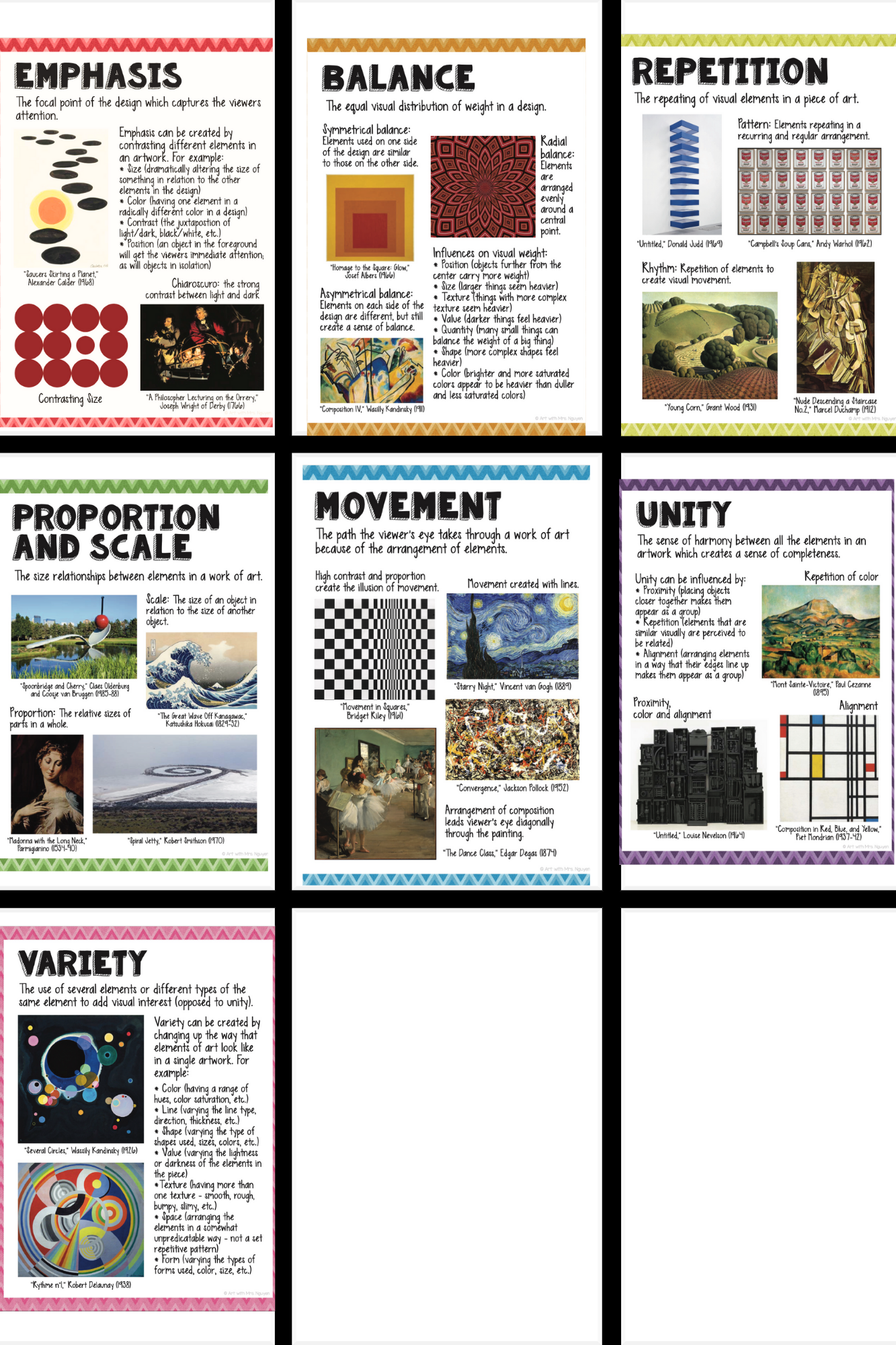
Principles of Design
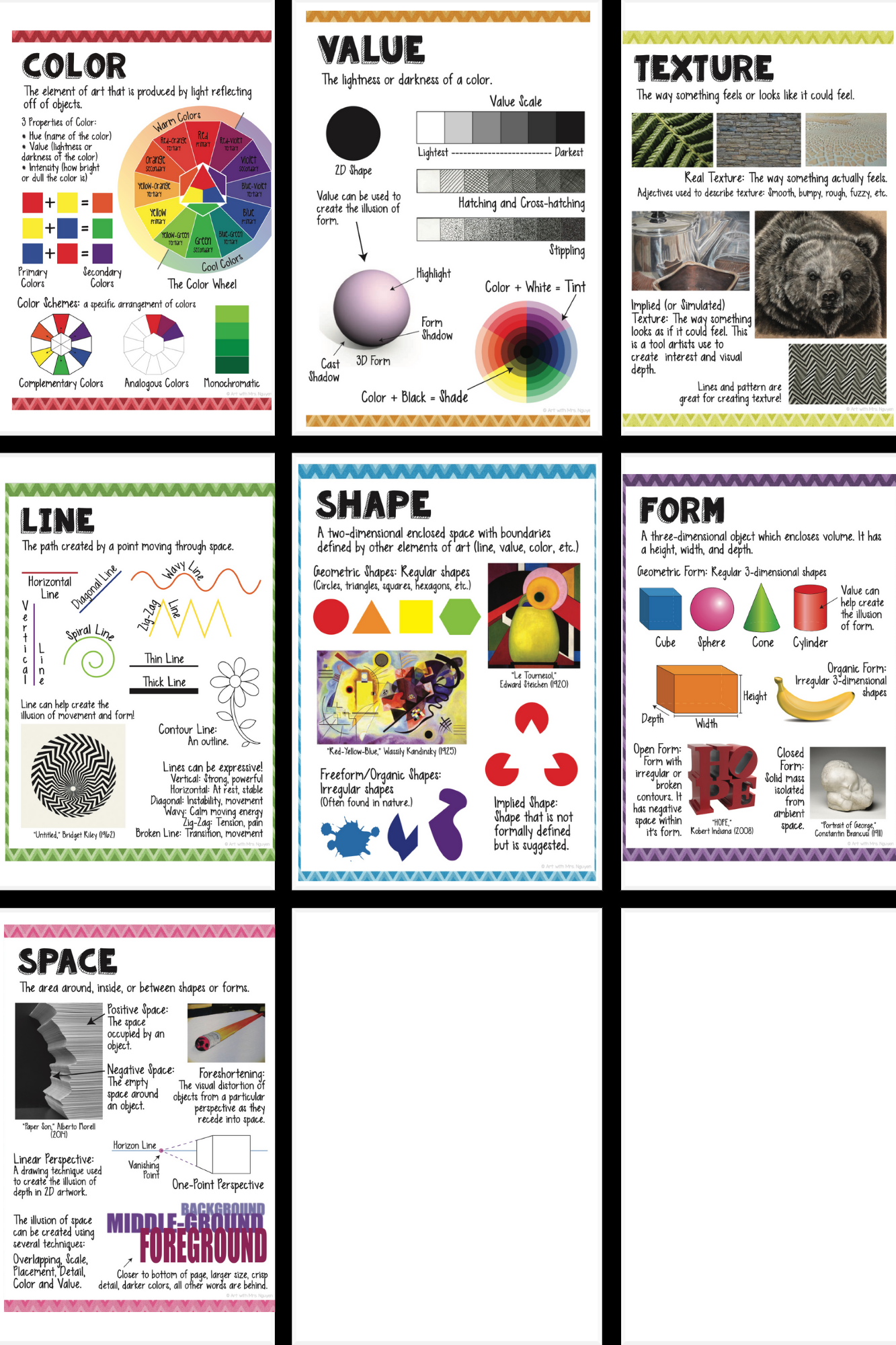
Elements of Art
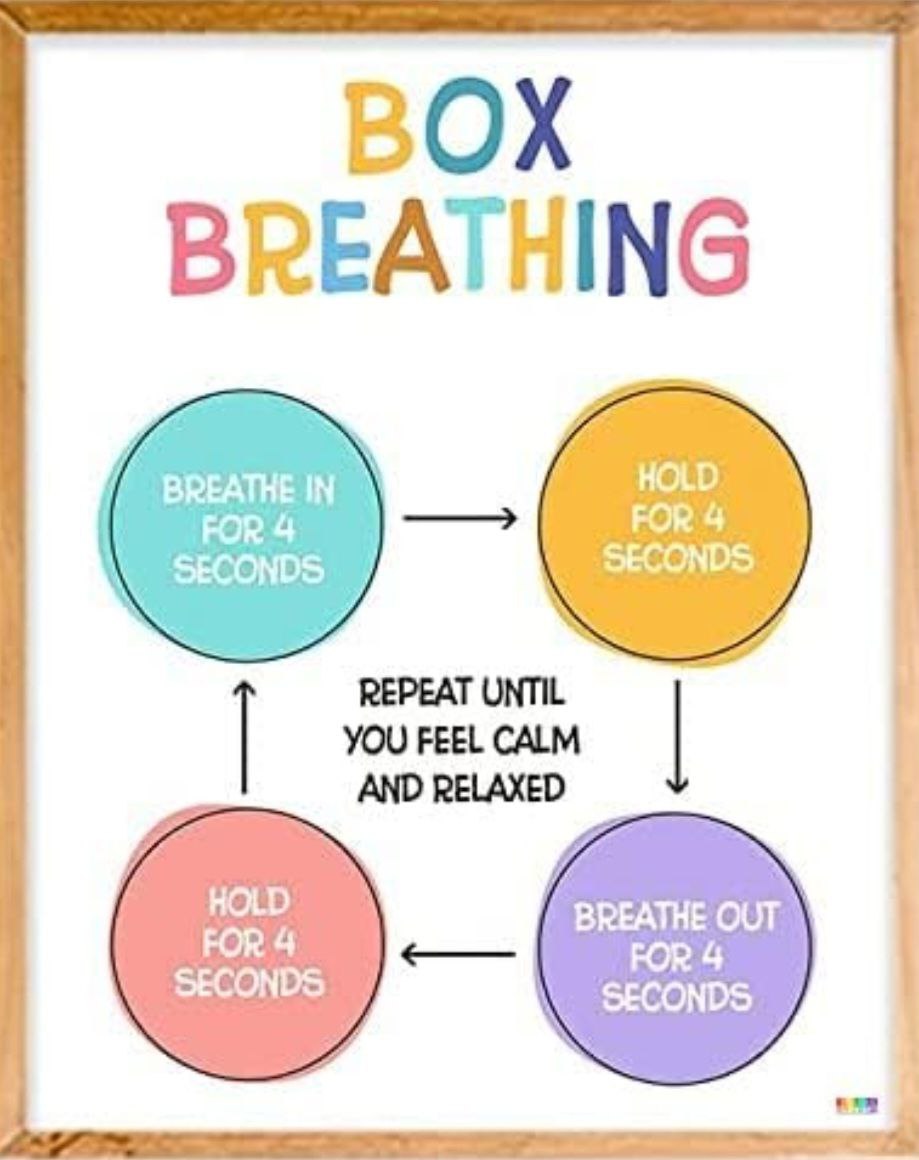
Box Breathing SEL Strategy
PBIS Tickets
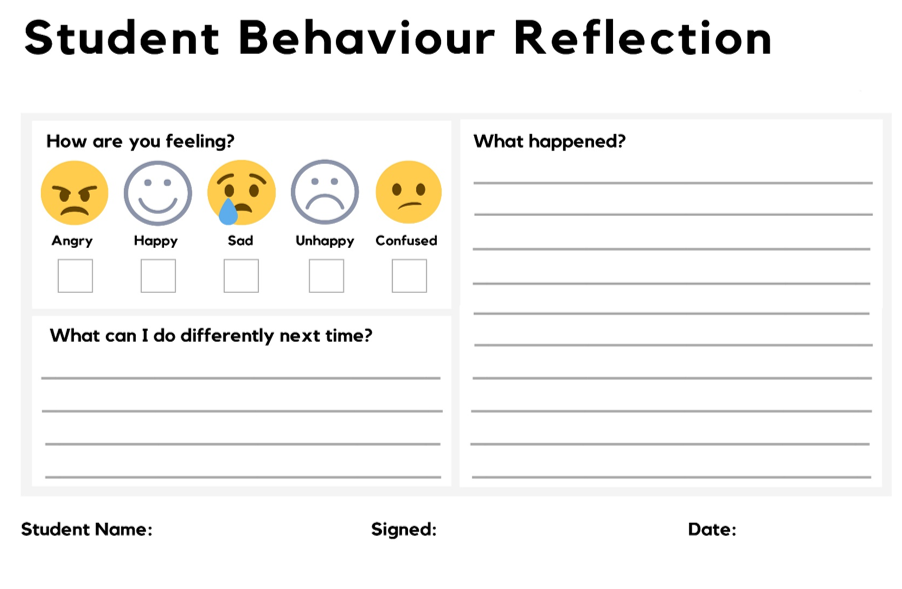
Behavior Reflection Sheet
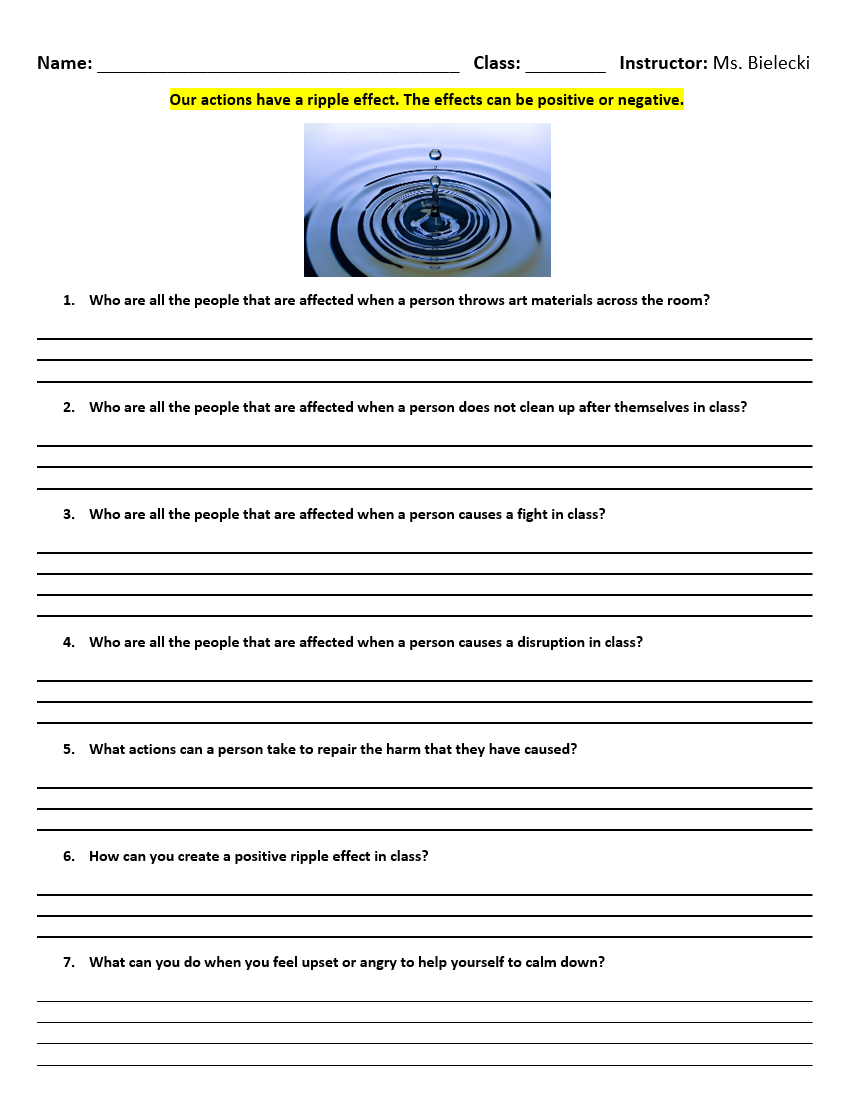
Ripple Effect Worksheet
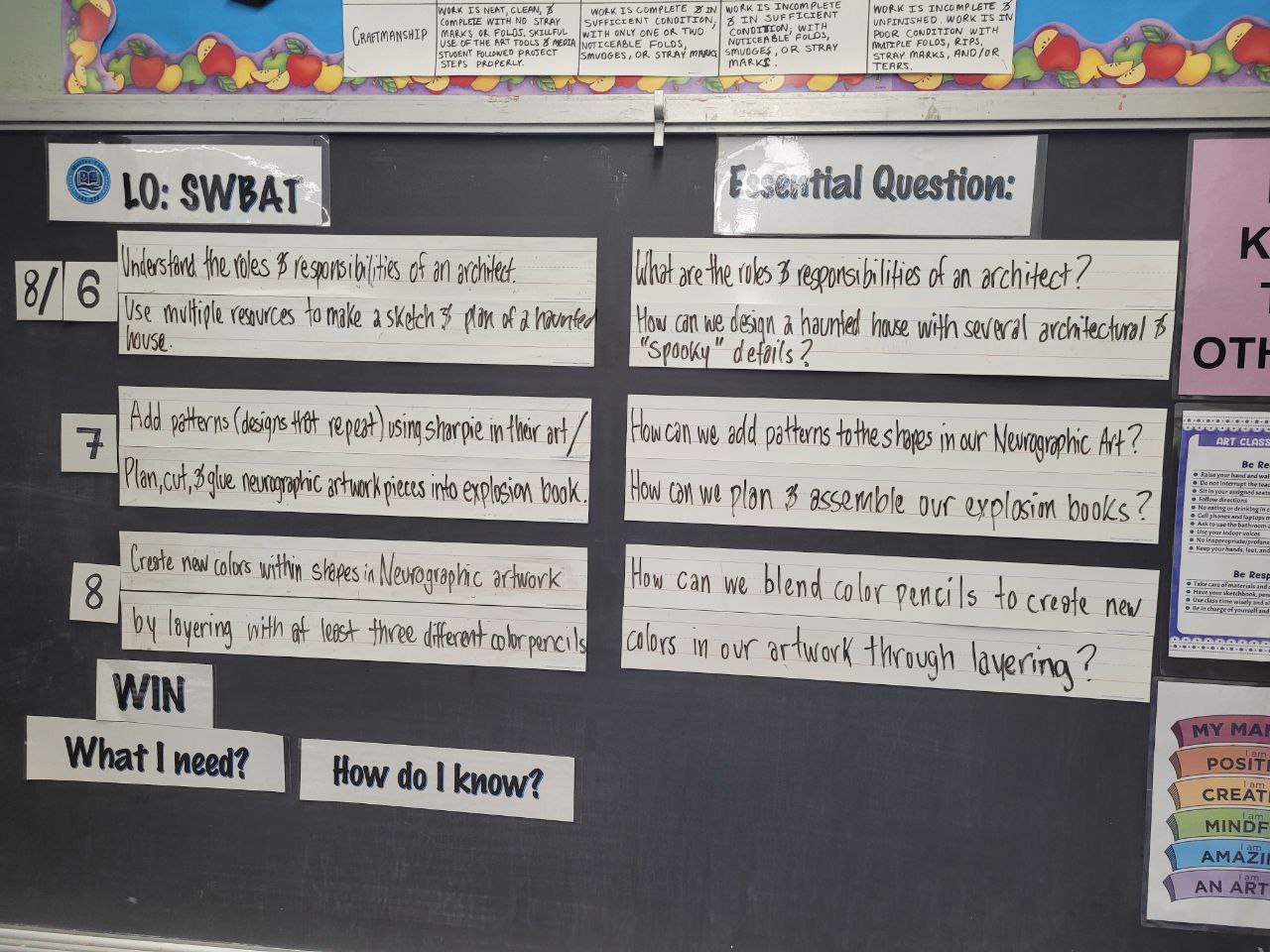
Sample Objectives & Essential Questions Posted
Bathroom Sign-Out
Connected Arts Network (CAN) Action Plan
During the 2023-2024 school year I was a part of the Connected Arts Network virtual professional learning community. Our cohort focused our inquiry, planning, and research on belonging in the arts classroom. My action plan is below.
R&D Team Meaning Making Presentation 2025
During the 2024-2025 school year I was a part of the school research and development team, whose focus was on implementing meaning making experiences in our classes throughout the year. Below is my presentation to staff during our meaning making showcase.
Growth Shown in Evaluation Observation Reports
Below is a pdf that contains a formal observation report from my first year teaching followed by a formal observation report from my 3rd year teaching. In the first report, I received highly effective and effective ratings in the Danielson Framework components. In the second report, I received all highly effective ratings in all of the components, demonstrating my growth as a teacher in such a short time frame. The evaluator acknowledged my efforts in incorporating assessment, differentiation, and academic vocabulary in lesson. They also highlighted my use of words from the school Vocab4all initiative and adaptations of worksheets and anchor charts for MLL students in the lesson.