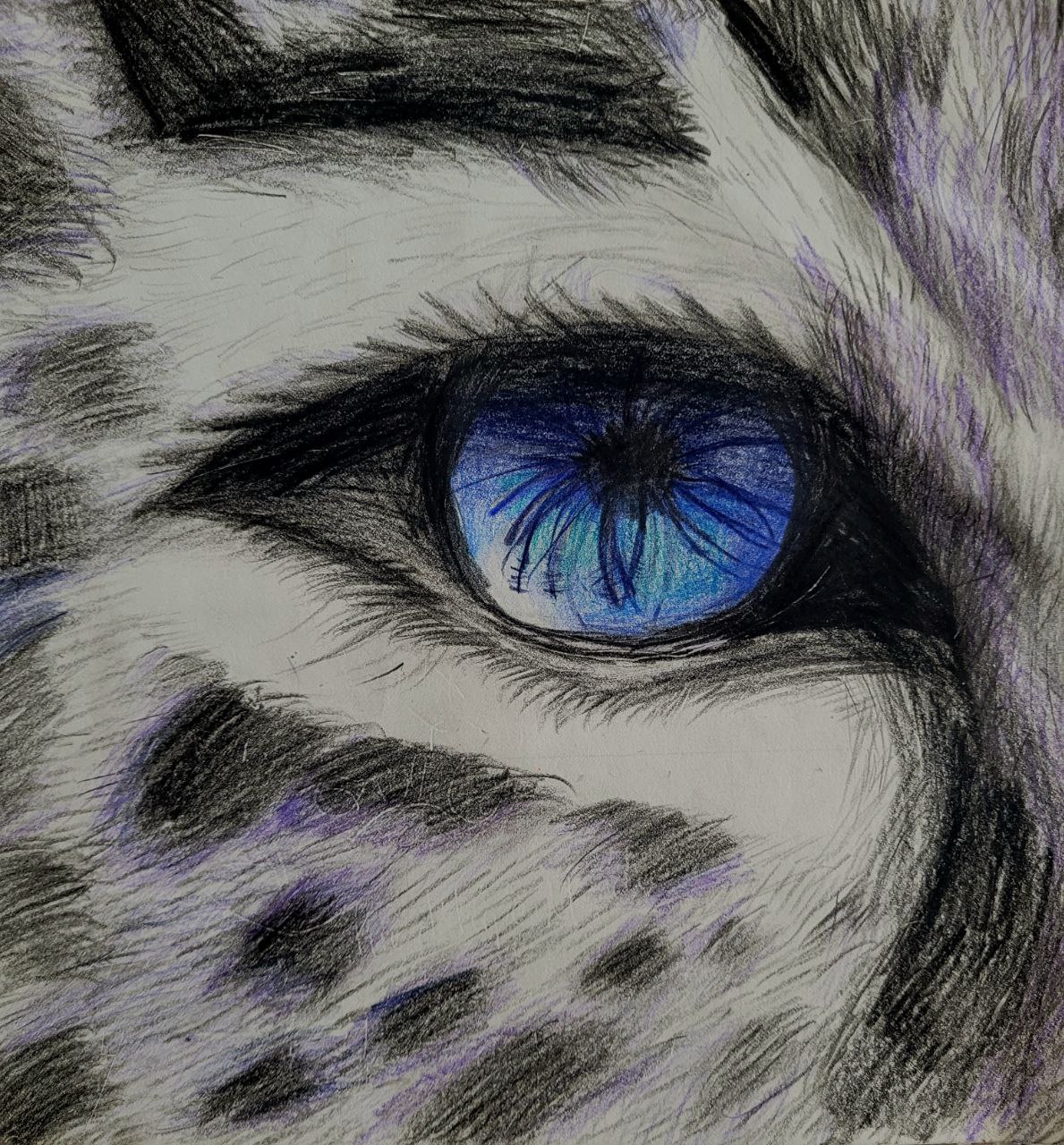
Animal Eyes
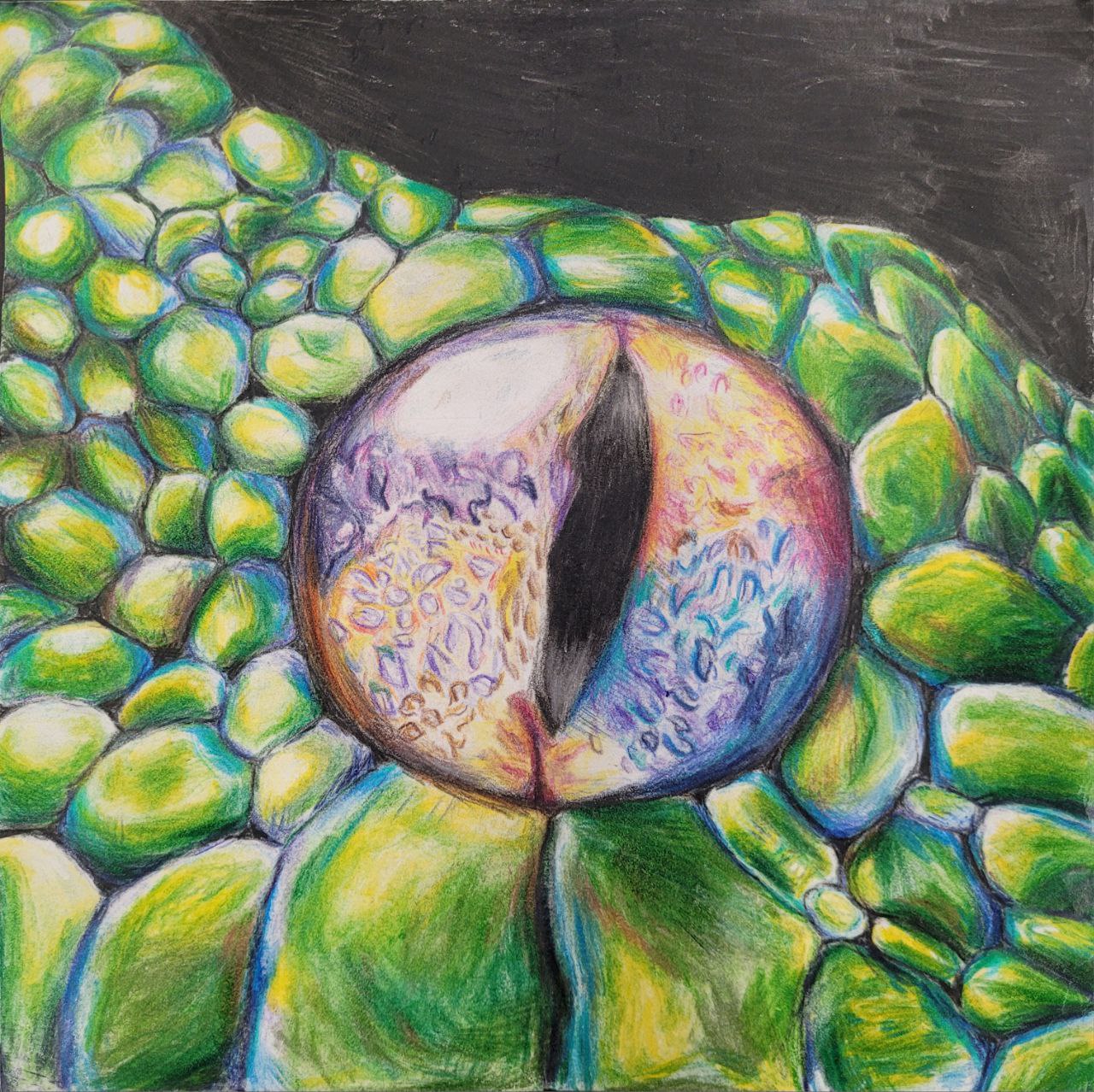
Students are introduced to the artist Chuck Close who is known for his use of the grid method throughout his art career. Students learn the benefits of using the grid method to help improve observational drawing skills and to enlarge or scale down a work of art. When you draw one square at a time, you are more likely to draw what you actually see, rather than what you think you see. Students are guided through the process of sketching using the grid method with a square drawing paper divided into 9 boxes. The corresponding square animal eye reference is also divided into a grid of 9 as well. Students get to choose from 16 different animal eyes (alligator, elephant, goat, snake, chameleon, lion, snow leopard, spider, owl, lizard, parrot, ostrich, frog, and cat). Students sketch the major lines and shapes lightly and then erase the grid lines. Next, soft application of lightest colors and undertones first is recommended. Followed by building of layers of color all over. Heavier pressure of color is then used along with the additions of closely observed details such as textures, shadows, and darker values. The Animal Eyes project is a great way for students to build patience in the artistic process and take pride in their observational drawing skills while drawing such intriguing vibrant subjects!

Student Work Examples
Snake Eye
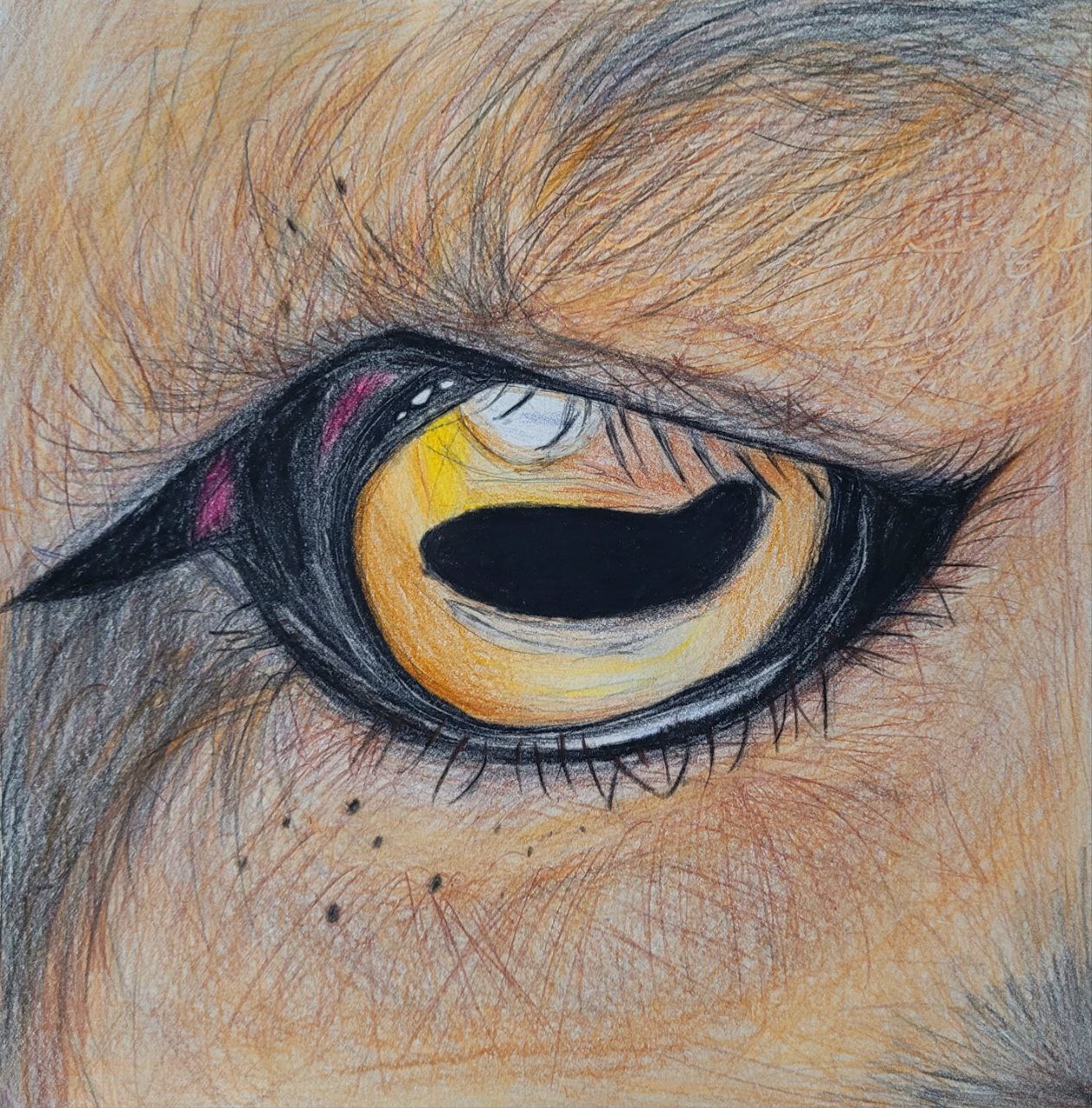
Goat Eye
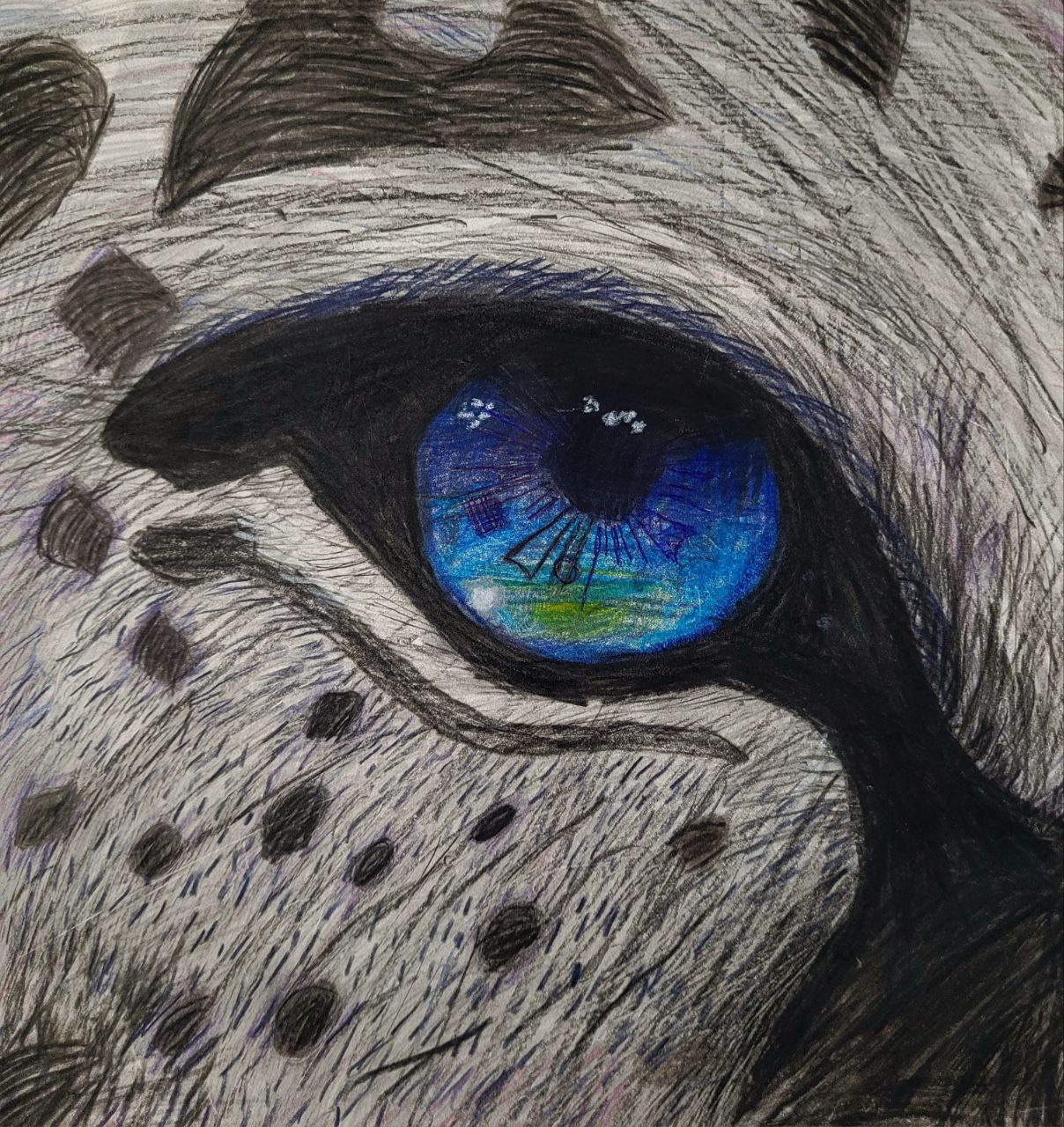
Snow Leopard Eye
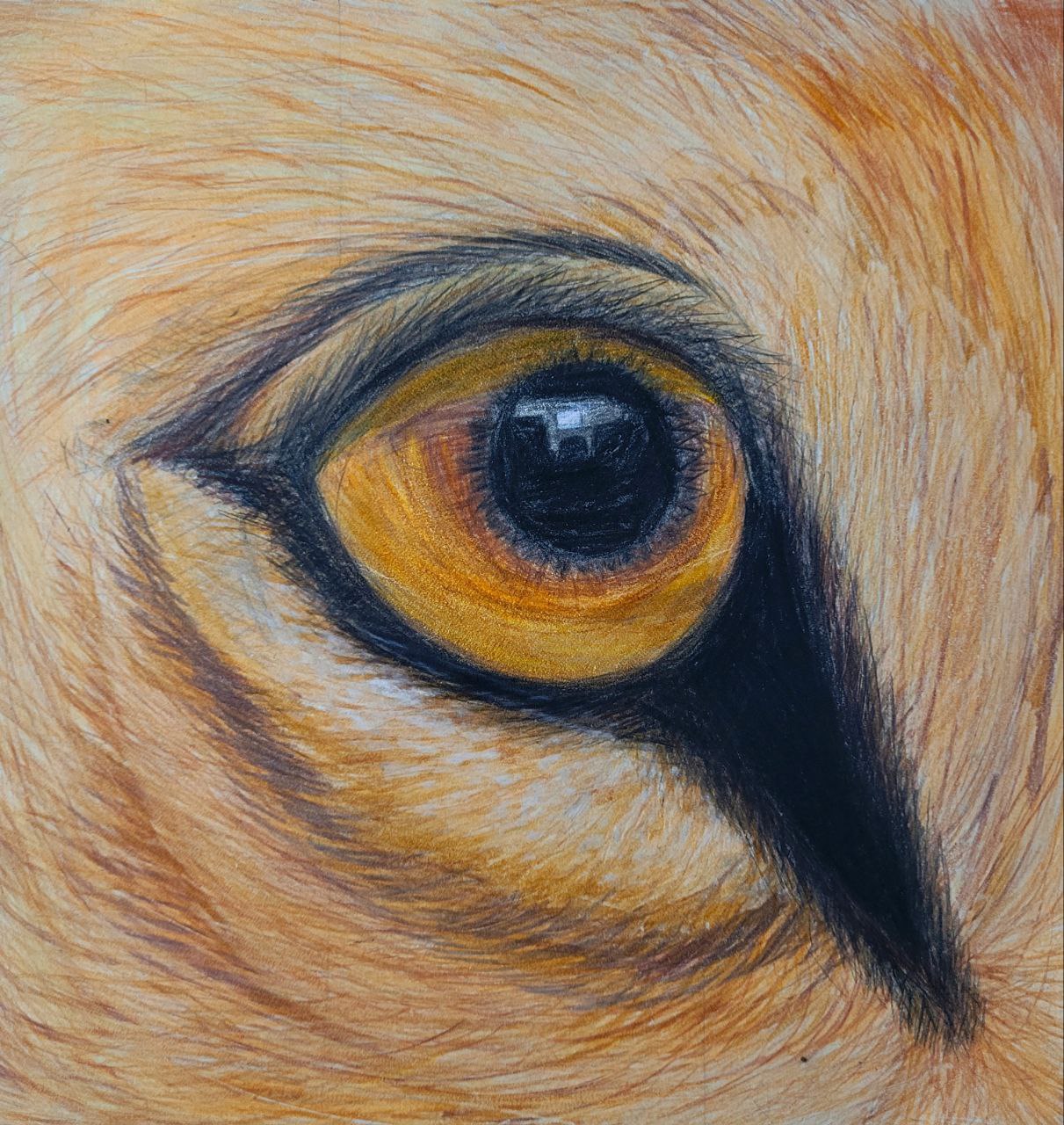
Lion Eye
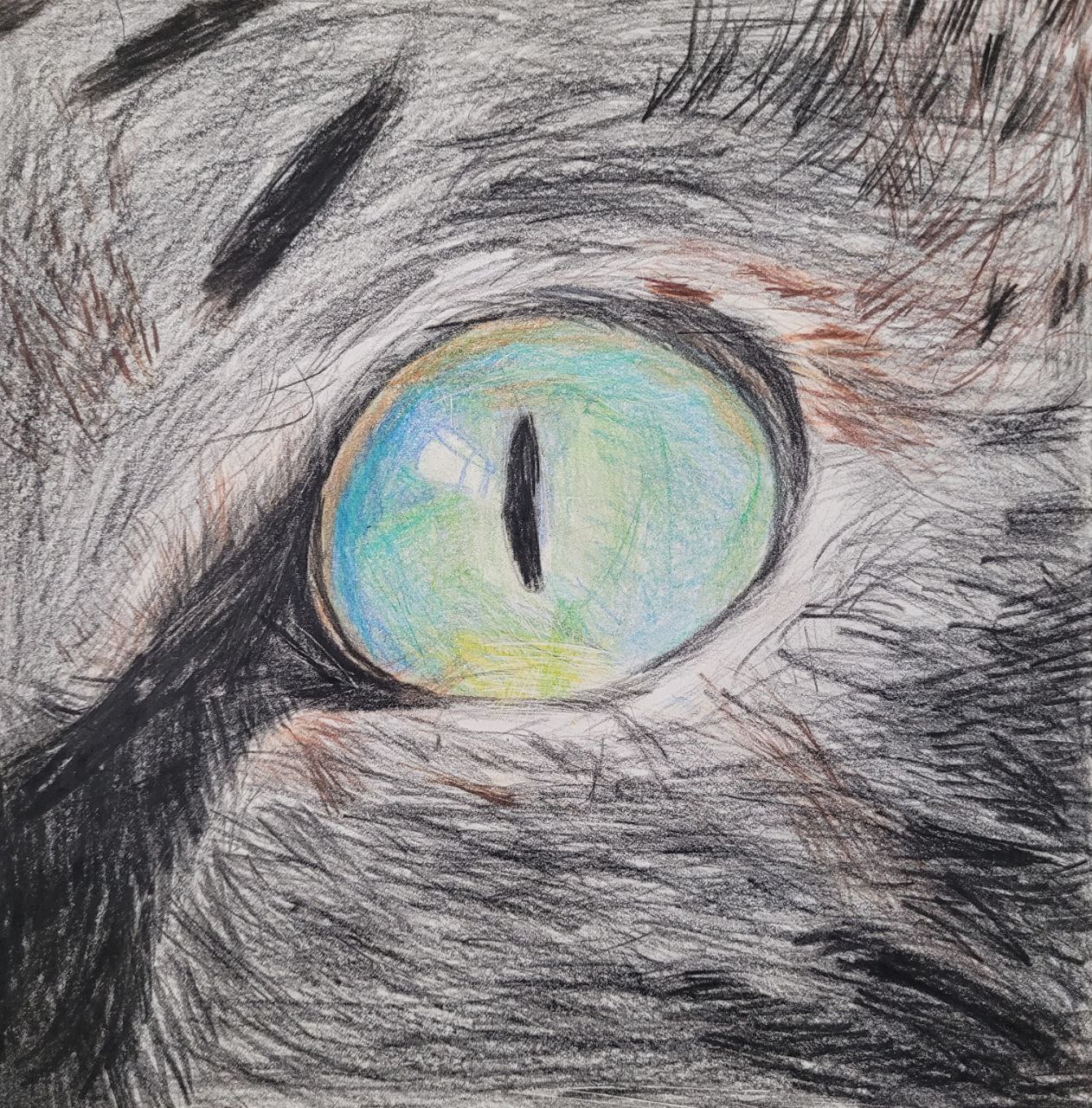
Cat Eye
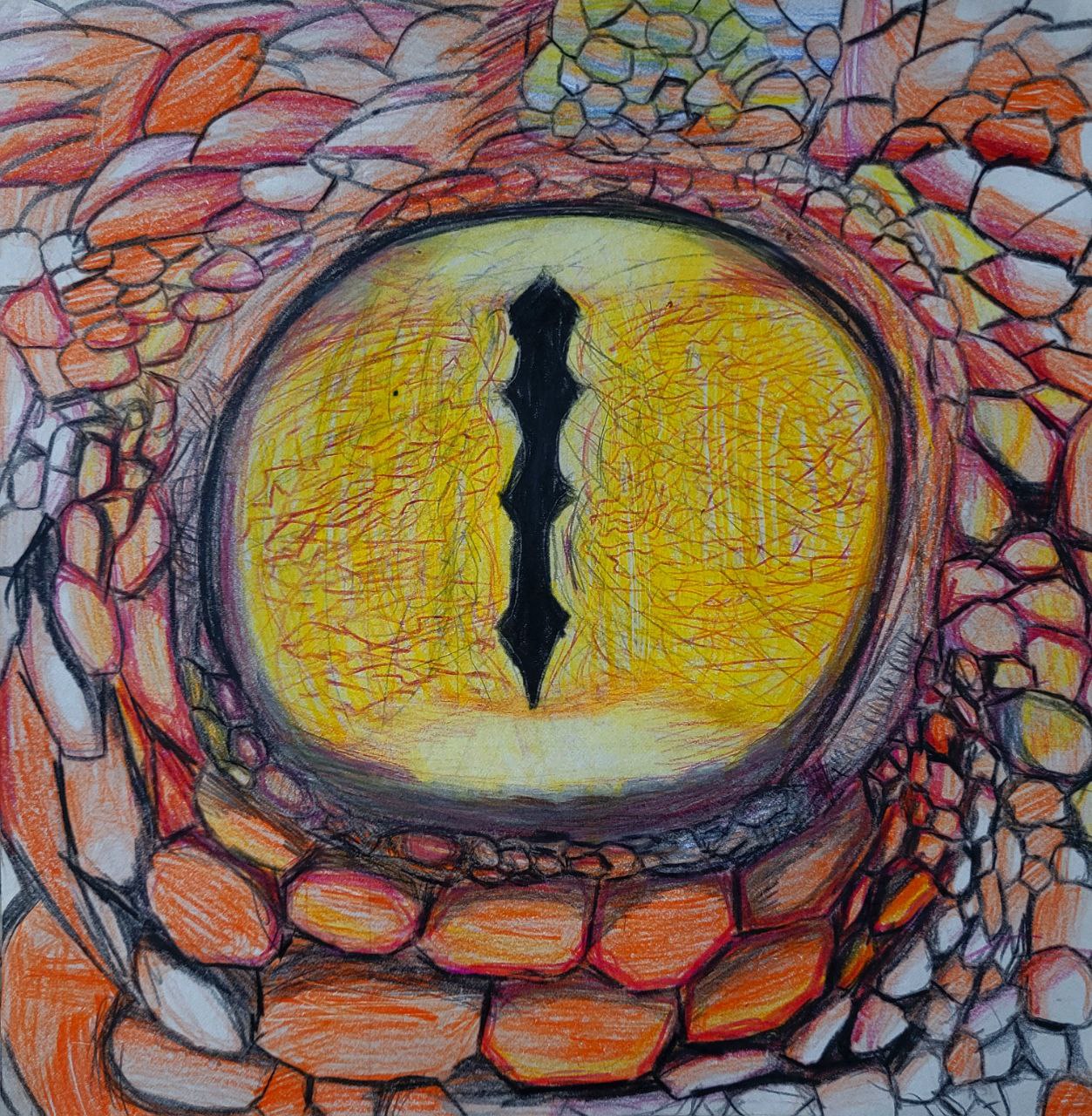
Lizard Eye
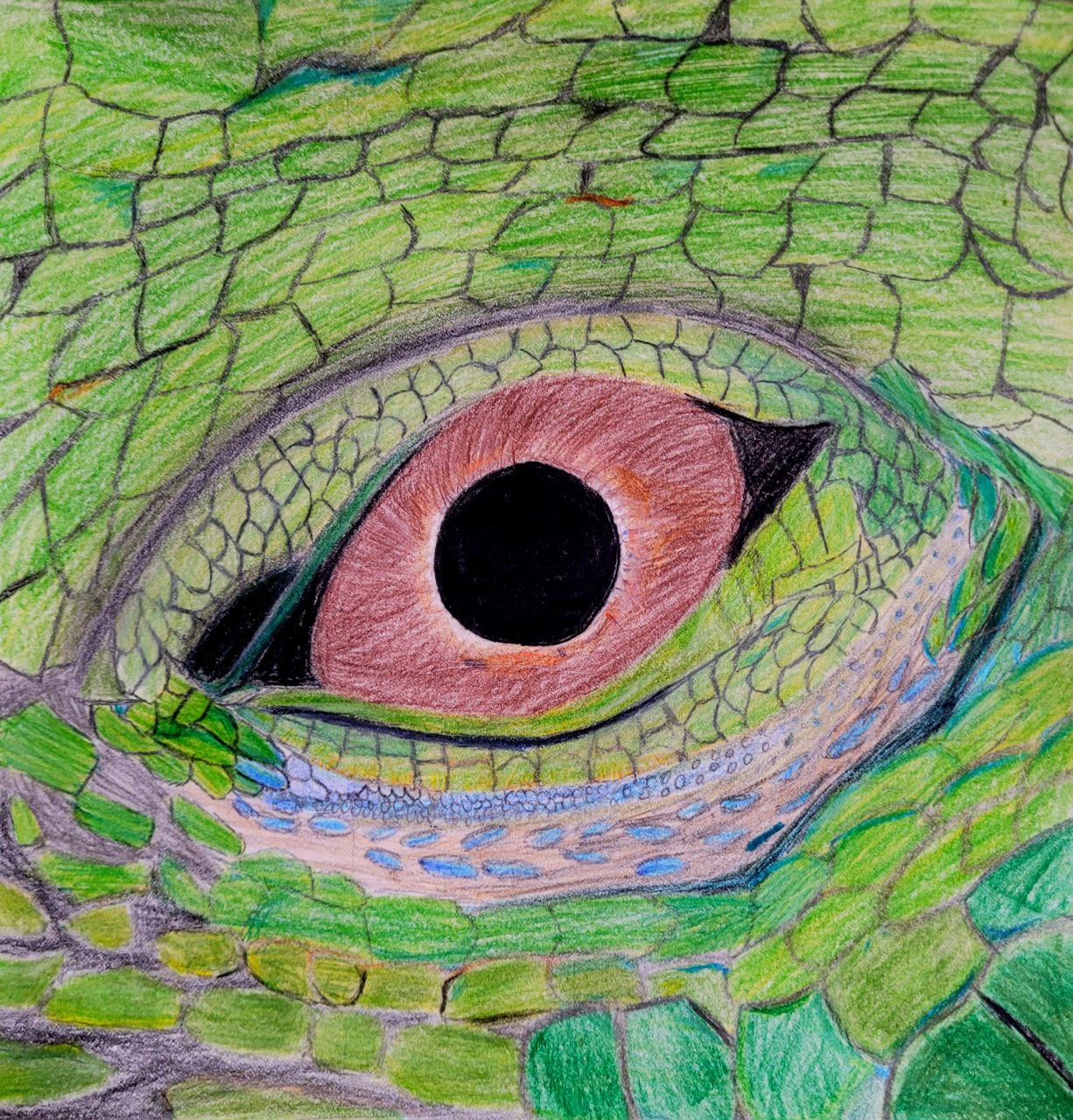
Iguana Eye
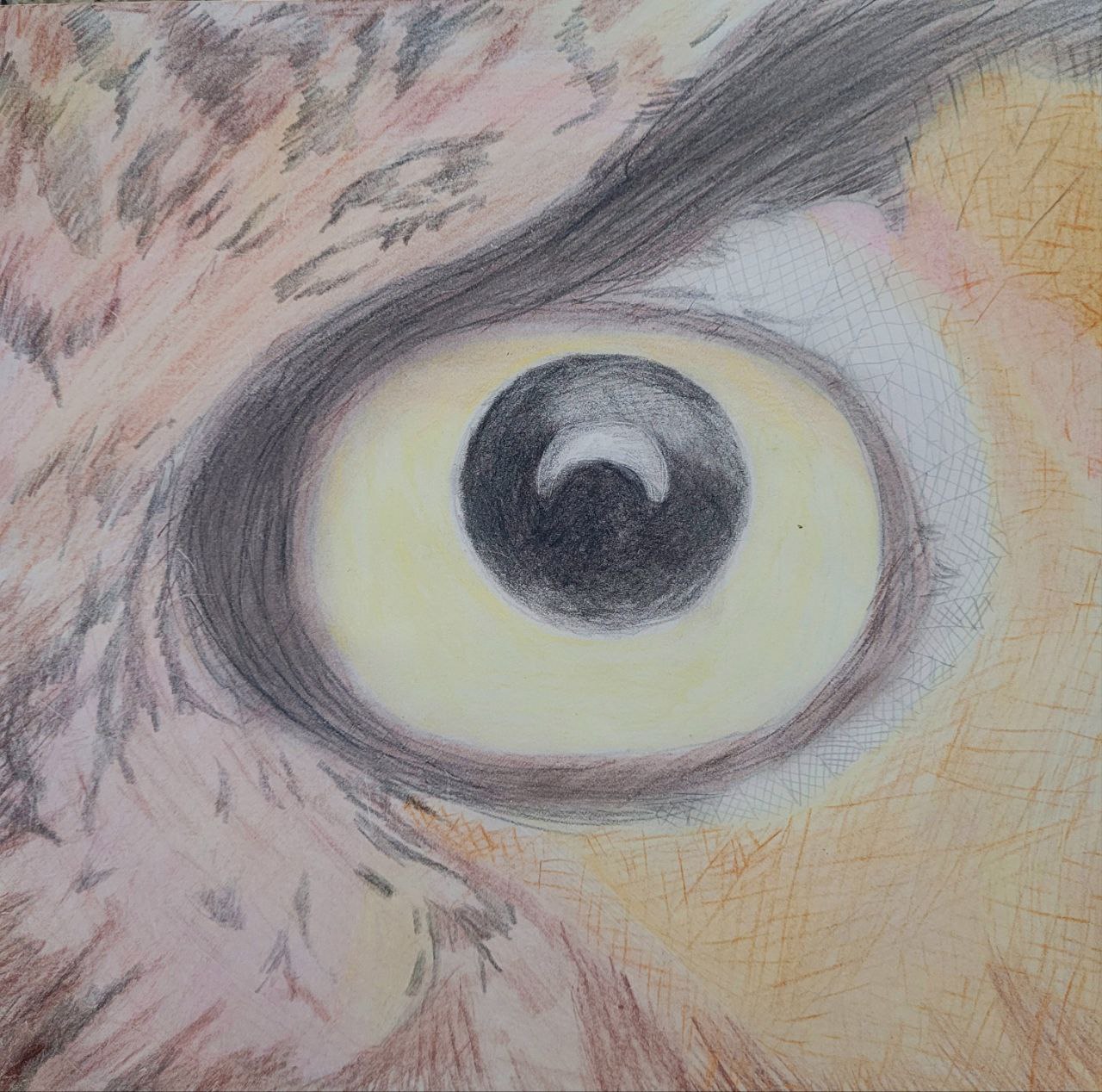
Owl Eye
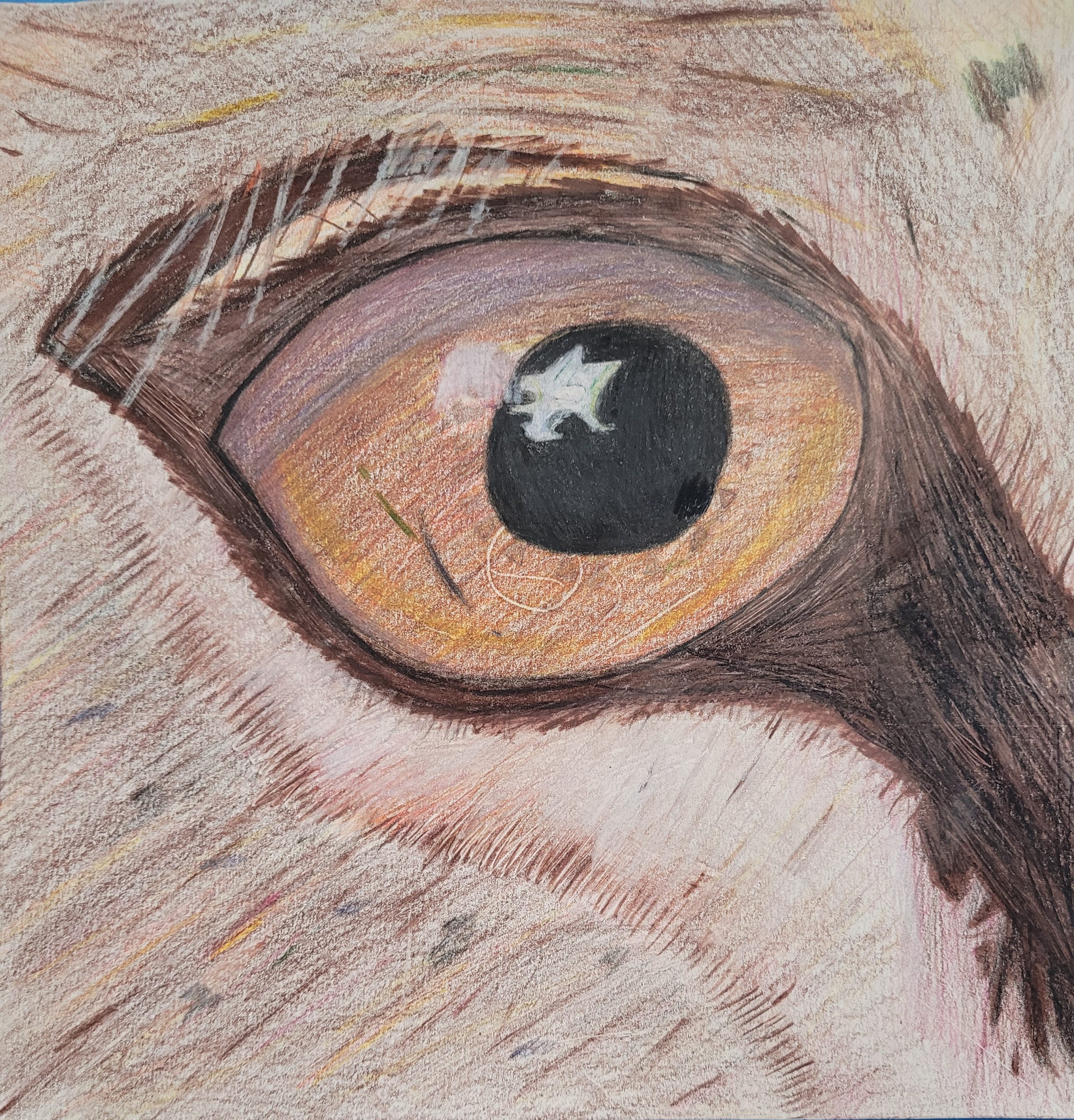
Lion Eye