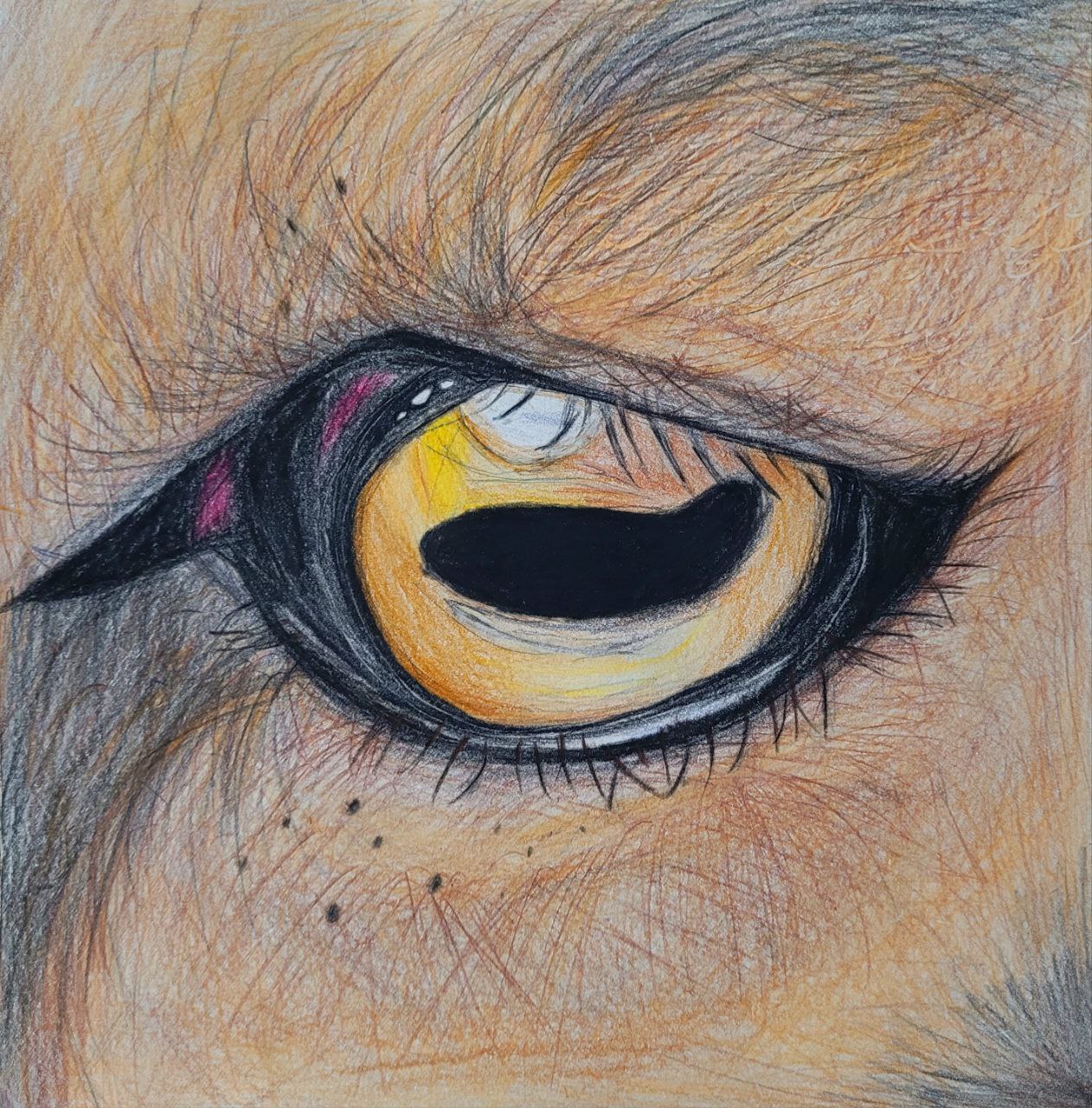
Artistic Growth of Students
Below you will find samples of student artwork that uncover remarkable improvement in their drawing skills. These students came into my class with varying degrees of experience, skills, and goals as evidenced by the beginning of the year surveys and preassessment observational drawings. Everyone had something to improve on and to gain as it is the first time that they’ve learned about or encountered art concepts such as perspective, the grid method, portraiture, face proportion, shading and color blending techniques. These drawing skills are critical to reaching 8th grade benchmarks in the Visual Arts Blueprint, which guides my instruction and art project planning. With my guidance and the projects that students created during their year of art with me, all of the students were able to gain specific technical drawings skills and take pride in their artistic vision.
Student A
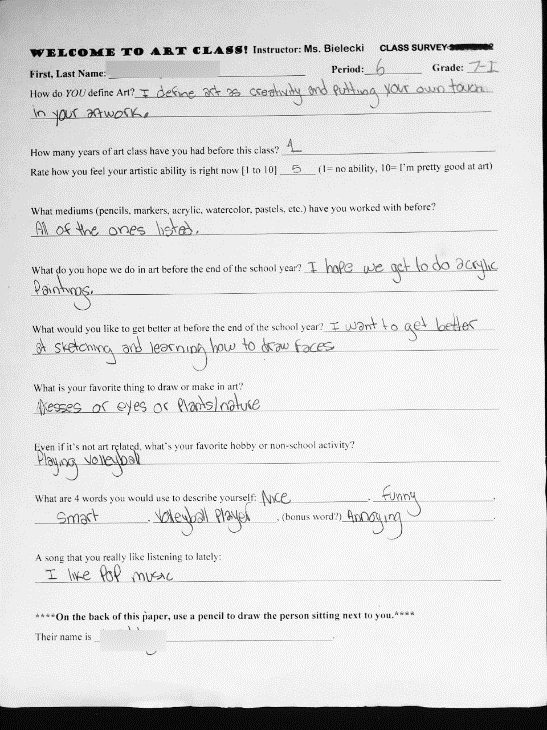
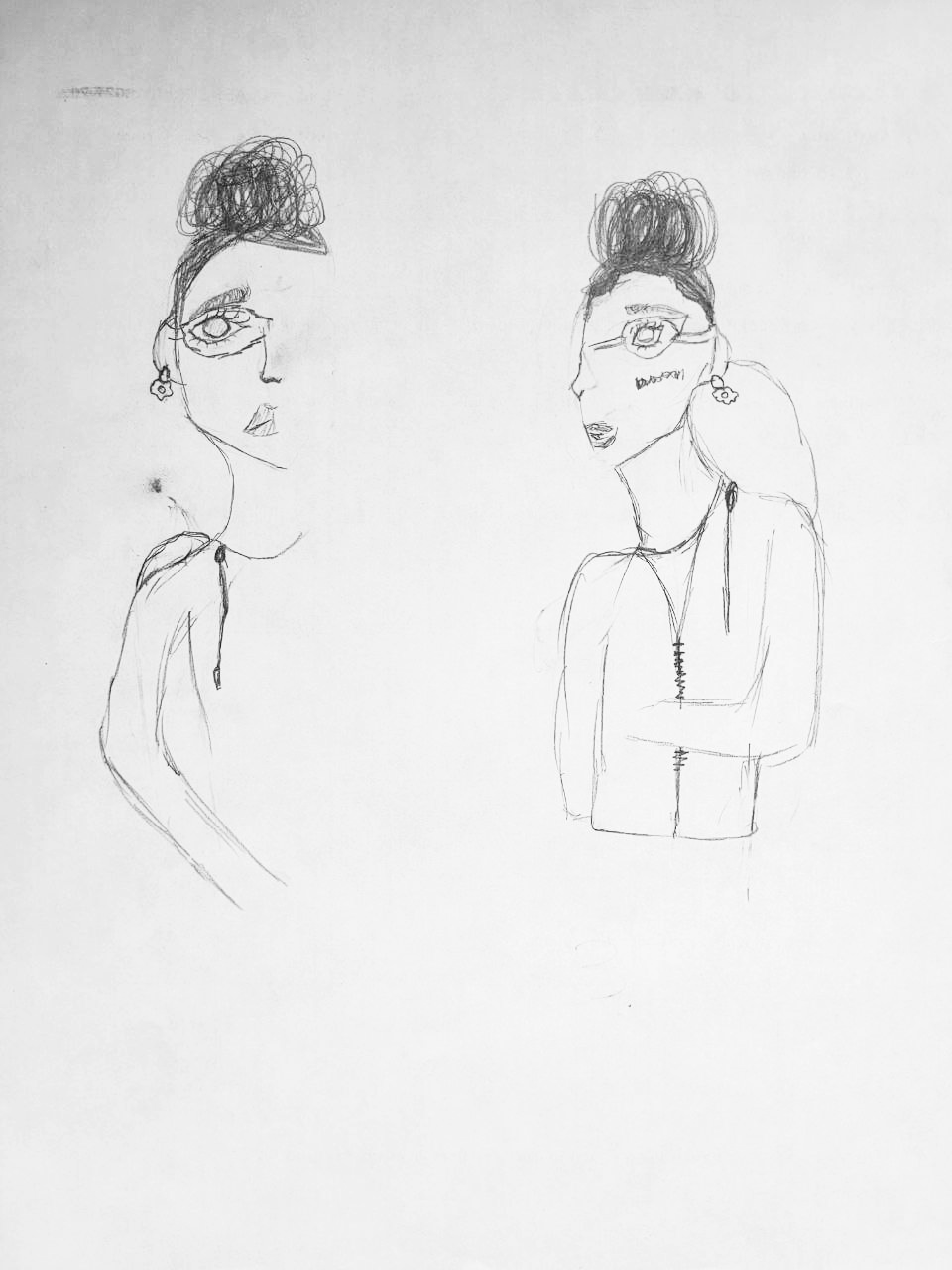
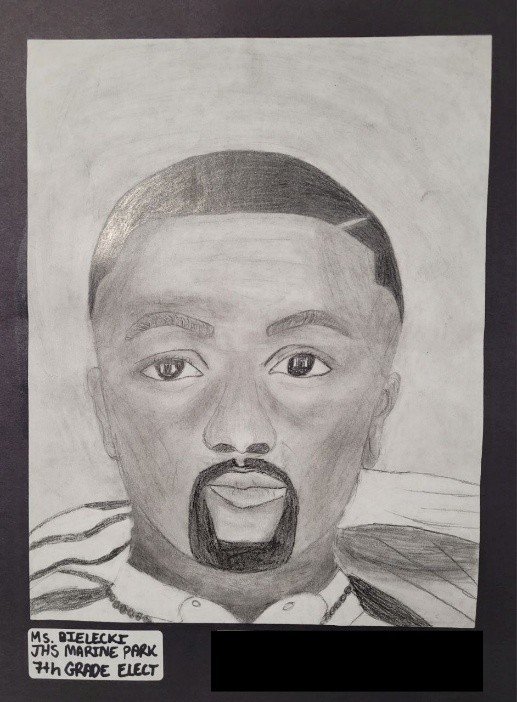
,Student A expressed in their beginning of the year survey that they wanted “to get better at sketching and learning how to draw faces.” They rated themselves a 5/10 in their artistic ability. They had only one year of art before my class. Their baseline drawing of their classmate shows some attention to detail with the depiction of accessories and hair texture, however they struggled with face proportion (accuracy, sizing, and placement of facial features) and drawing a person in quarter or side profile view. The eye and ear in the sketch on the right sketch are too high as well. Overall, the preassessment drawings are small, lack shading, and shows uncertainty in their observational drawing abilities. After I introduced step by step face proportion techniques in the middle of the year, Student A’s artist portrait of Kehinde Wiley shows an immense amount of improvement in portrait drawing! Before the Artist Portrait project, students were guided through a practice of face proportions. Then students applied the technique to make a general guideline sketch to which they adjusted according to what they observed in their reference photo. In Student A’s drawing, one can see that the eyes are drawn at the center of the face, which is a concept that I have stressed to students in class. Additionally, Student A drew the portrait large enough to fill the paper and depicted a range of values in their drawing using value techniques such as blending with a stump and smudging with finger. Student A took care to draw the shadows and highlights in the face, neck, and eyes. While there are areas for improvement in the nostrils, facial hair, and mouth, Student A has made strides in their observational drawing skills. With my assistance and guidance, Student A’s first time drawing a portrait from observation was a success. In addition, Student A’s realistic gift bow drawing later on in the year, depicts even more progress in shading techniques and observational drawing with color pencil layering and blending.
Student A Work and Supporting Materials
Beginning of the Year Survey
Preassessment Portrait Drawing
Artist Portrait of Kehinde Wiley
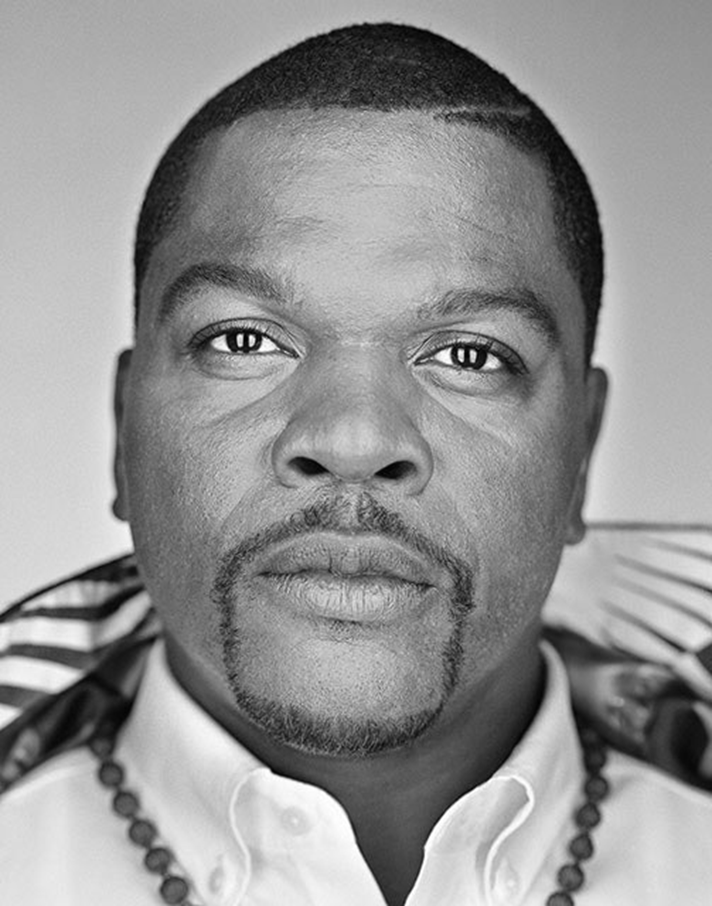
Reference Photo of Kehinde Wiley
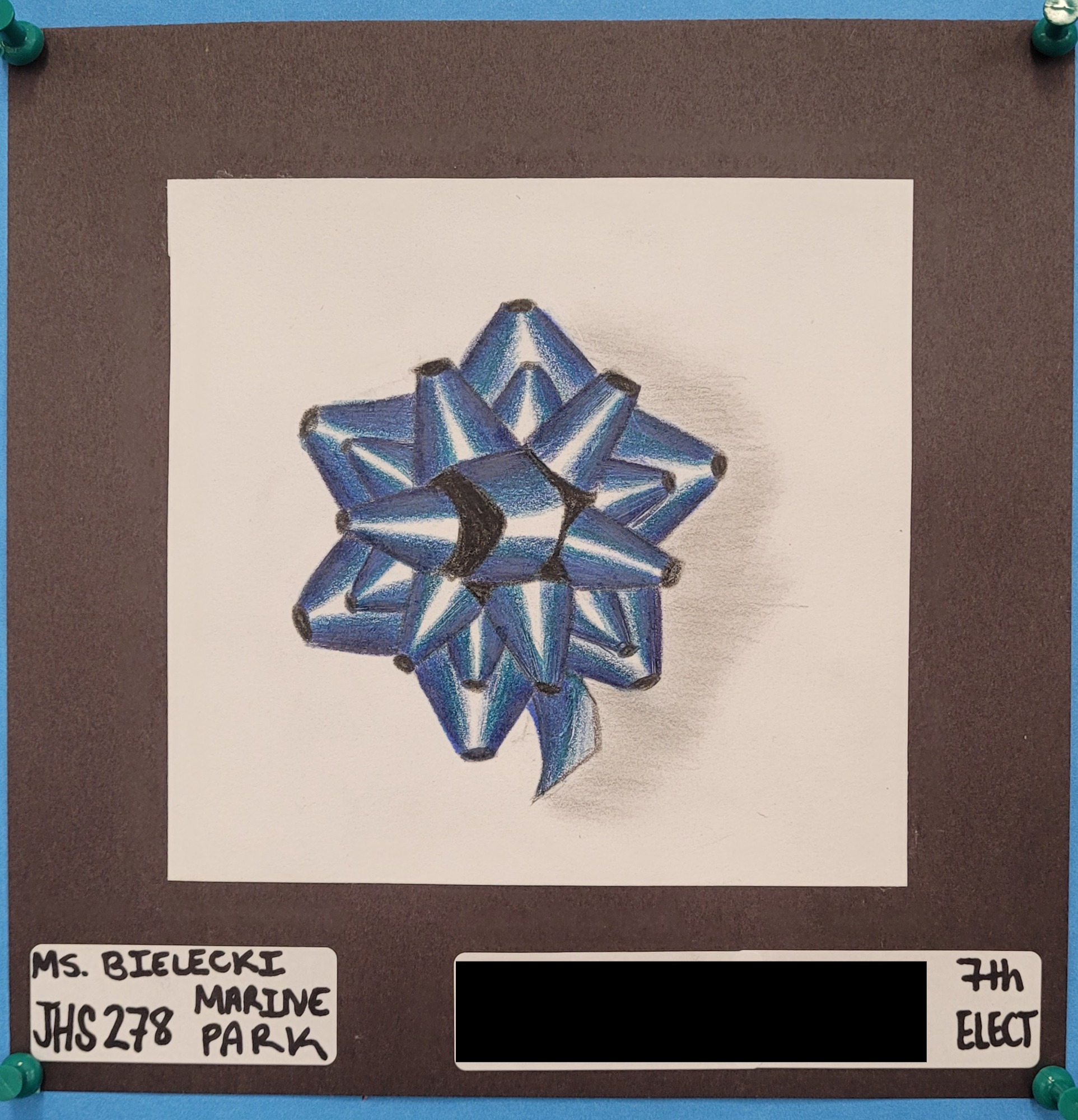
Realistic Gift Bow
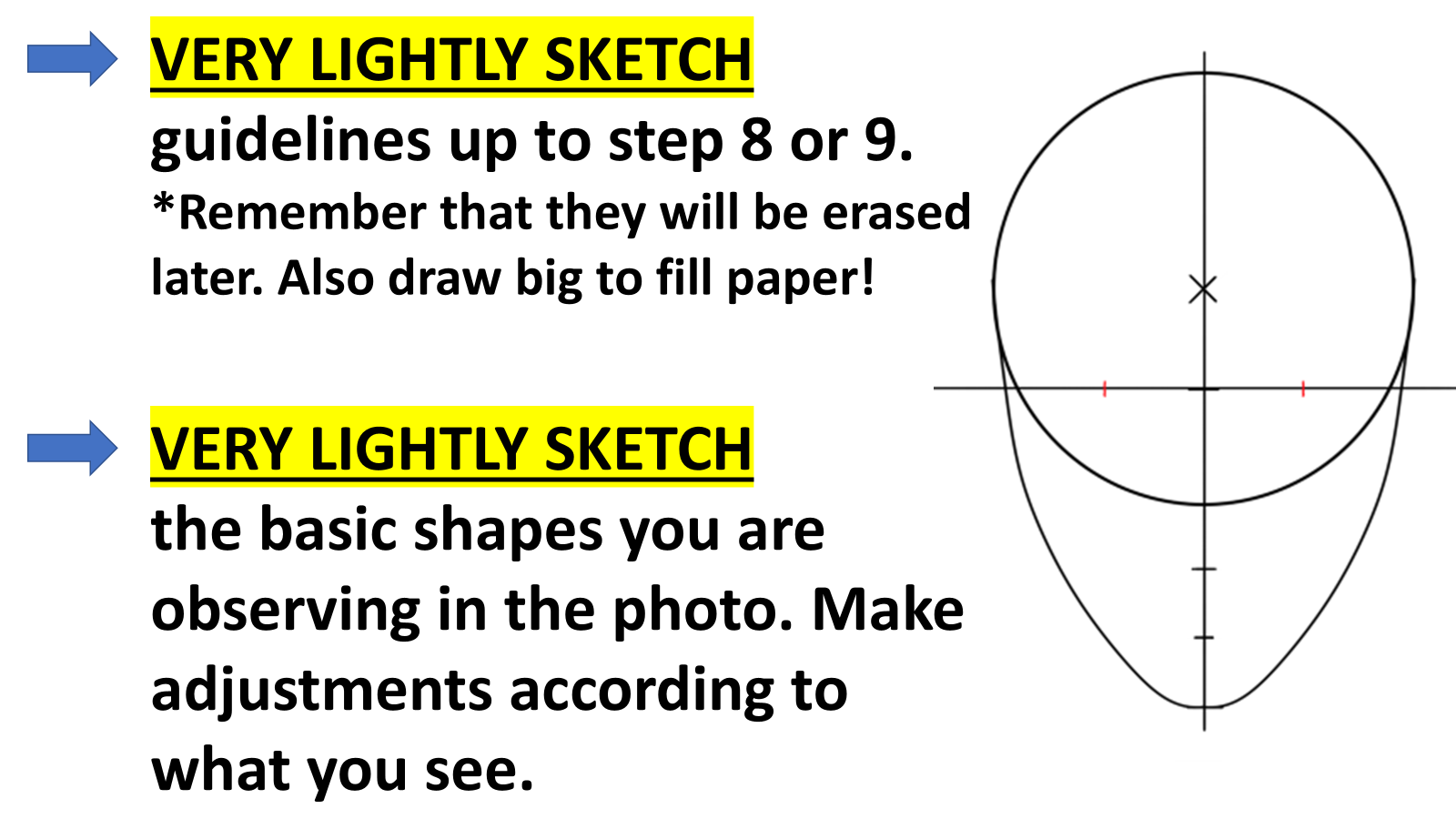
Face Proportion Guideline for Artist Portrait
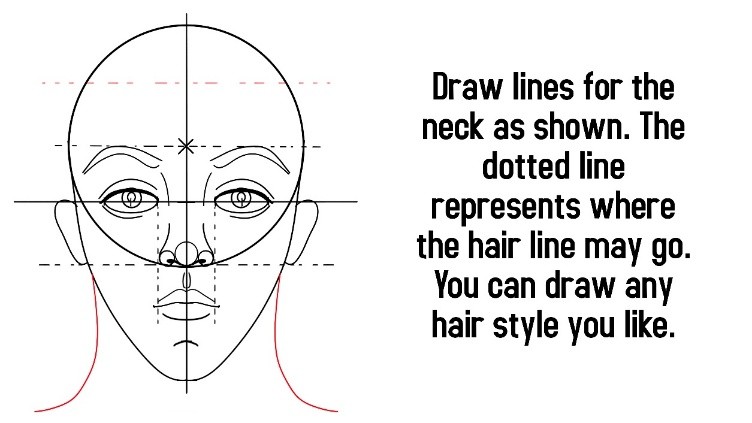
Step from Face Proportion Guide
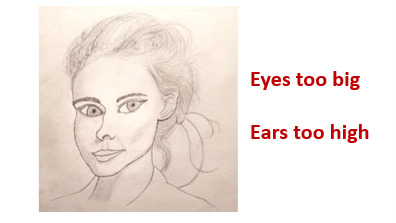
Portraiture Advice: What to Avoid
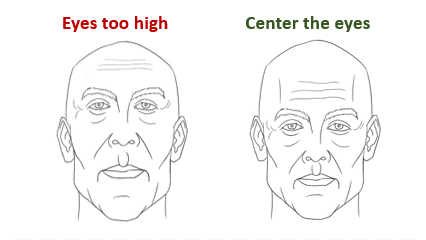
Portraiture Advice: What to Avoid
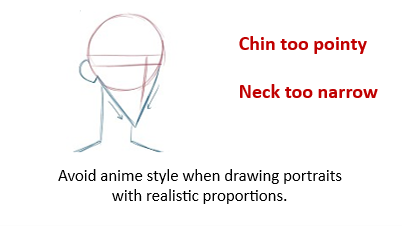
Portraiture Advice: What to Avoid
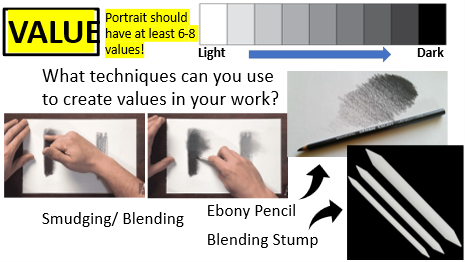
Value Techniques
Student B
Student B’s survey reflected some more experience with art than others; they had 3 years of art previously, rated themselves a 7.5/10 in artistic ability and enjoyed drawing faces. Student B’s preassessment portrait drawings demonstrated some knowledge of face proportion techniques; however, anime style was present: the eyes were a bit large, chin was pointy, and the neck very thin. After practicing face proportion and value techniques, these facial inaccuracies are not seen in Student B’s artist portrait of Wendy Red Star! Student B’s understanding of face proportion techniques, shading, and depiction of details are excellent. Subtle shadows are created with a blending stump in the face and the neck, highlights are shown in the eyes, strands of hair flow naturally over the shoulders, several values are shown, patterns of the blouse are present, and there is even wood grain in the background. Student B trusted in me and sought out advice as they were drawing and I witnessed their development of determination, patience, and attention to detail. Student B’s one-point perspective room goes beyond the step-by-step instructions and demonstrates understanding of how to draw a room in one-point perspective. Student B’s additions include a chair, depiction of the night sky in the window, a welcome mat, another door, clothes and a purse hanging, pendant lighting, a hung landscape painting, and candle and vase on the table. Student B added some shading as well. All the lines appropriately line up with the vanishing point. Student B really took time and effort to develop their surreal room idea as evidence by their sketchbook drawings. I believe they were inspired by the outdoors/nature-indoors and multiple settings surreal themes as de Chirico & Magritte have done in their work. Overall, there is lots of creativity and technical ability displayed in Student B’s work!
Student B Work and Supporting Materials
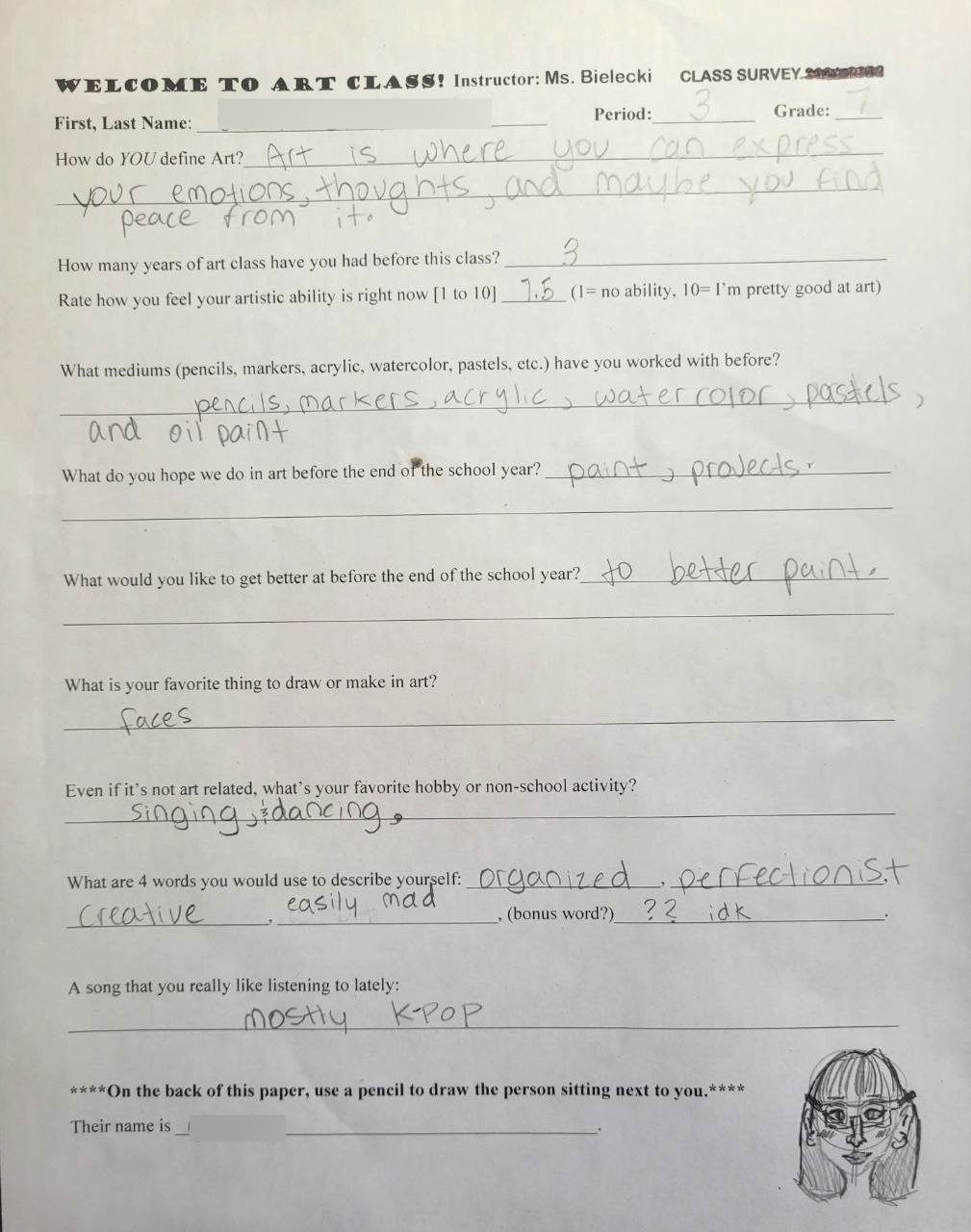
Beginning of the Year Survey
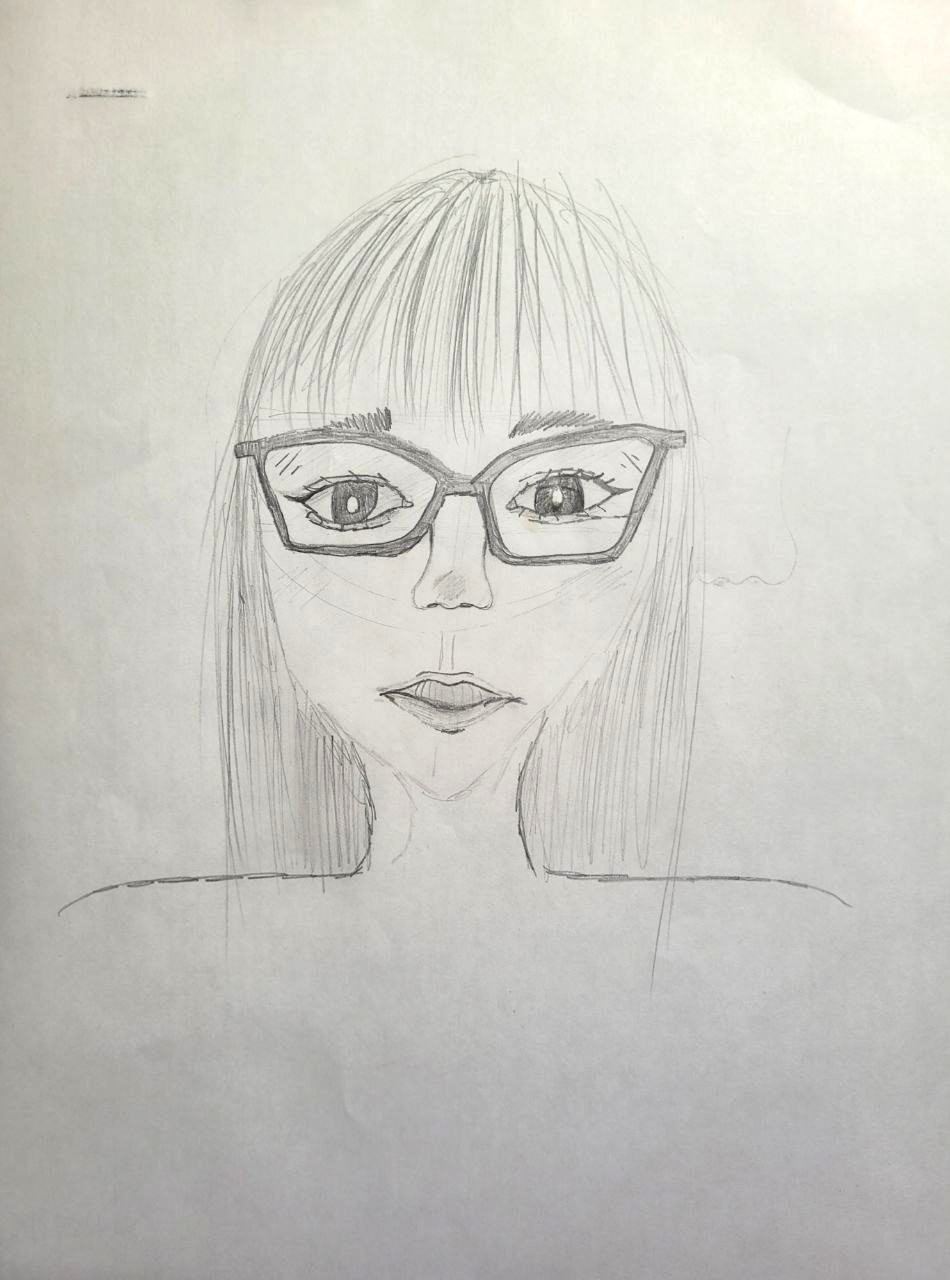
Preassessment Portrait
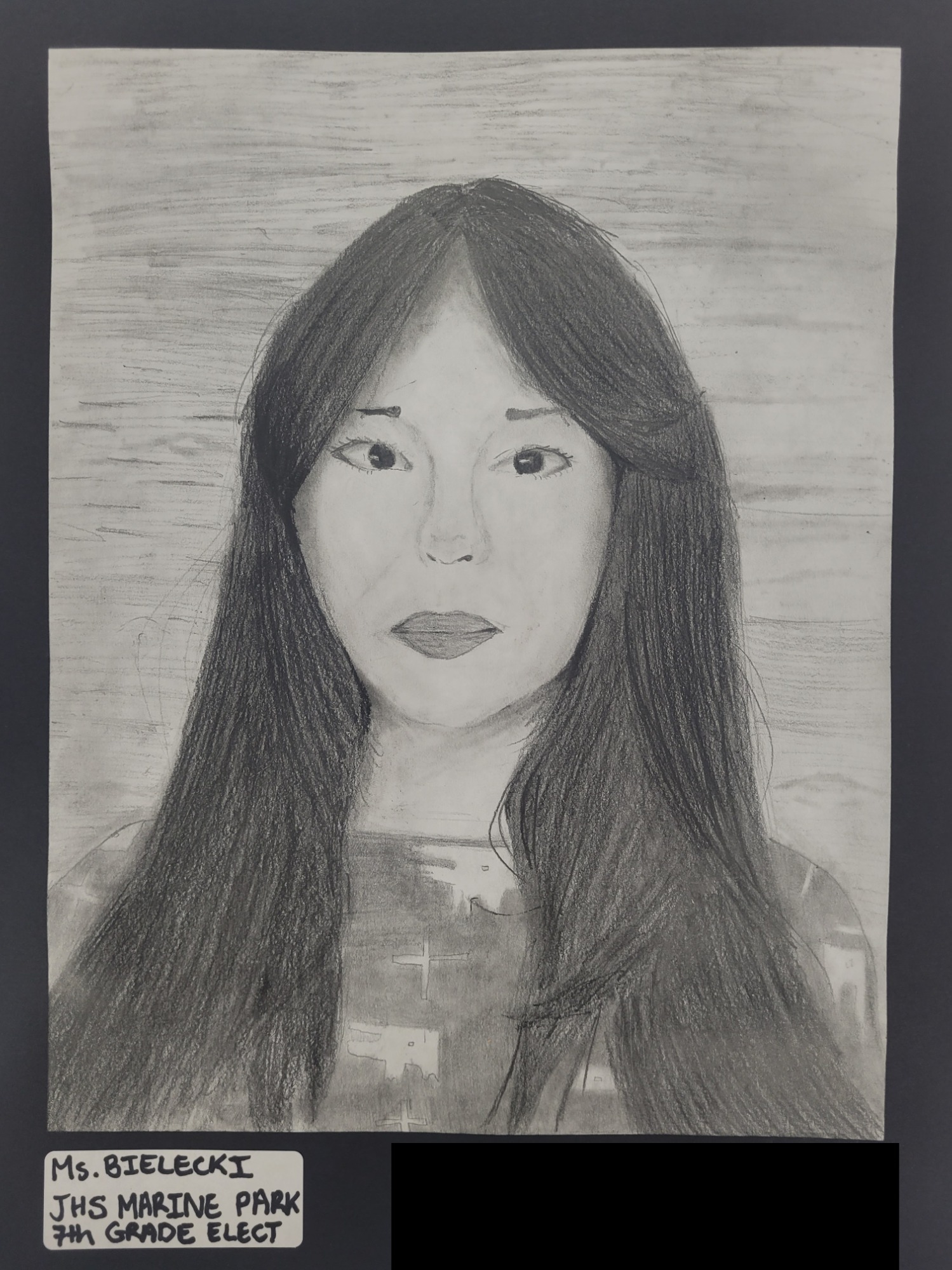
Artist Portrait of Wendy Red Star
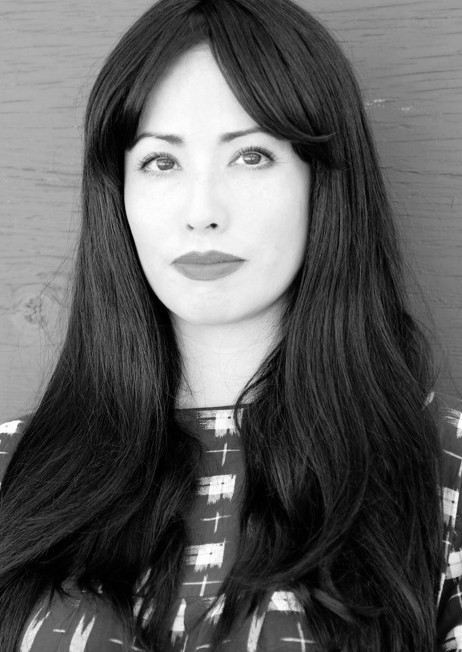
Reference of Wendy Red Star
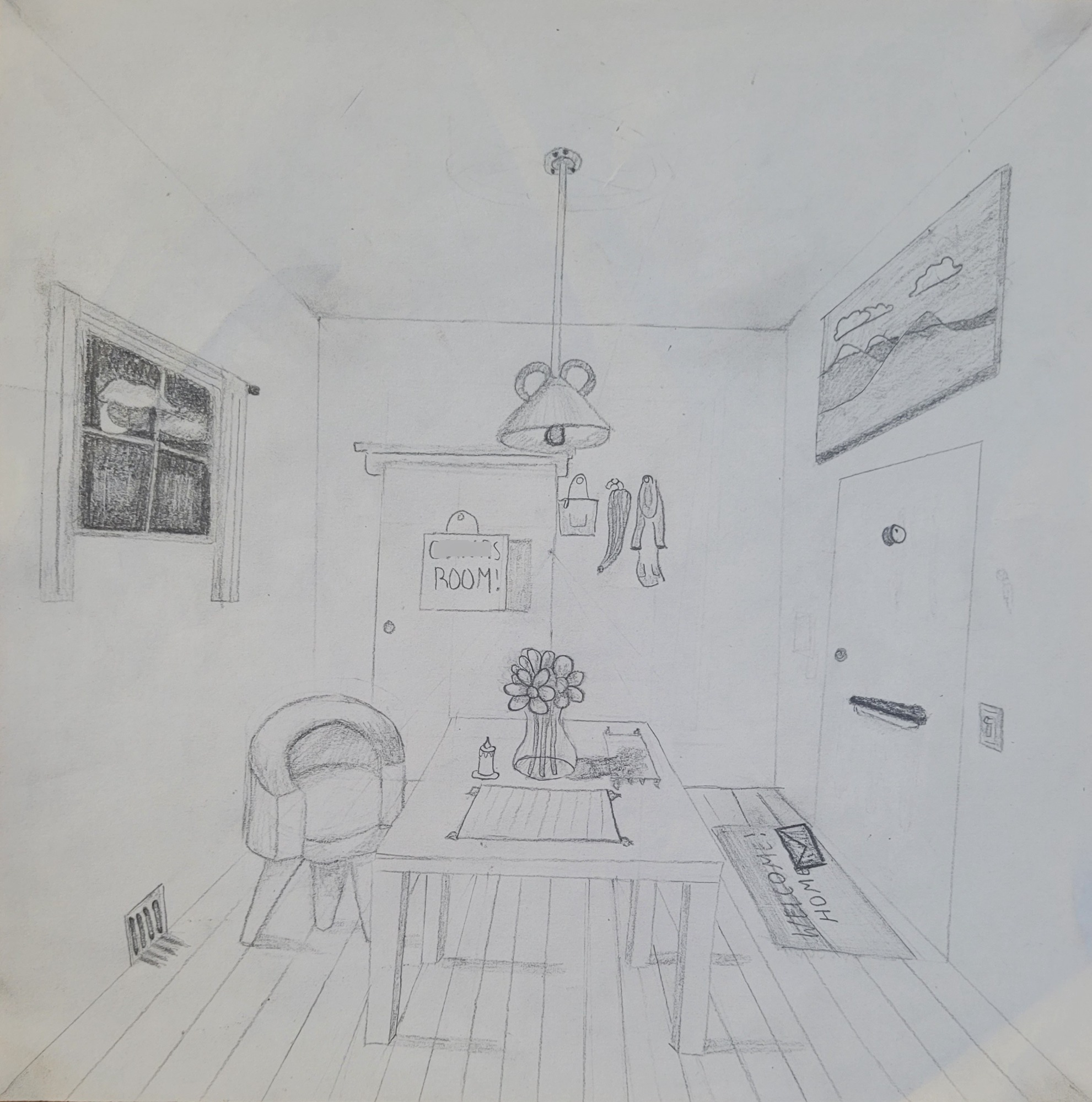
One-Point Perspective Room
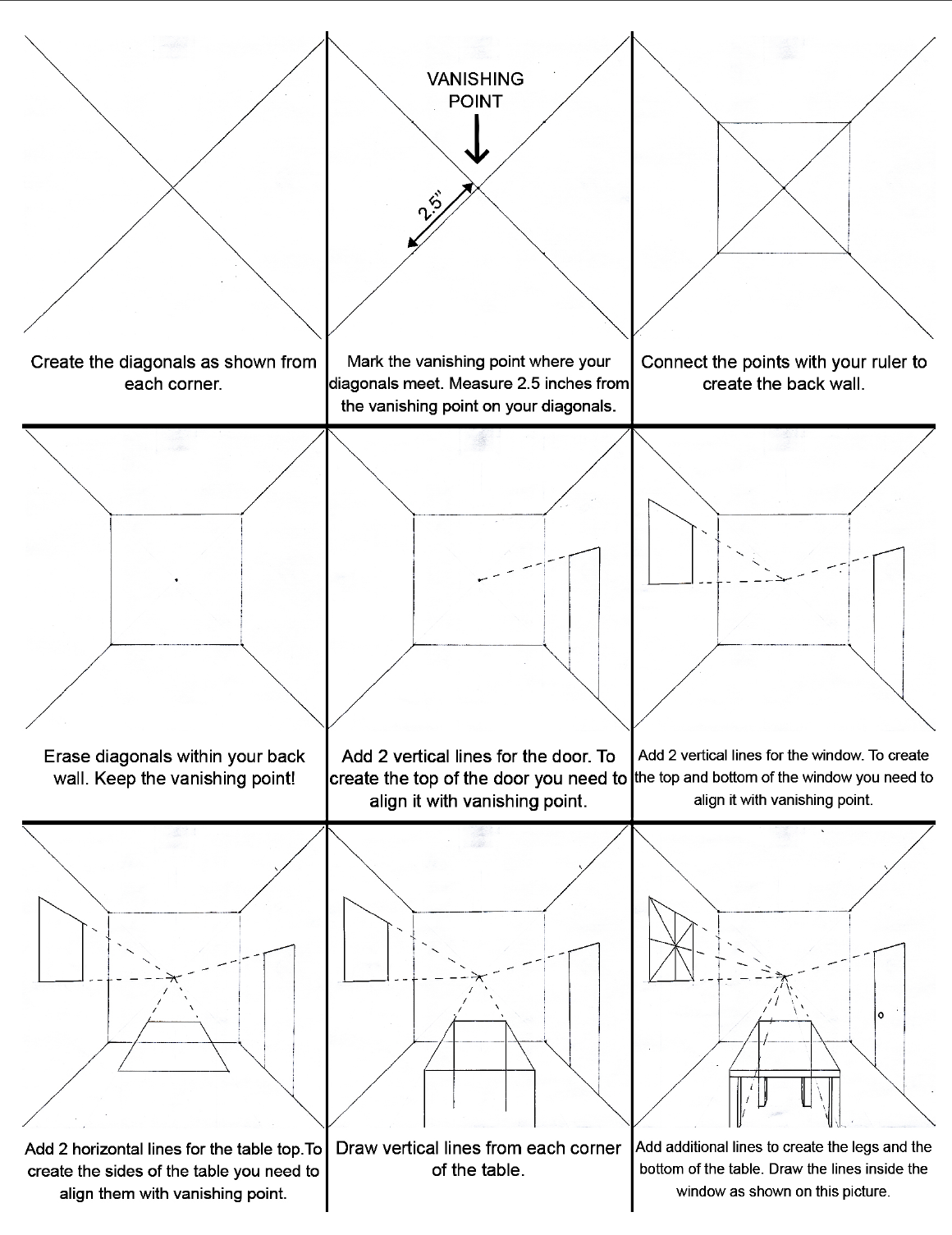
Guide for One-Point Perspective Room 1
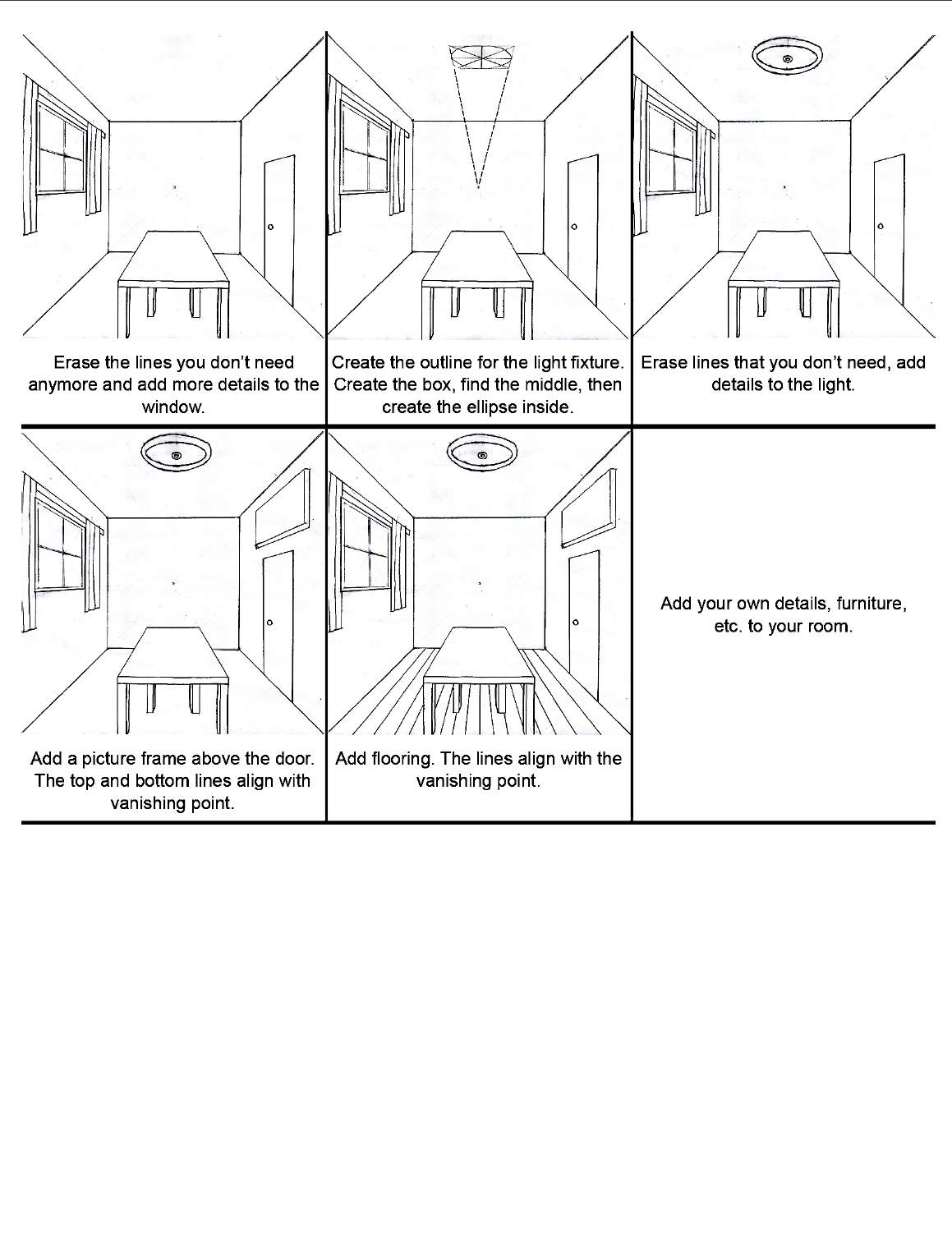
Guide for One-Point Perspective Room 2
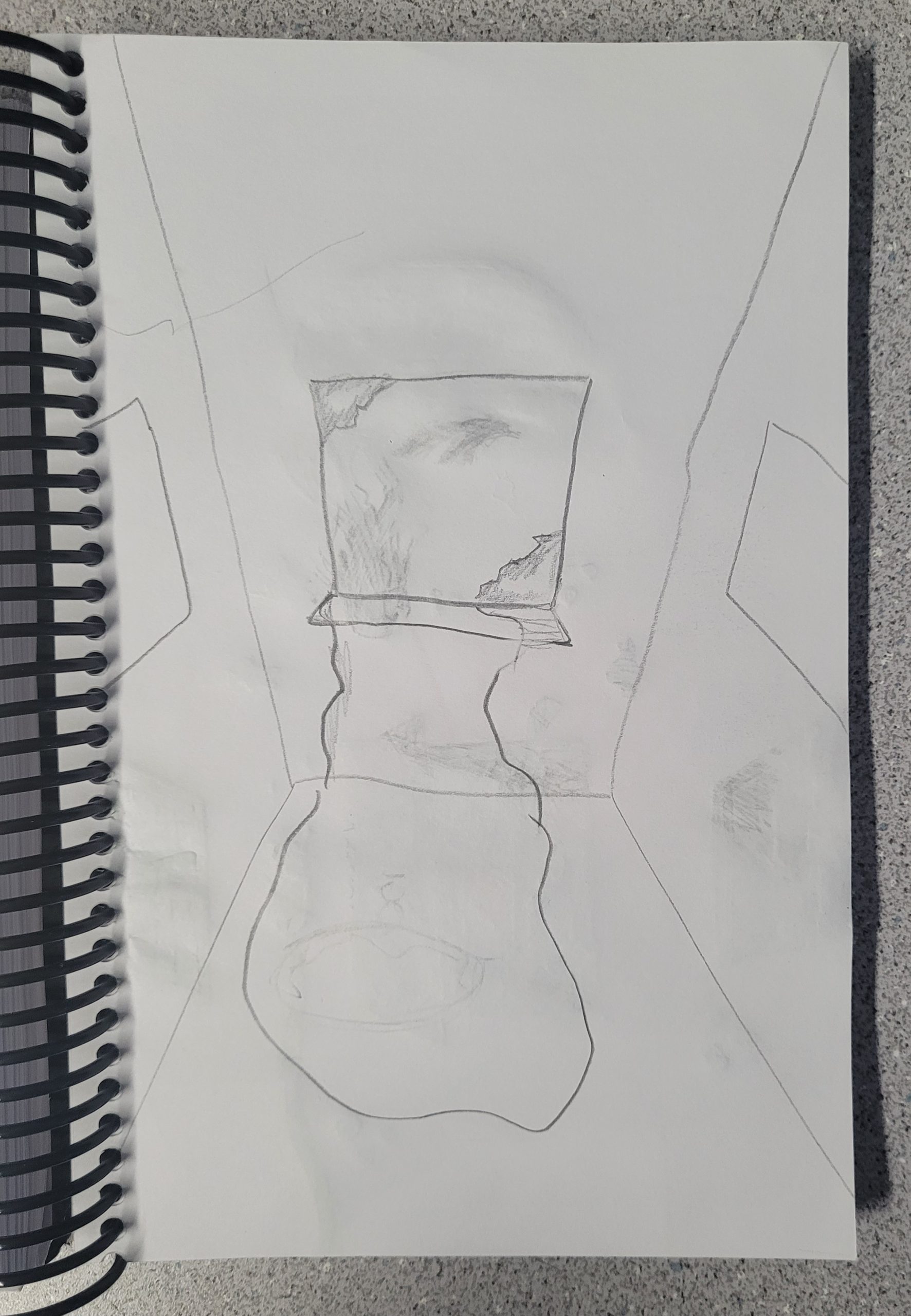
Surreal Room Sketch
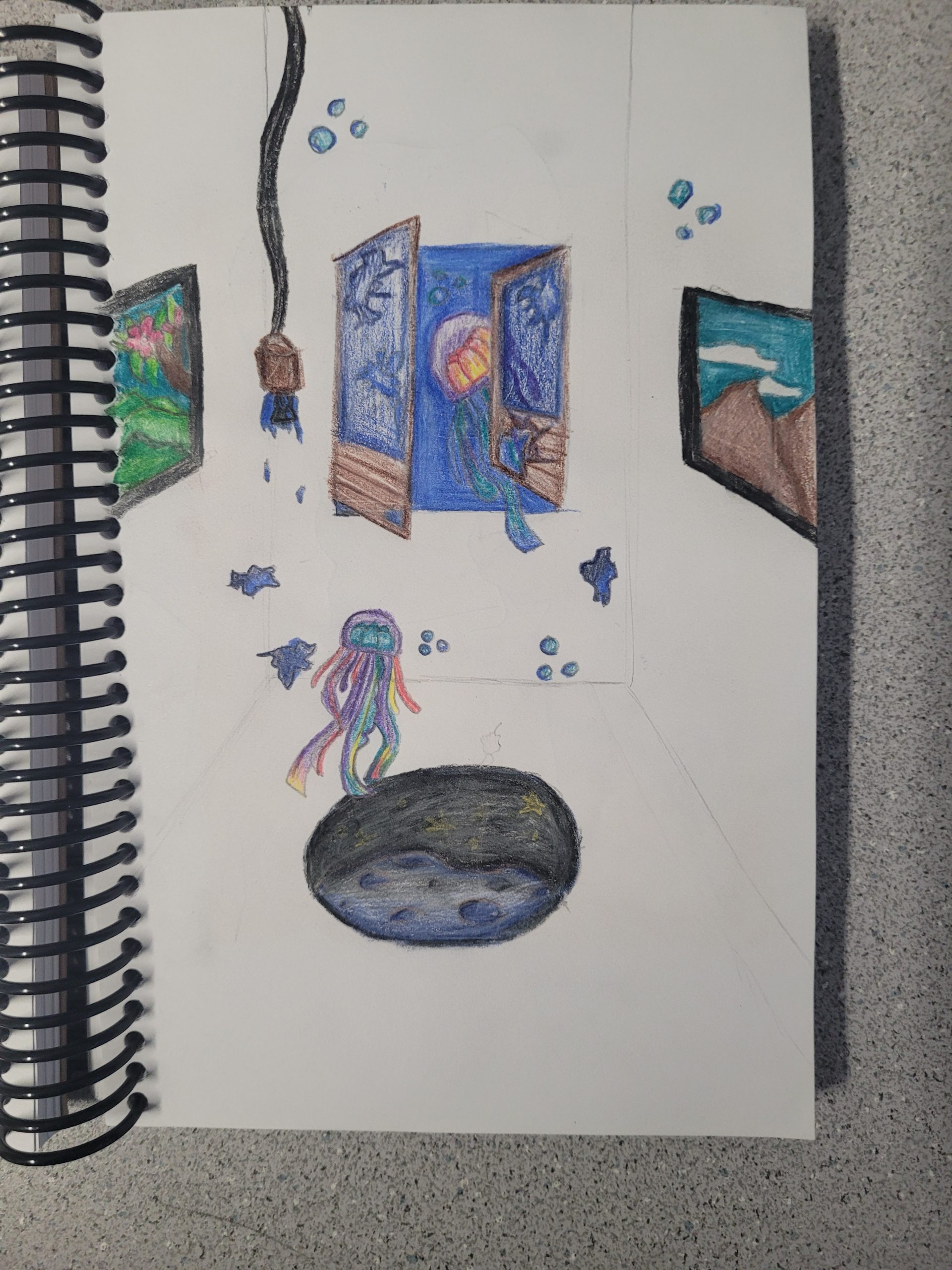
Surreal Room Sketch
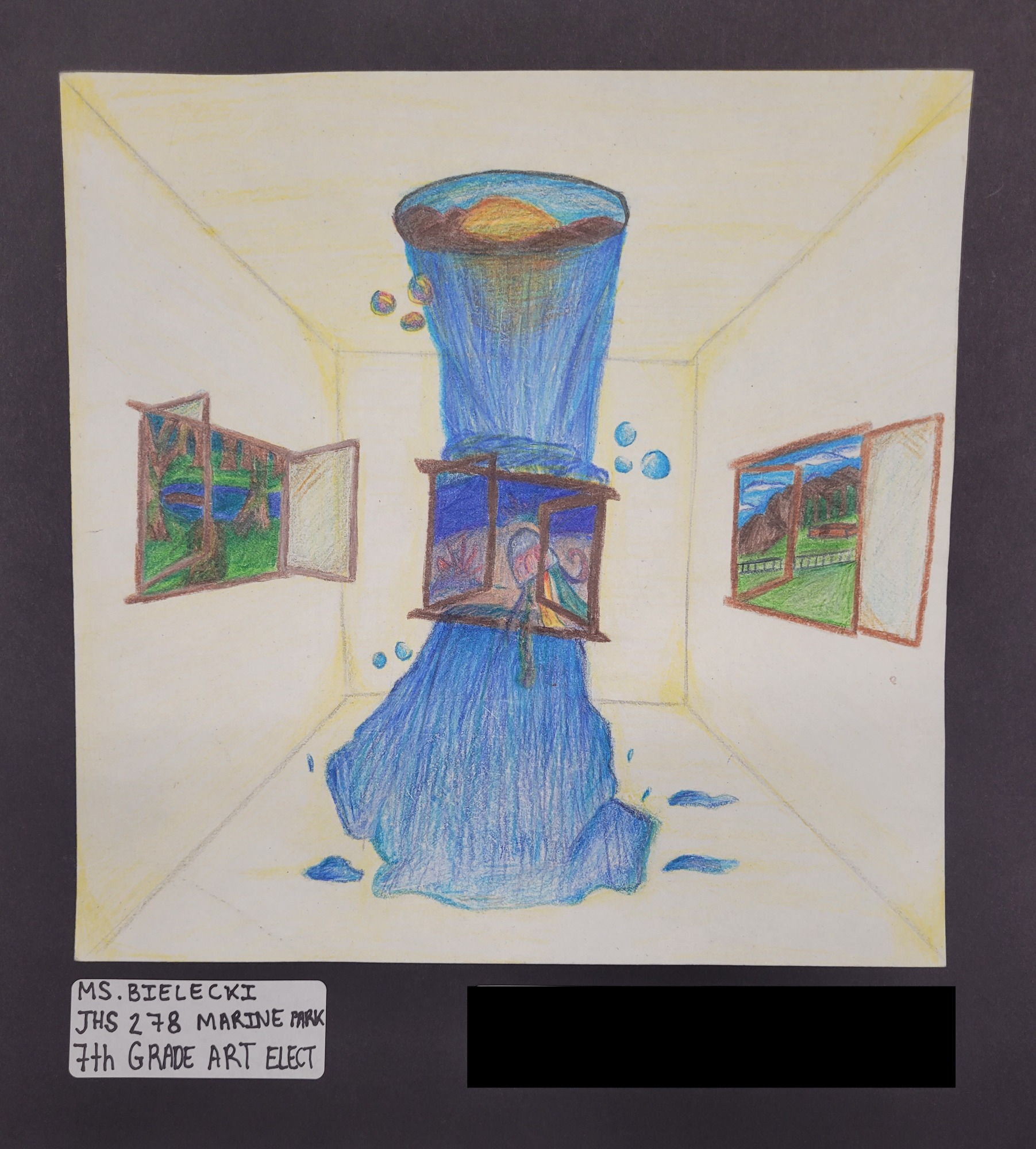
Surreal Room
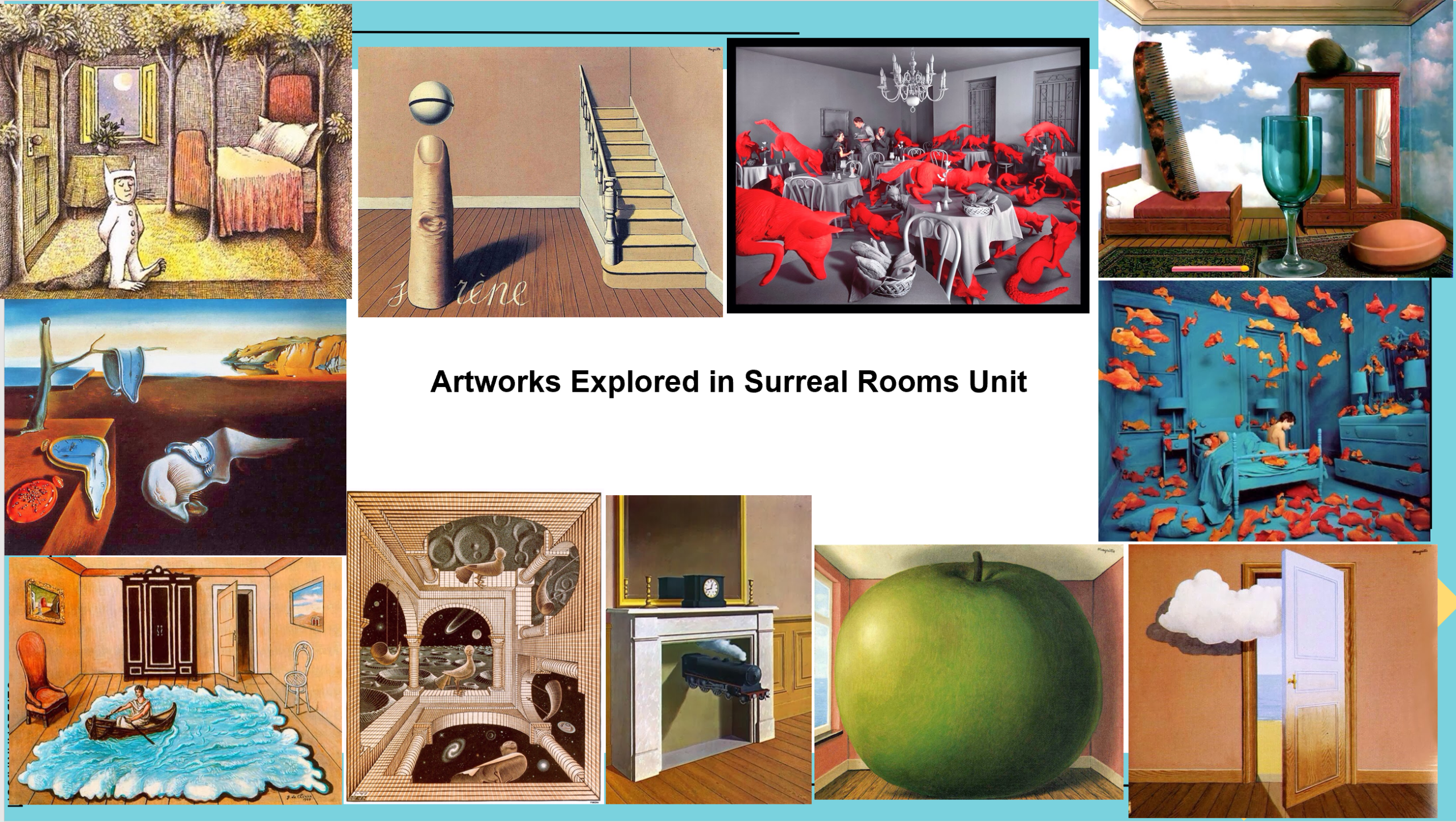
Surreal Artworks Explored
Student C
Student C’s survey reflected some more experience with art than others; they had 3-5 years of art previously, rated themselves an 8/10 in artistic ability and wanted to get better at realistic art. Yet, Student C’s preassessment portrait drawing showed some areas for improvement: anime influence was evident by the large eyes and the drawing was very small and did not depict much observed detail or shading. In comparison, Student C got to improve upon their realistic drawing skills with the gift bow project. There is very good application of values through the blending of light green, dark green, turquoise, and blue colored pencils. The highlights are at the center of the “cone” shapes and the transitions are appropriate. They also included a cast shadow to make the context realistic as well. As was the case with the majority of the class, it was Student C’s first time drawing a room in one-point perspective. I supported everyone in this process by demonstrating, having step by step instructions to reference, and advising students while circulating the room. Student C’s one-perspective room goes beyond the step-by-step instructions, includes shading, and lines align with vanishing point appropriately. They added several unique furnishings (books and plants on a bookshelf, a coat rack, lamp, fruit bowl, and head phones on the table) and shaded several areas. Student C’s sketches and beginning of surreal project reflects original ideas. Their work combines several surreal concepts such as scale change, outdoors indoors, object transformation/ purpose concepts of surreal artists we explored (de Chirico, Magritte, Dali). Student C consulted me for advice on space underneath the chocolate river on the side walls. I suggested furthering the idea of time and then they came up with the idea of numbers. Student C’s final surreal room demonstrates color pencil techniques and surrealism. Student C’s work is unique and original. Their additions further help to drive the breaking of conventions and surreal concept we discussed in class. In speaking with them, I could tell that they took pride in their work.
Student C Work and Supporting Materials
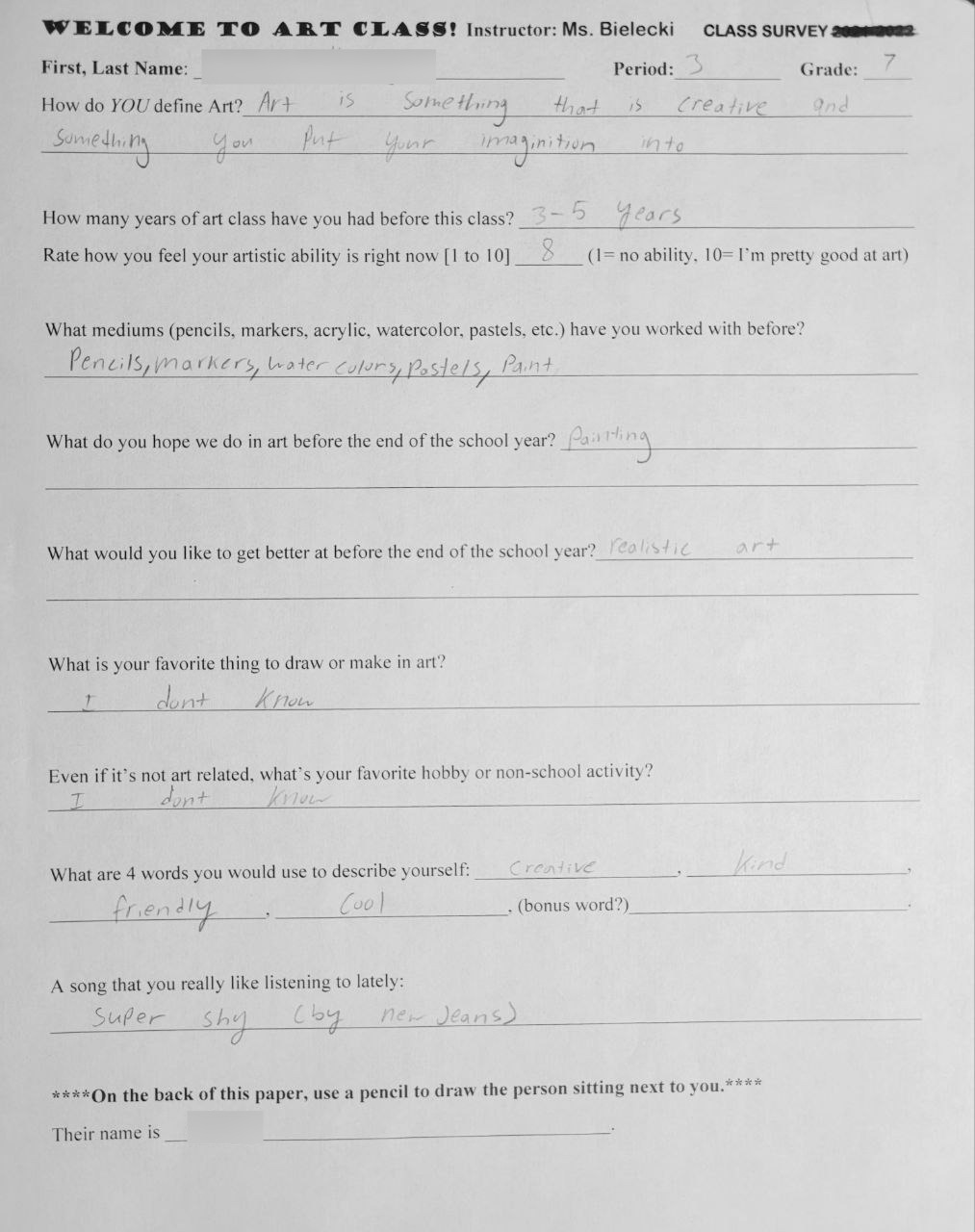
Beginning of the Year Survey
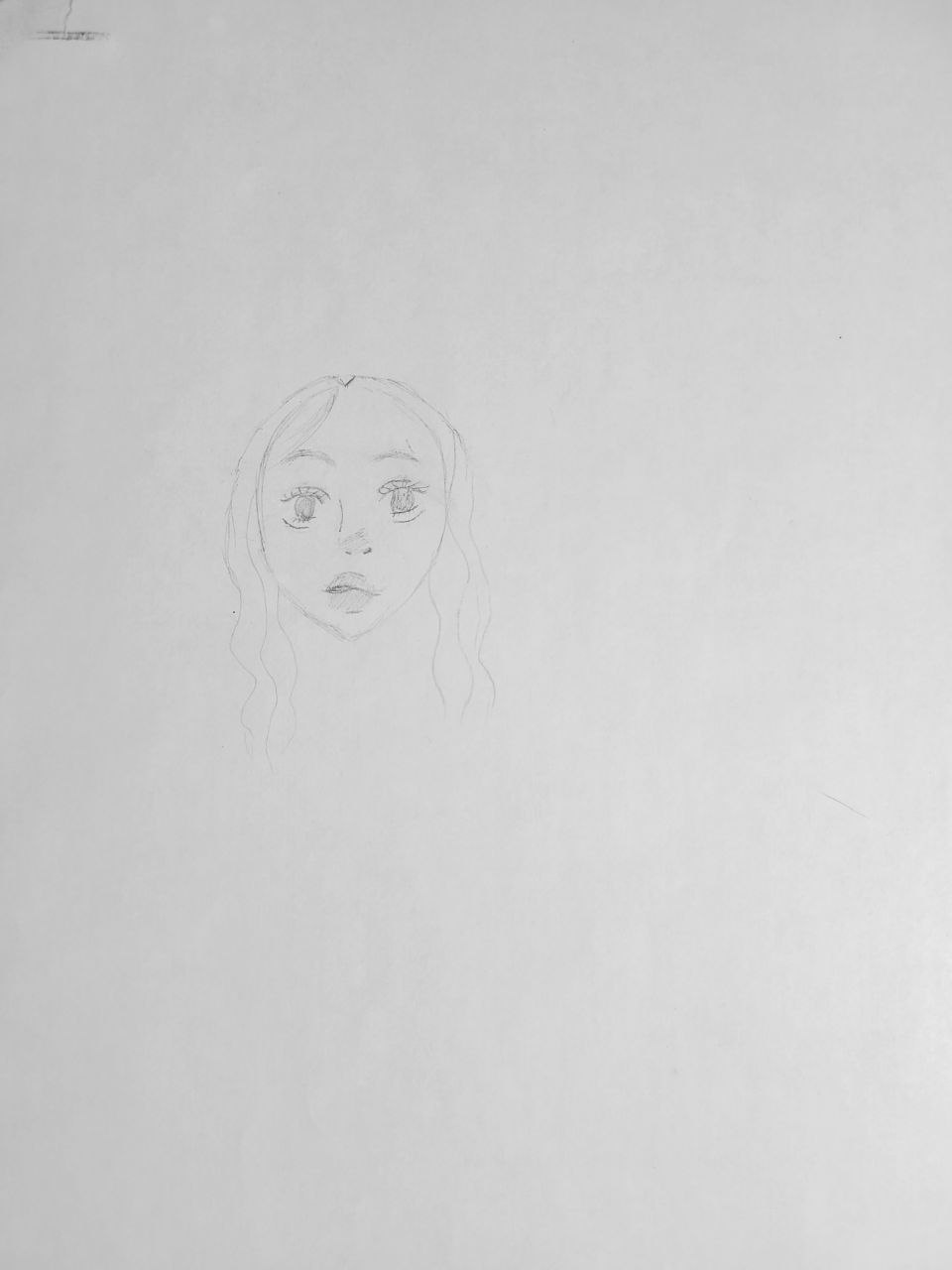
Preassessment Portrait
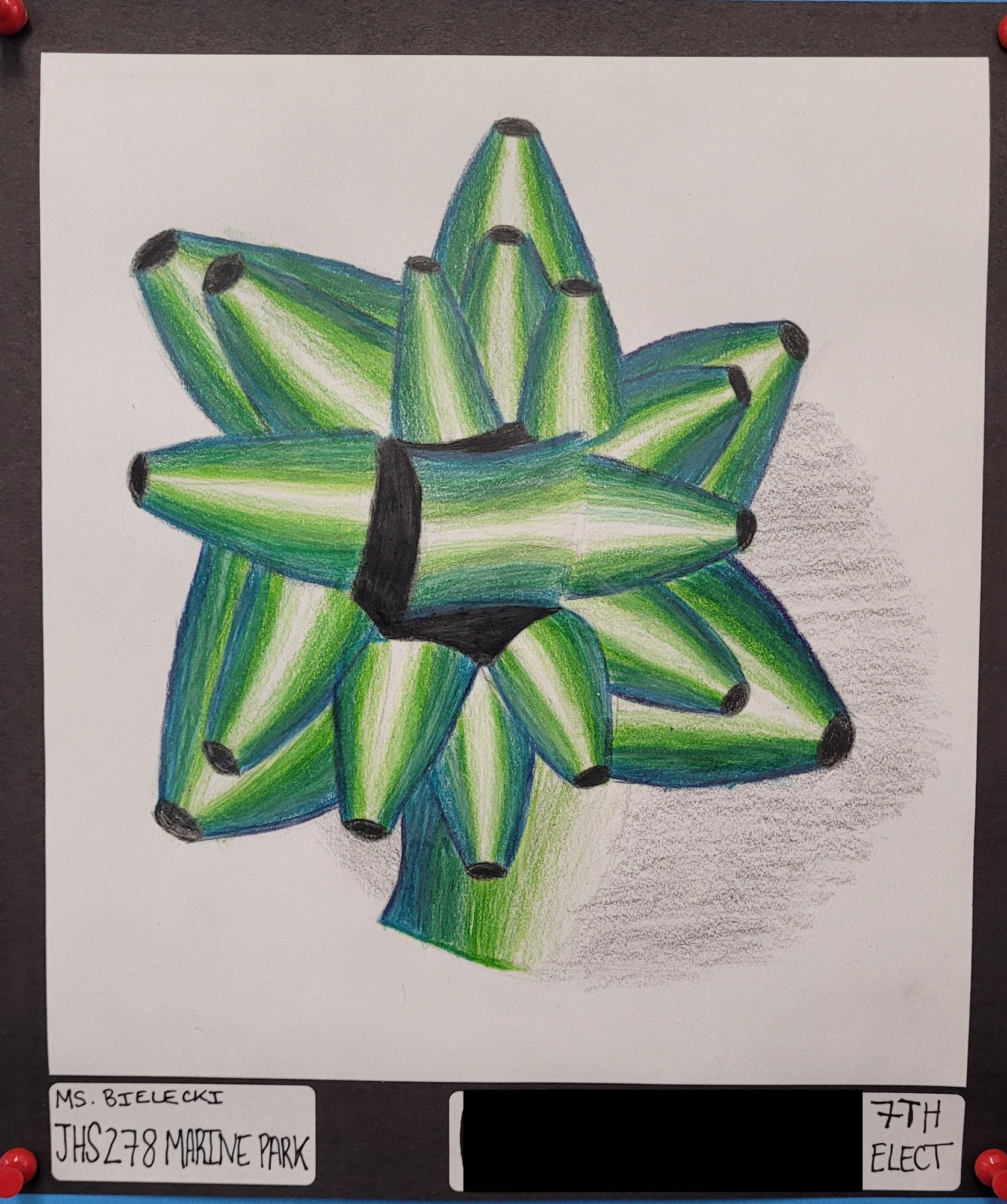
Realistic Gift Bow
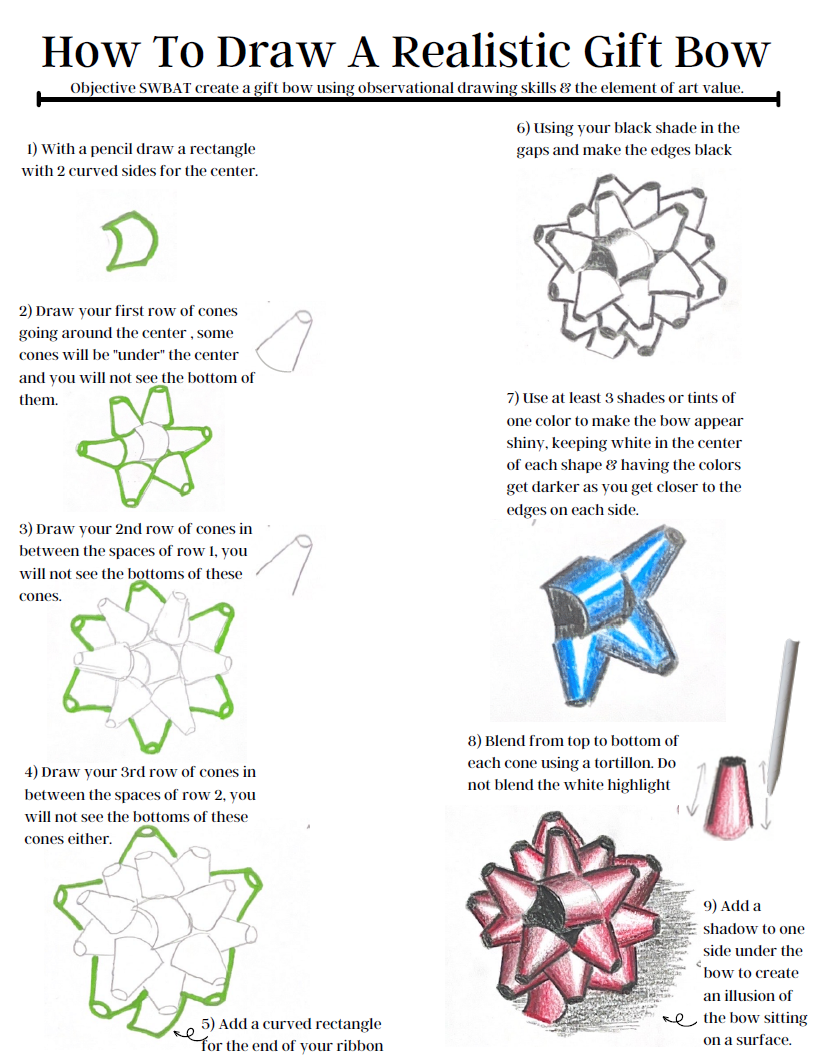
Gift Bow Steps
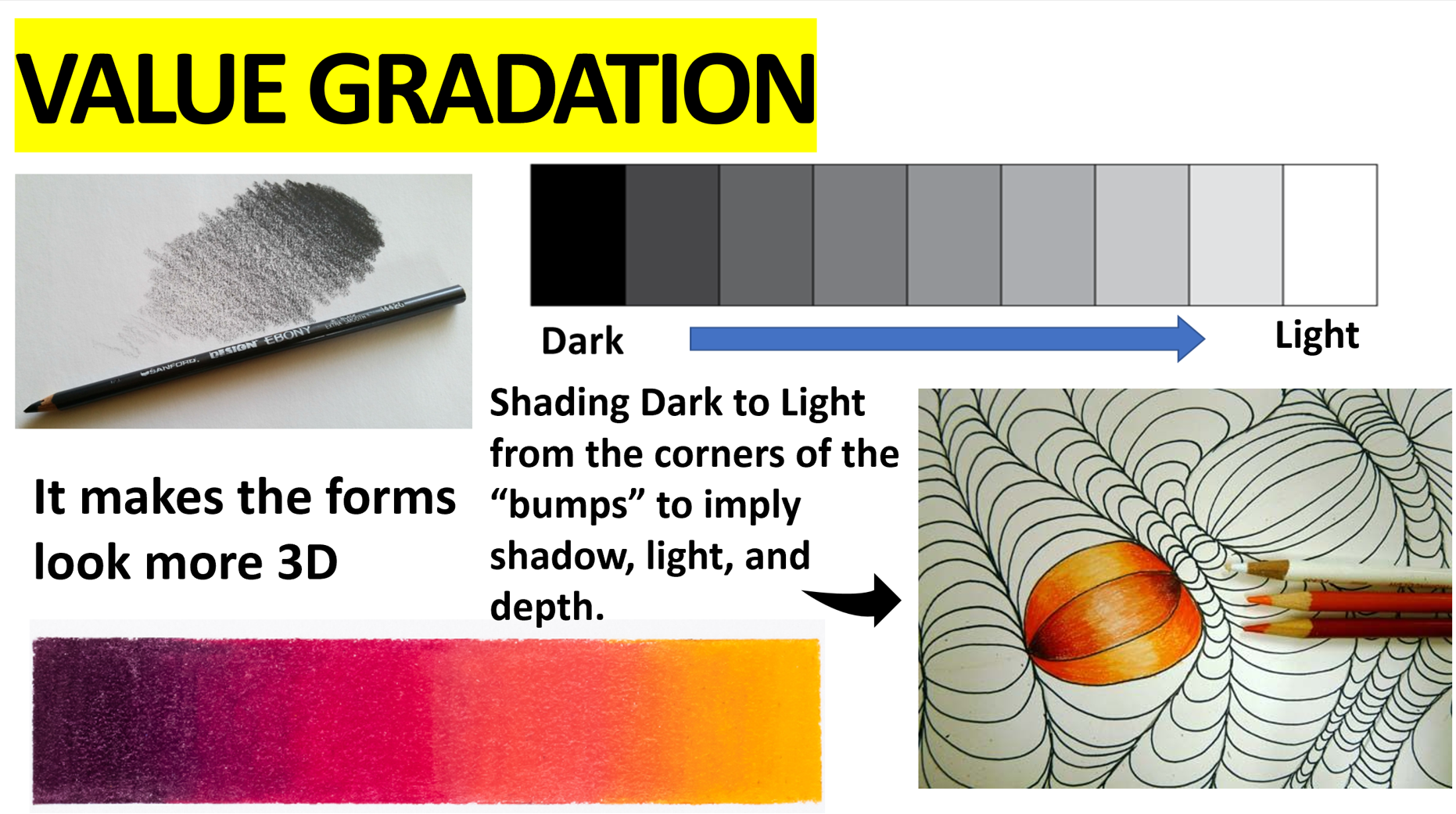
Value Gradation Technique
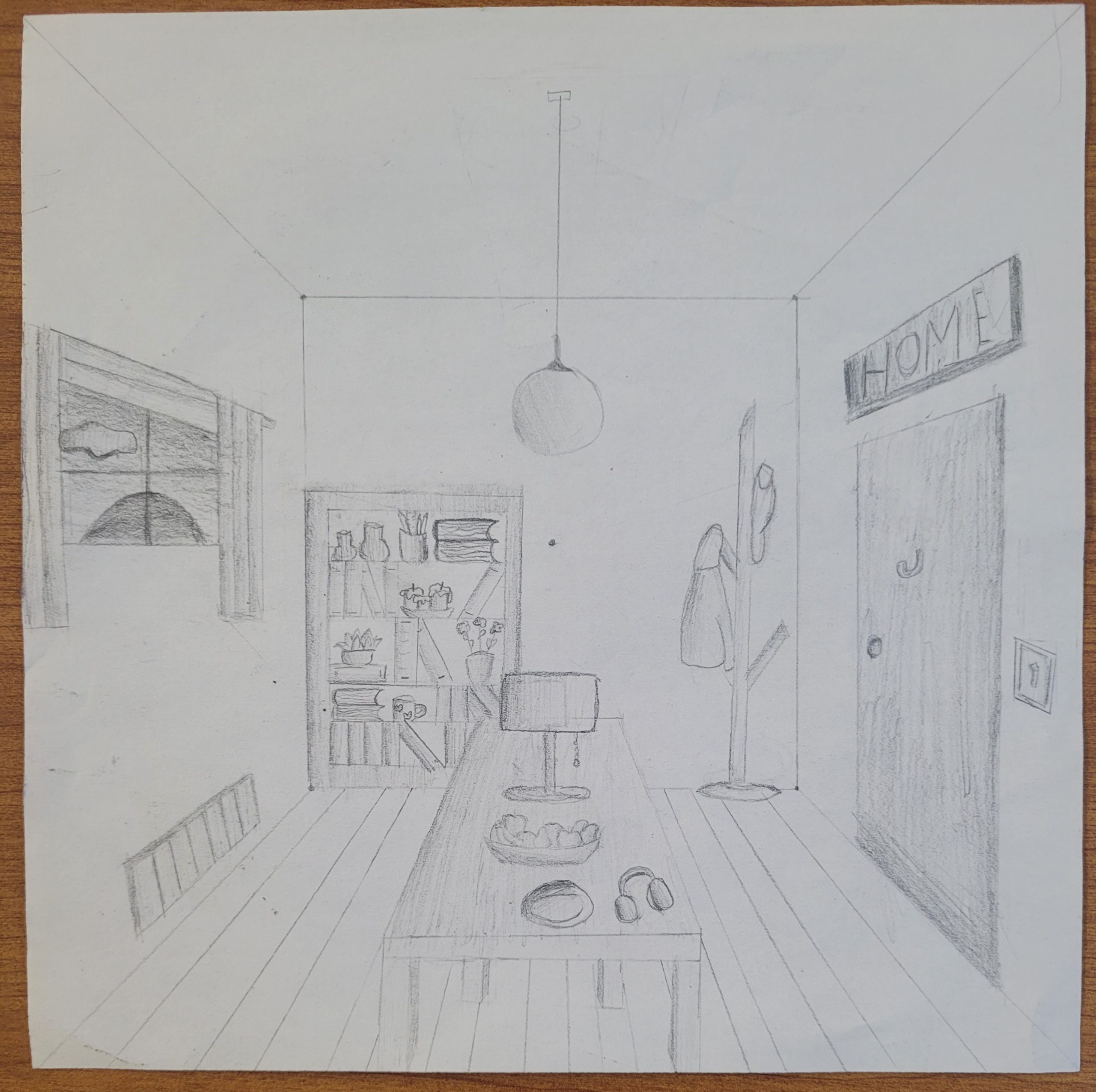
One-Point Perspective Room
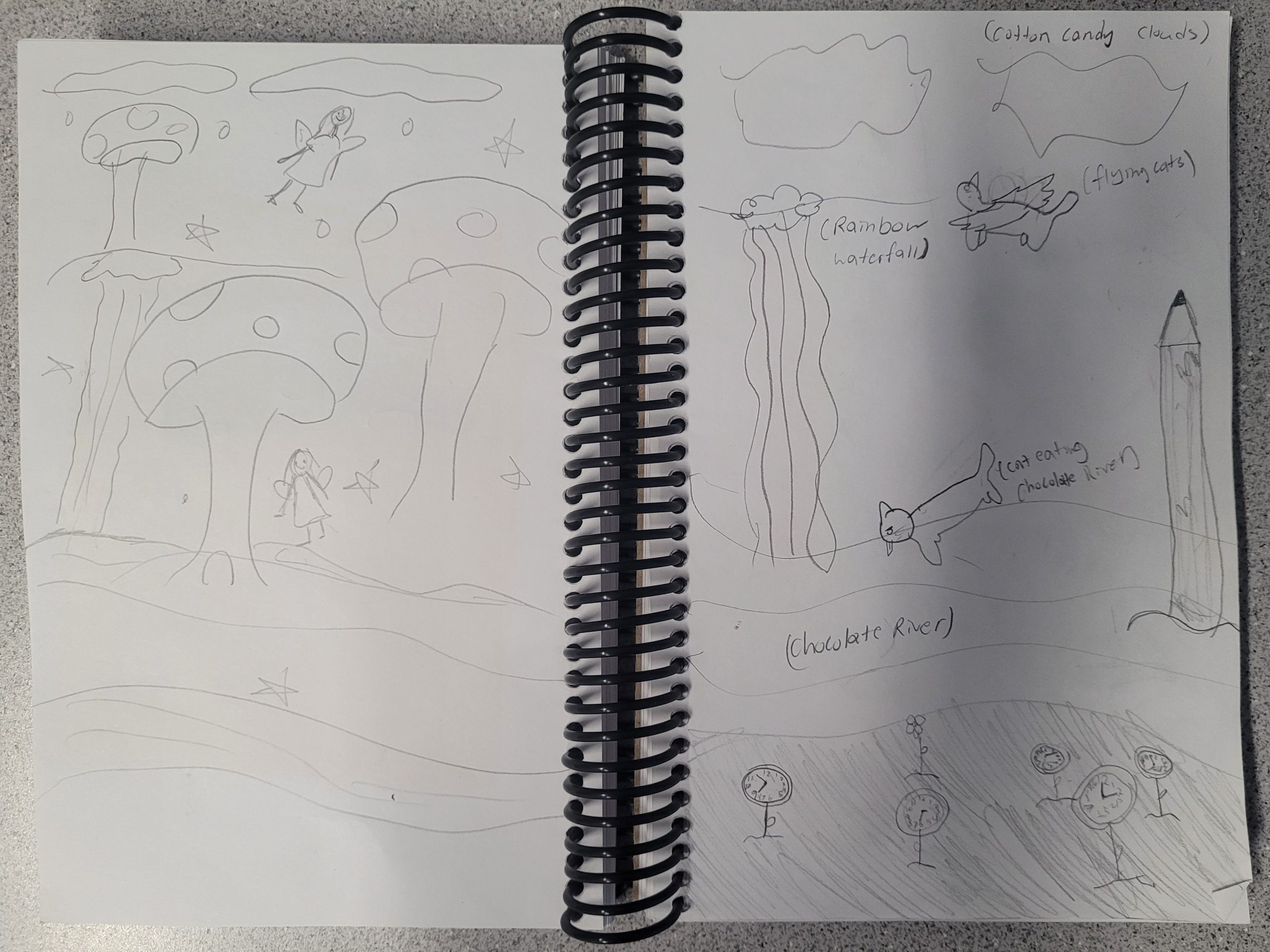
Sketches for Surreal Room
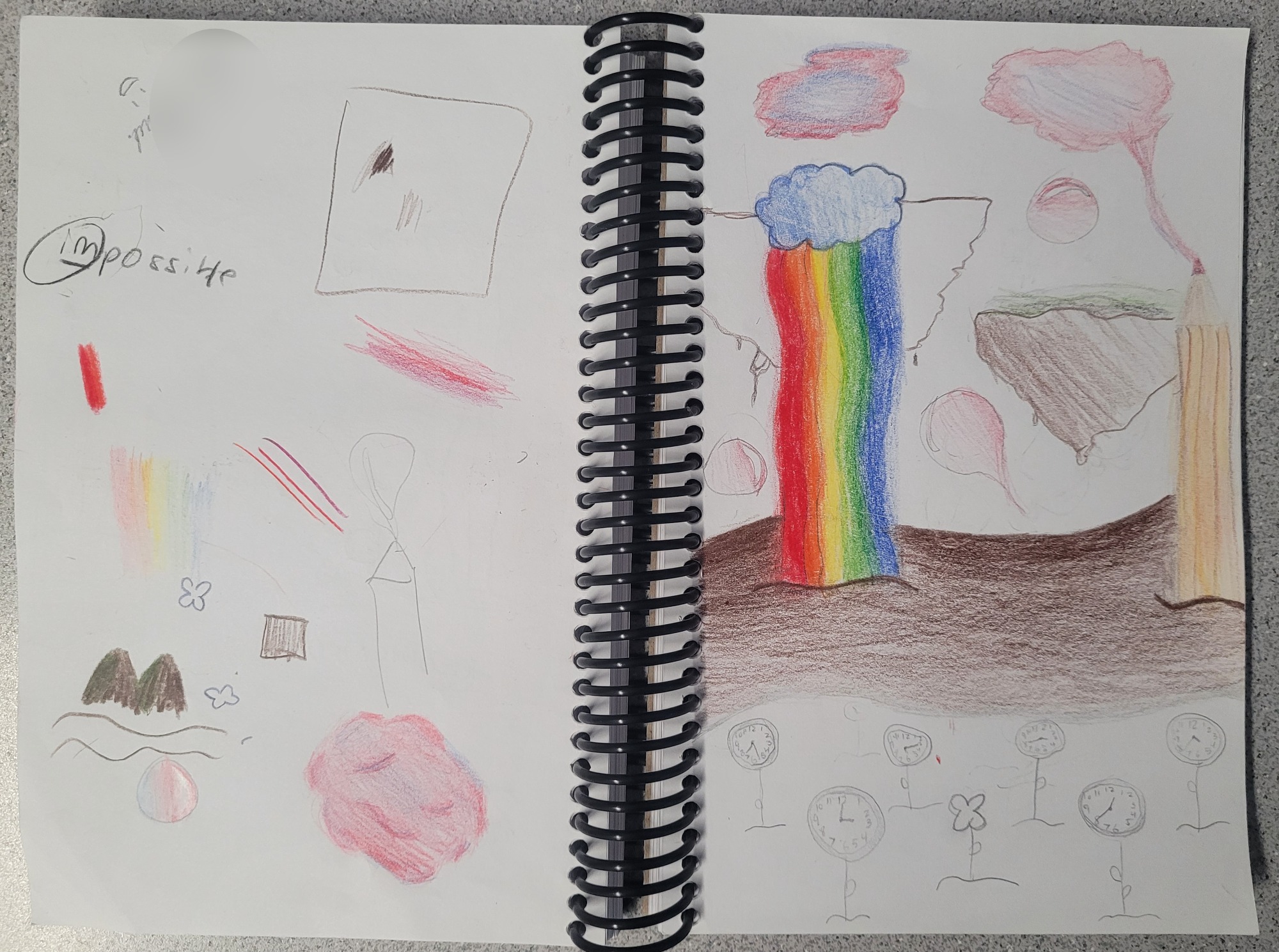
Sketch For Surreal Room
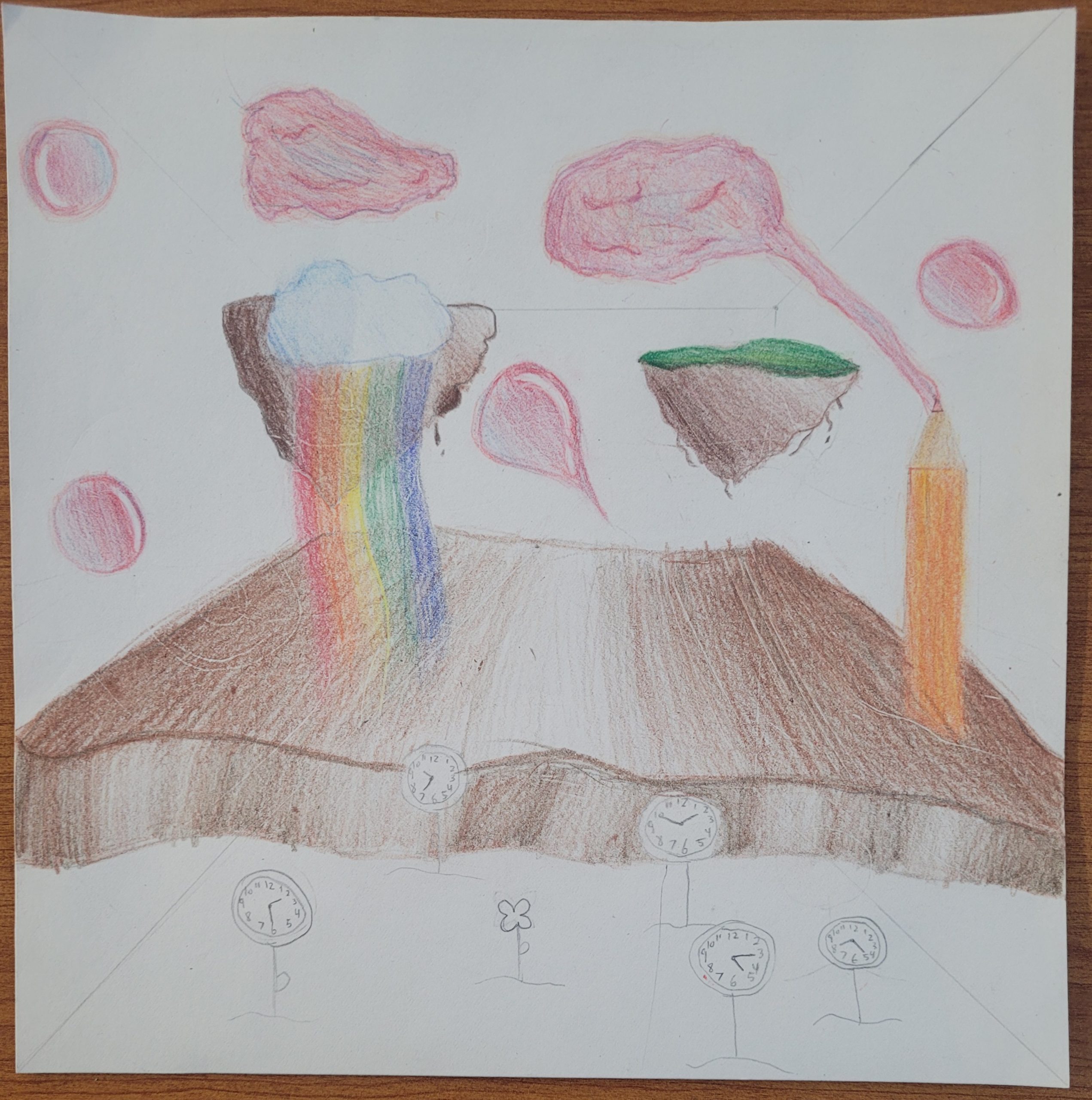
Surreal Room in Progress
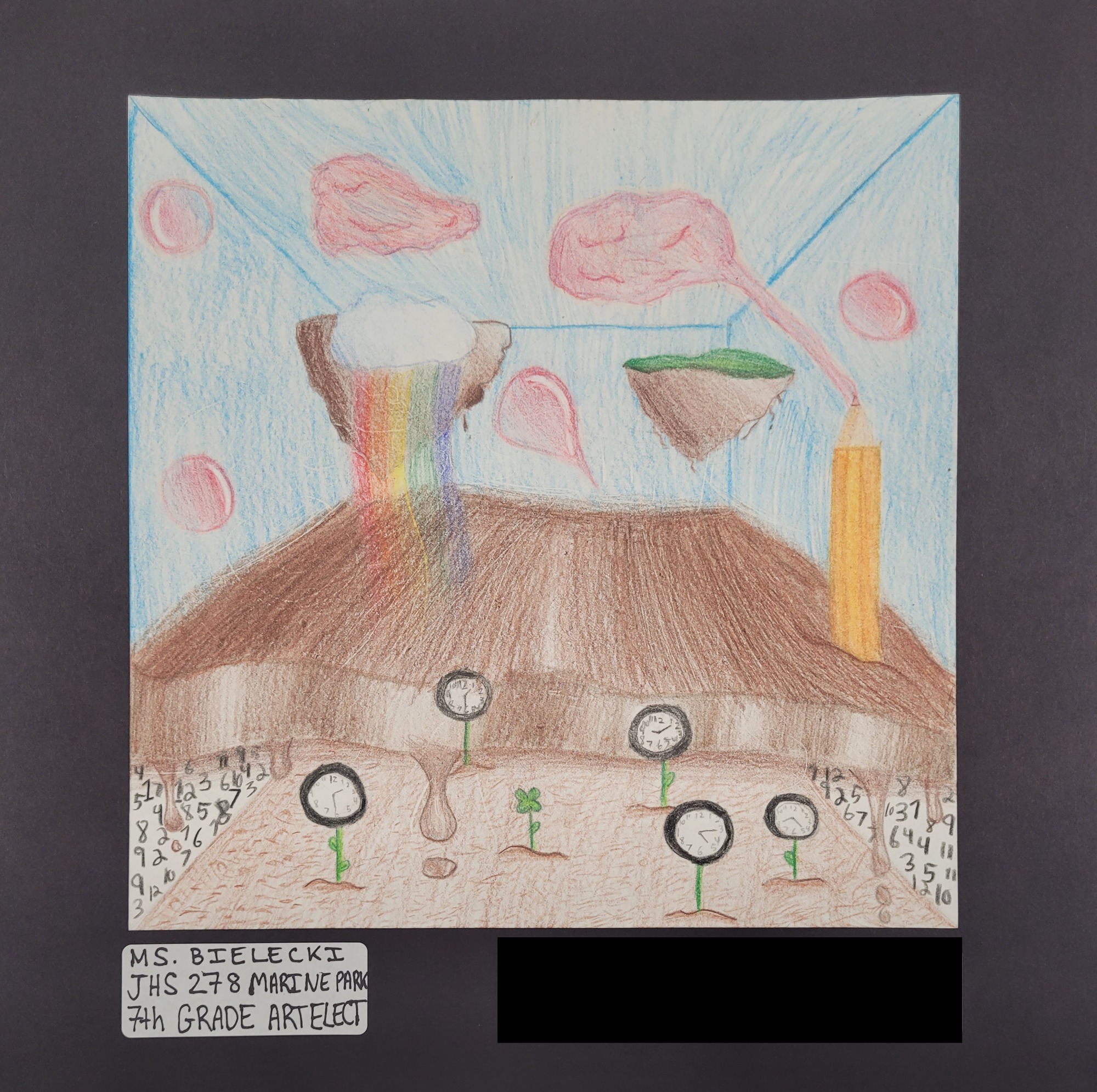
Surreal Room
Student D
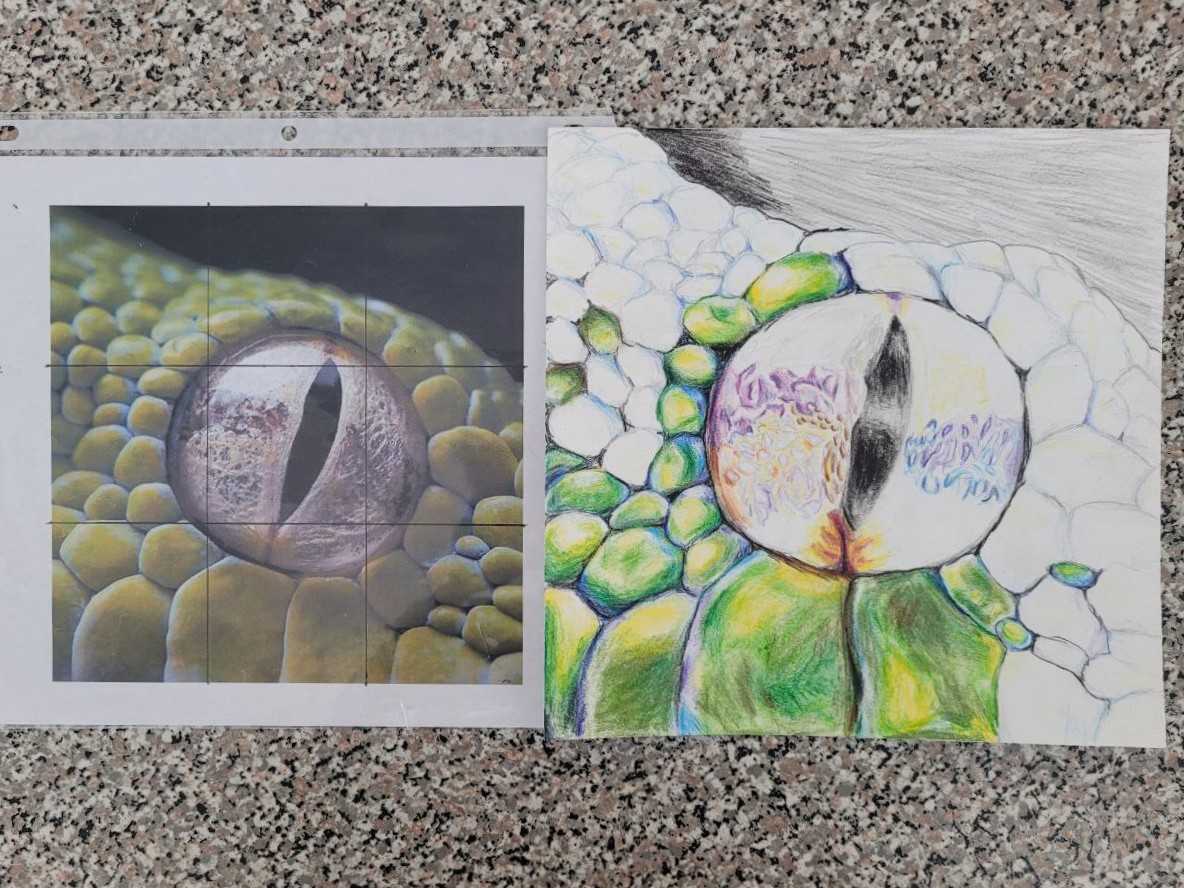
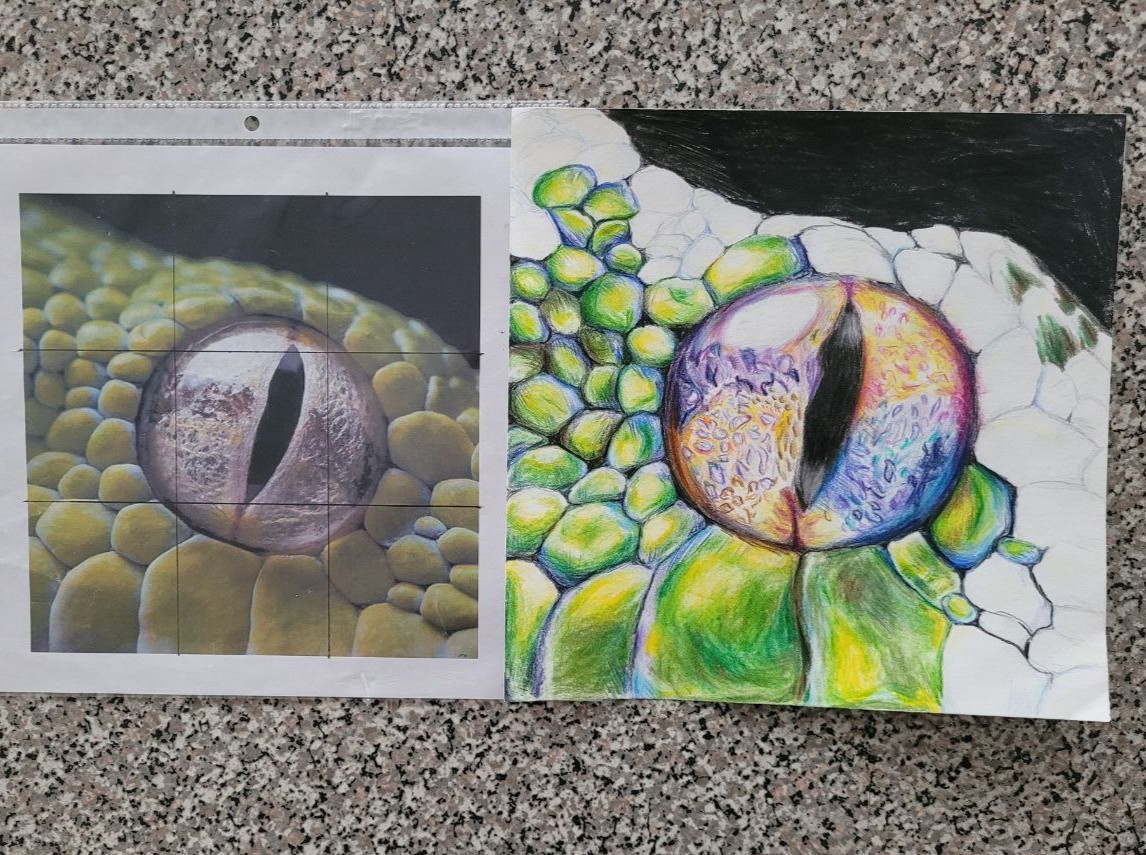
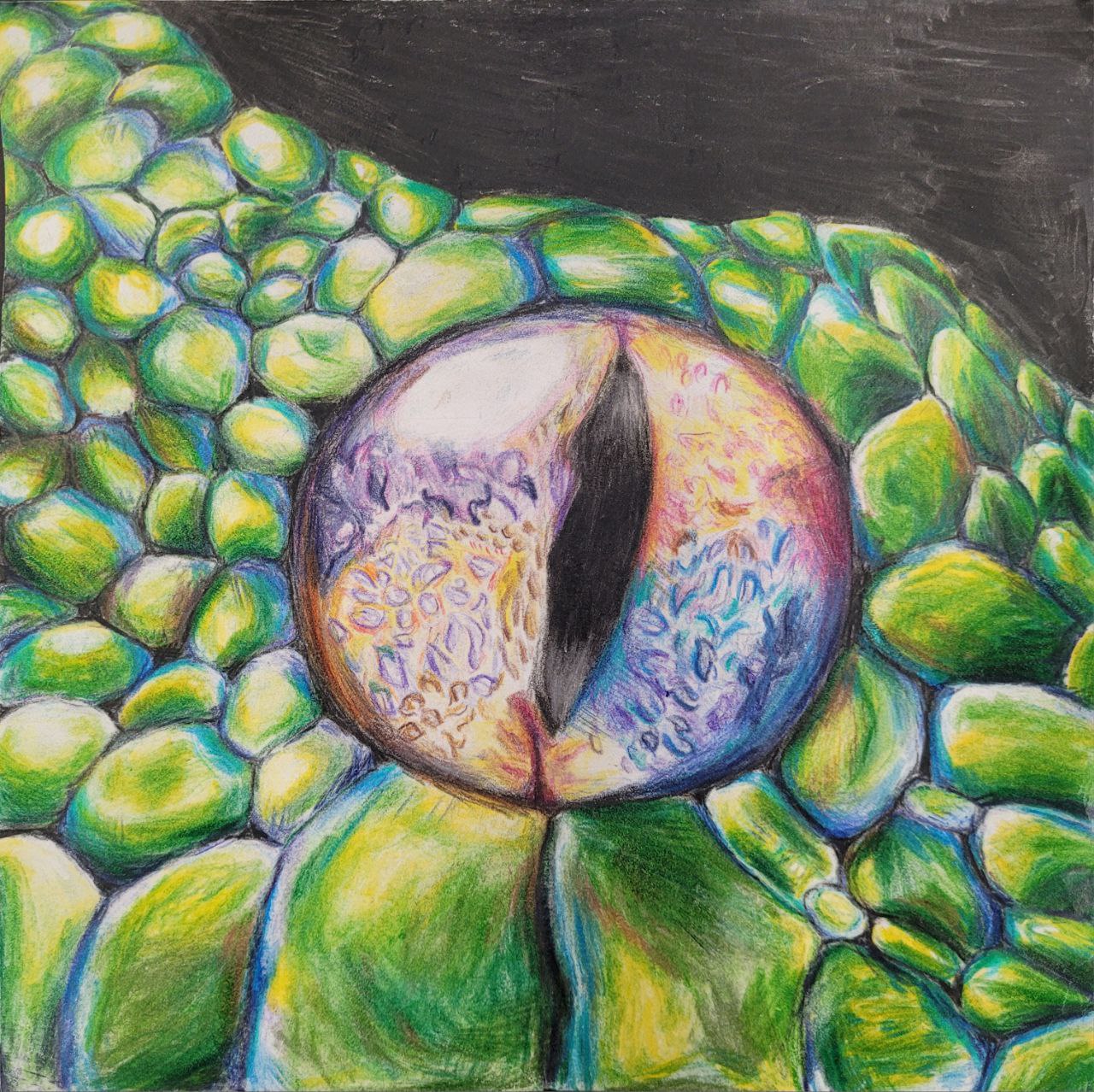
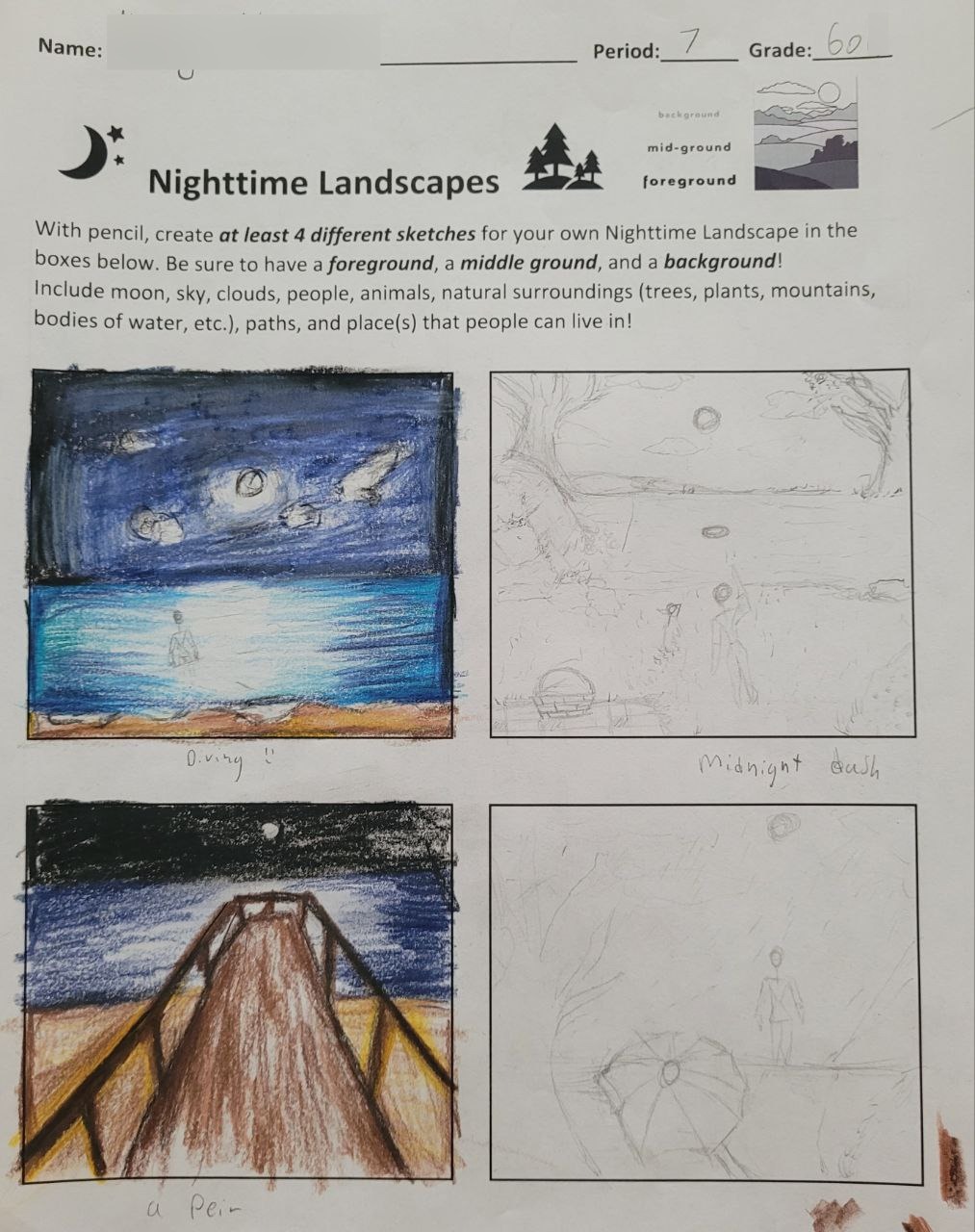
Student D’s survey reflected some more experience with art than others; they rated themselves a 7/10 in artistic ability and wanted to get better at realism and to learn about color theory. Student B’s preassessment portrait drawing demonstrated some knowledge of face proportion techniques and advance shading techniques in the face, neck and hair. The eyes, although large, are centered in the face. While the mouth is very low on the face, the lips shape and shading are realistic. The shine in the hair and shadows in the neck are very impressive for a 6th grade drawing. Student D identifies themselves as shy, creative, and introverted in the survey. Given this information, I knew that throughout the year I would work with Student D on their in class speaking and check in with them on their progress. I could see that Student D was very engaged and determined, giving their absolute best to doing their artwork throughout the year and they made an effort to share their wonderful ideas during art discussions. In the first half of the year Student D worked on the nighttime landscape project using colored pencils and white and black china markers as a finishing touch on black paper. I guided students through the idea generation process with the thumbnail sketches of imagined landscapes; students then picked their favorite one to color further. Student D’s final nighttime landscape reflects understanding about light especially the light emanating from the moon on the water and dock. Drawing and paying attention to the direction of moonlight and shadow is something we discussed while viewing several masterworks. An art work that Student D took great pride in was the drawing of the snake eye for the Animal Eye project towards the end of the year. I taught students how to make an initial sketch from observation using the grid method and then layer color pencil starting with lightest colors first-identifying several colors to mix and depict details through close observation of the reference. One can see Student D’s progress as they started with a light sketch, working their way to depicting the light yellows, pinks, and oranges in the eye and blues in the edges of the scales. The focus travels to different parts of the work as they continue to work on the piece, which is a good practice as an artist. Student D was encouraged to find all the different undertone colors and light areas of reflection and to use burnishing to blend colors. In the end Student D’s complete snake eye drawing is very vibrant and shows an incredible amount of attention to detail and execution of technique. I believe that Student D was really happy with the results and the fact that they were able to get better at realism and color theory when drawing as they stated in their survey. Student D had a quiet but proud confidence smiling as they shared their work with their family in the Annual Spring Art Show. I spoke with Student D’s family about the 7th grade art boot camps and offered future assistance with arts high school auditions at the art show.
Student D Work and Supporting Materials
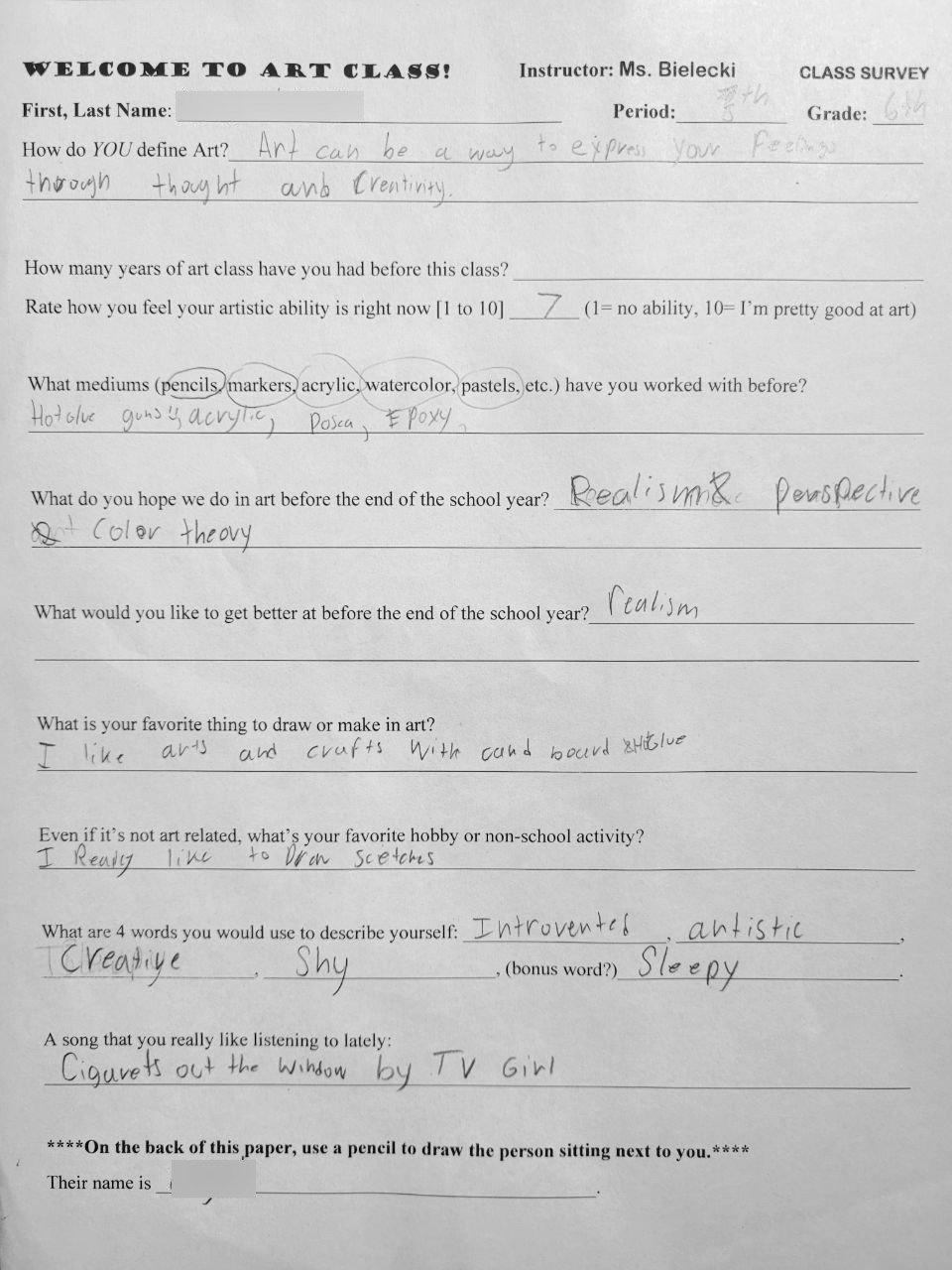
Beginning of the Year Survey
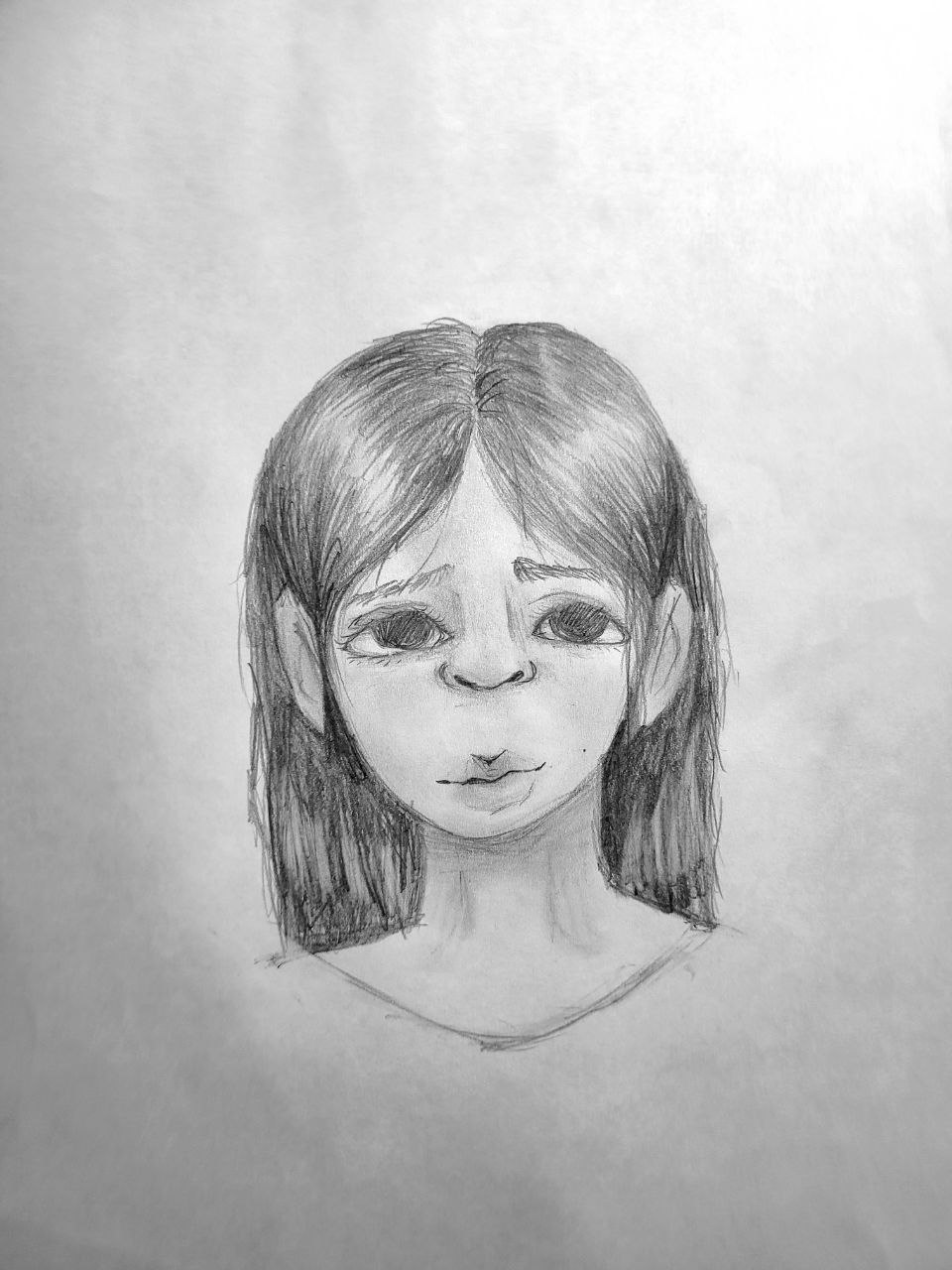
Preassessment Portrait
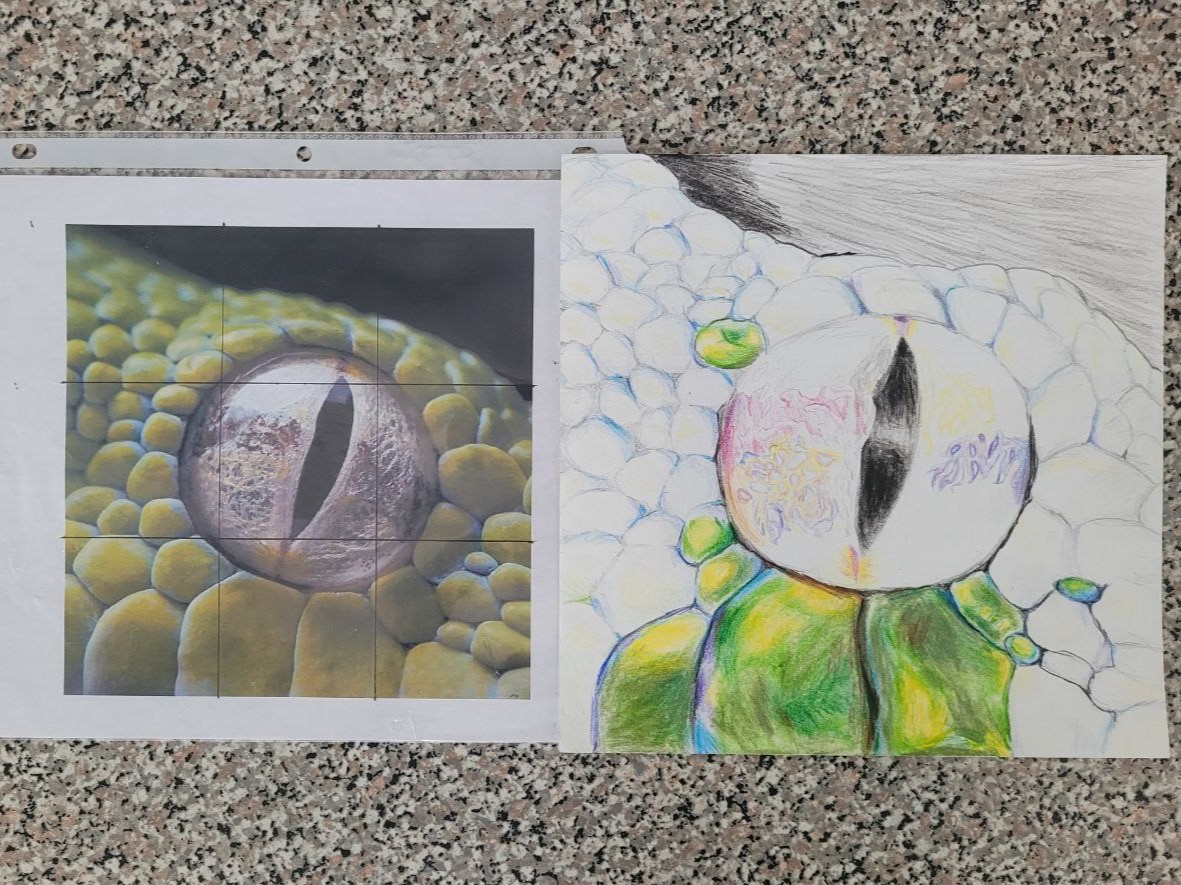
Snake Eye In Progress 1
Snake Eye In Progress 2
Snake Eye In Progress 3
Snake Eye
Nighttime Landscape Sketches
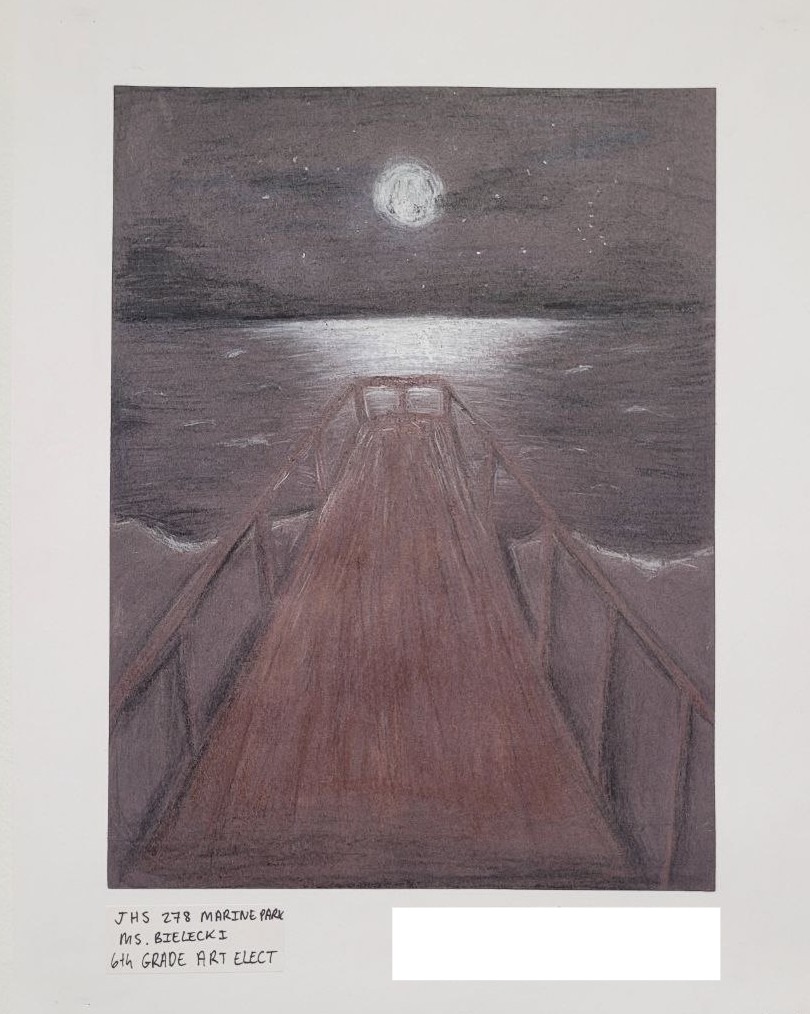
Nighttime Landscape
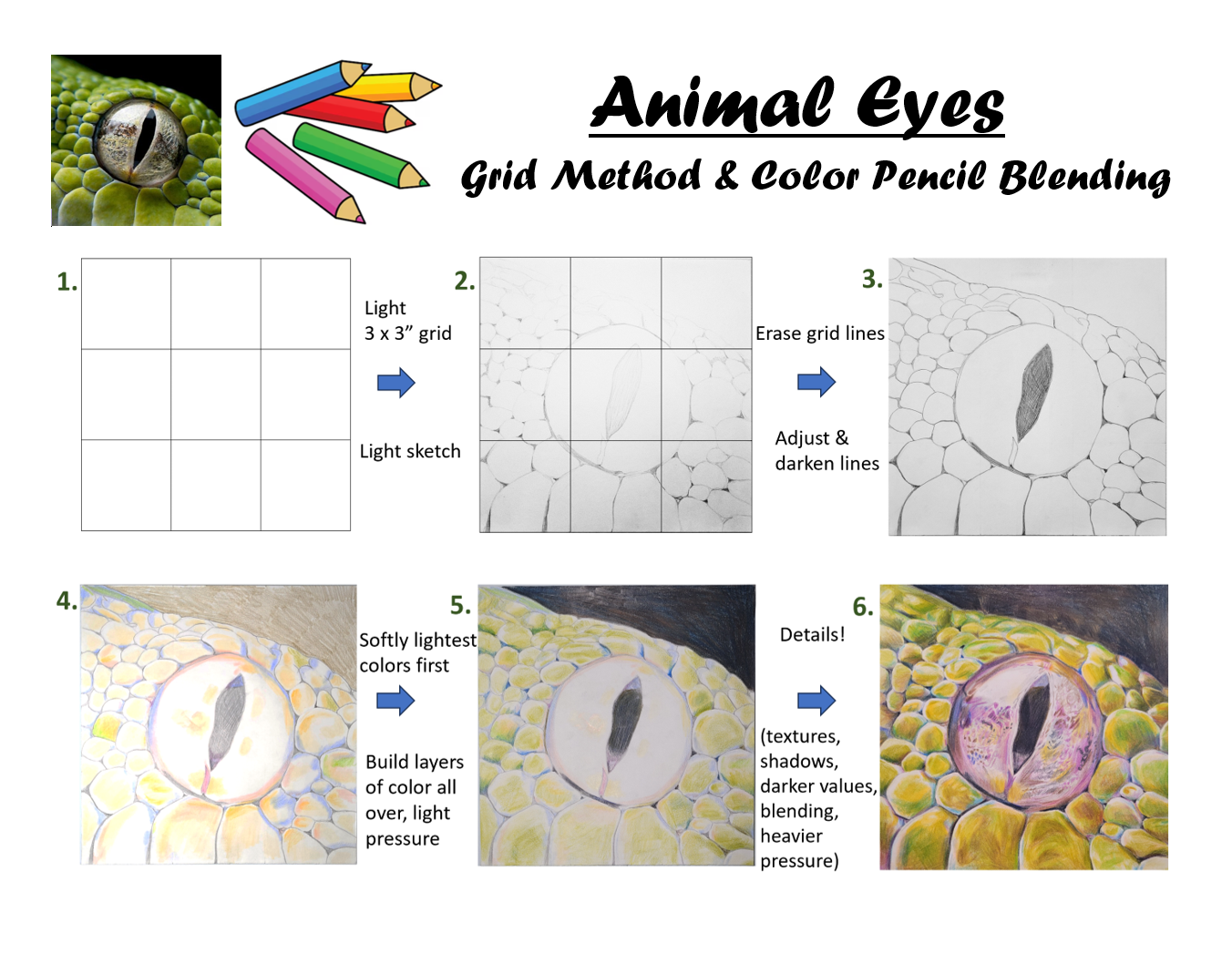
Animal Eye Instructions
Student E
Student E expressed in their beginning of the year survey that they wanted “to learn to shade” and “get better at realistic drawings.” Their baseline drawing of their classmate lacked attention to detail. While the eyes, nose, and mouth are generally placed in the proportionally correct places, the size and accuracy of them don’t show much observed detail. For example, the pupil’s eyes are large and cartoon-like. After I introduced step by step face proportion techniques in the middle of the year, Student E’s artist portrait of Jeffrey Gibson shows a lot of improvement in portrait drawing! I worked closely with Student E who felt comfortable in seeking advice from me in depicting details and accuracy of features in the portrait. Student E took care to draw the subtle shadows using a blending stump and depicted highlights in the face. They also carefully depicted details in the clothing and hat. This is in stark contrast to the non-existent details in the shoulders in the preassessment portrait drawing. Student E has made strides in their observational drawing skills. With my assistance and guidance, Student E’s first time drawing a portrait from observation was a success. Student E’s pattern landscape later on in the year, was a project that they took pride in and let their creativity shine. Student E told me that they purposely selected warm colors for the house, sky, and sun and cool colors for the hills so that having them side-by-side would be pleasing to see overall. The opportunities to develop technical skills in drawing fulfilled Student E’s wish to improve their realistic drawing skills and projects like the pattern landscape gave them the opportunity to feel confident in their artistic vision.
Student E Work and Supporting Materials
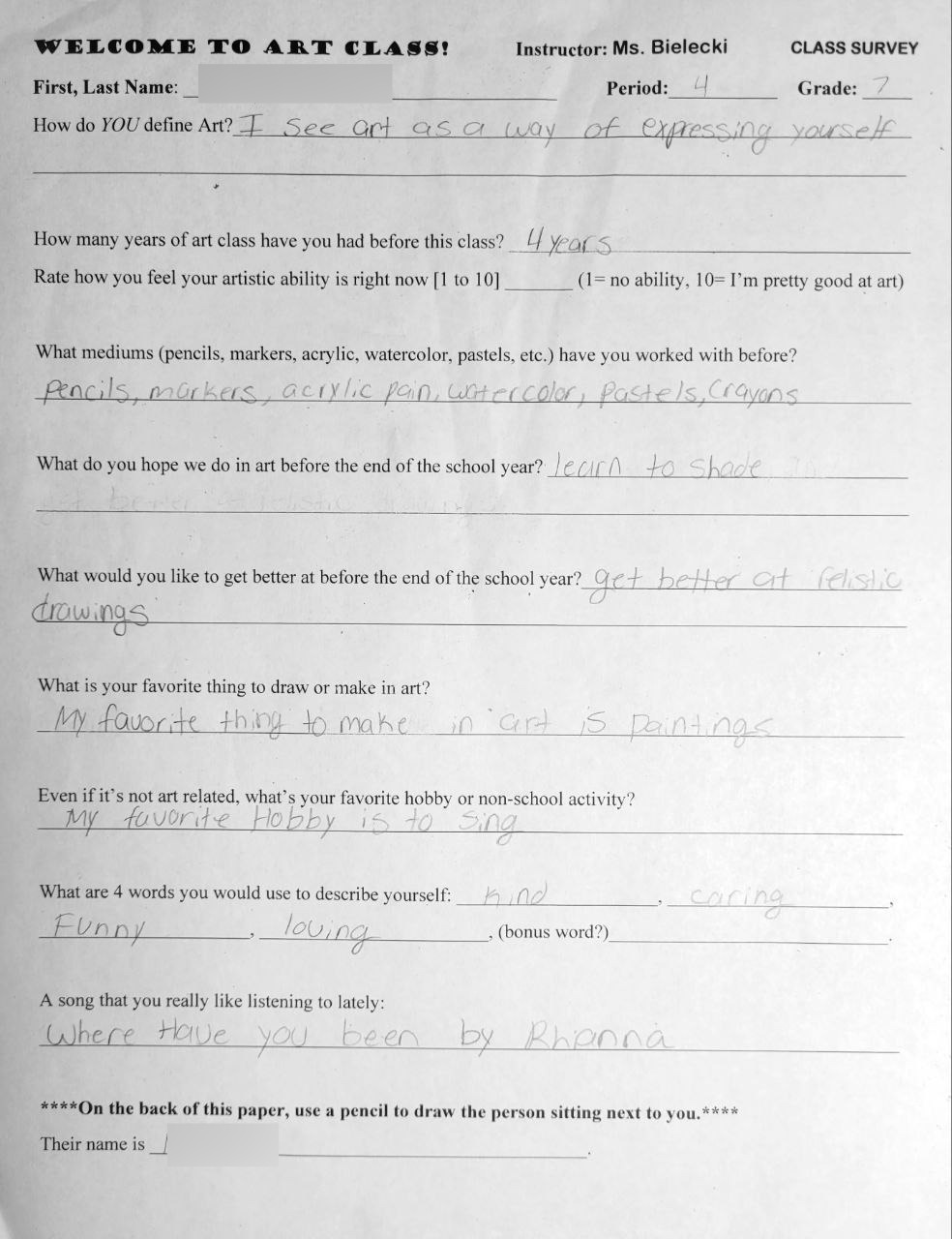
Beginning of Year Survey
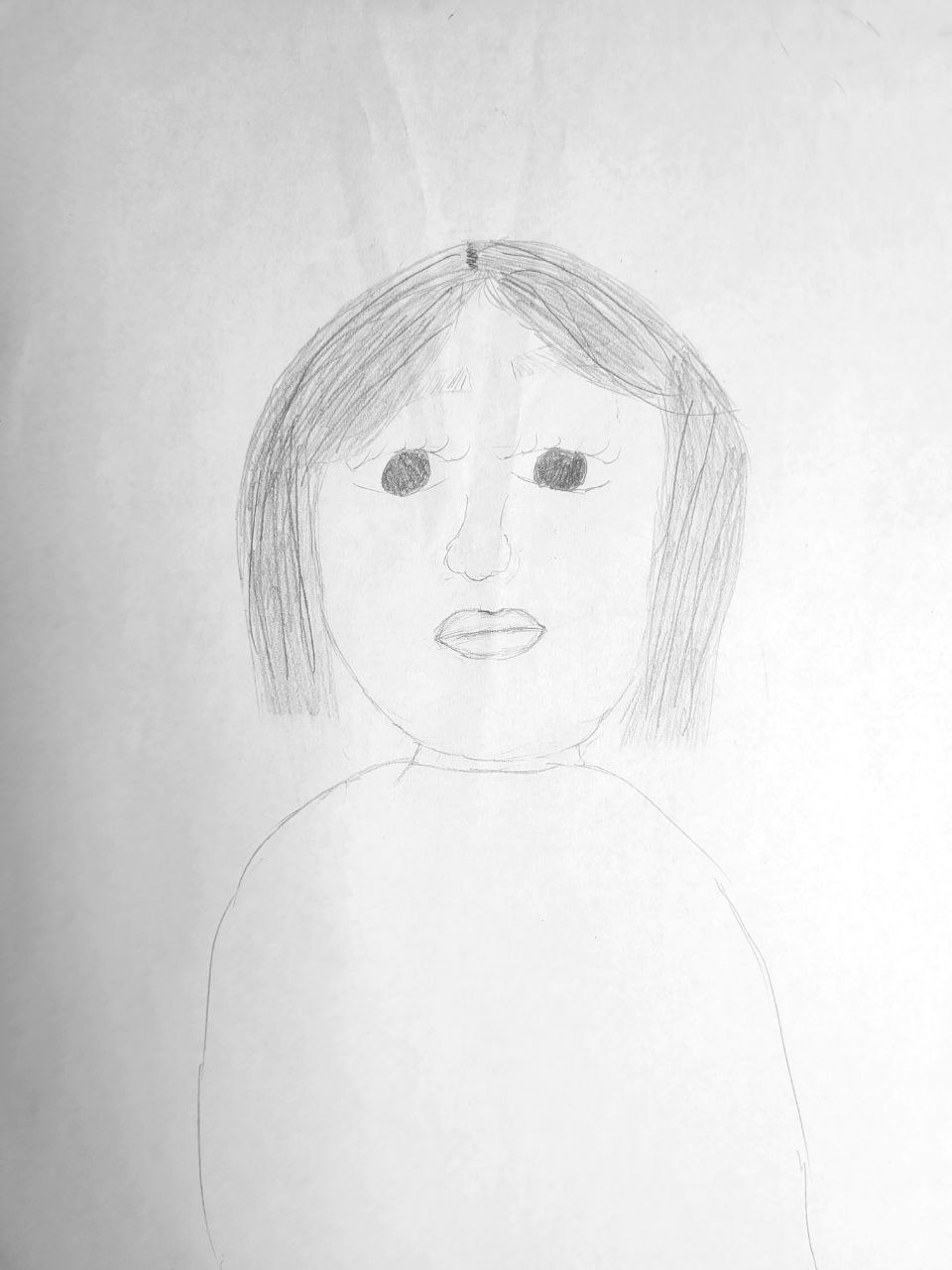
Preassessment Portrait
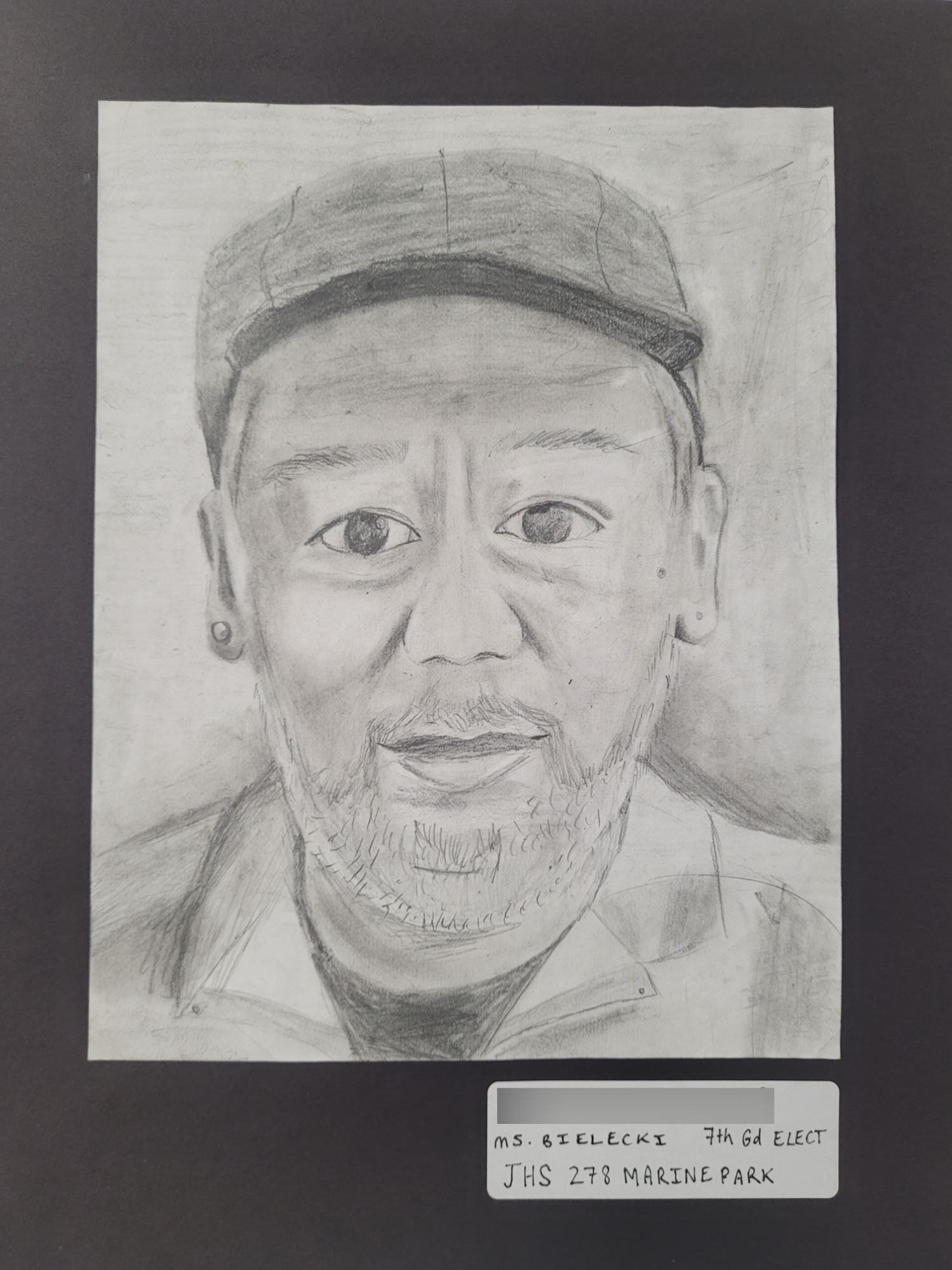
Artist Portrait of Jeffrey Gibson
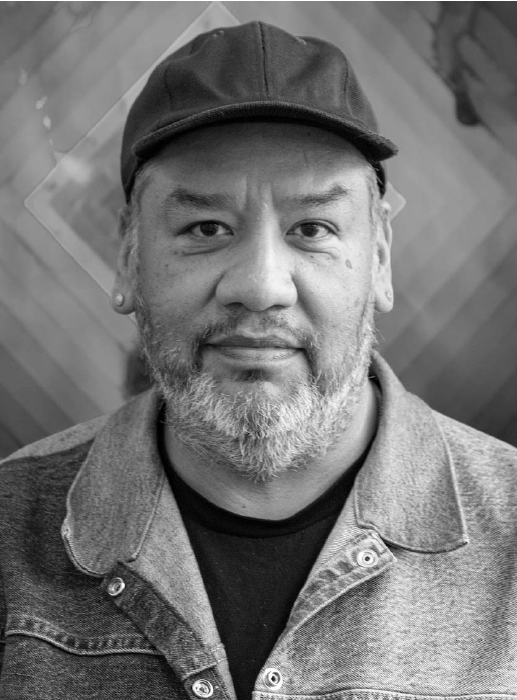
Reference of Jeffrey Gibson
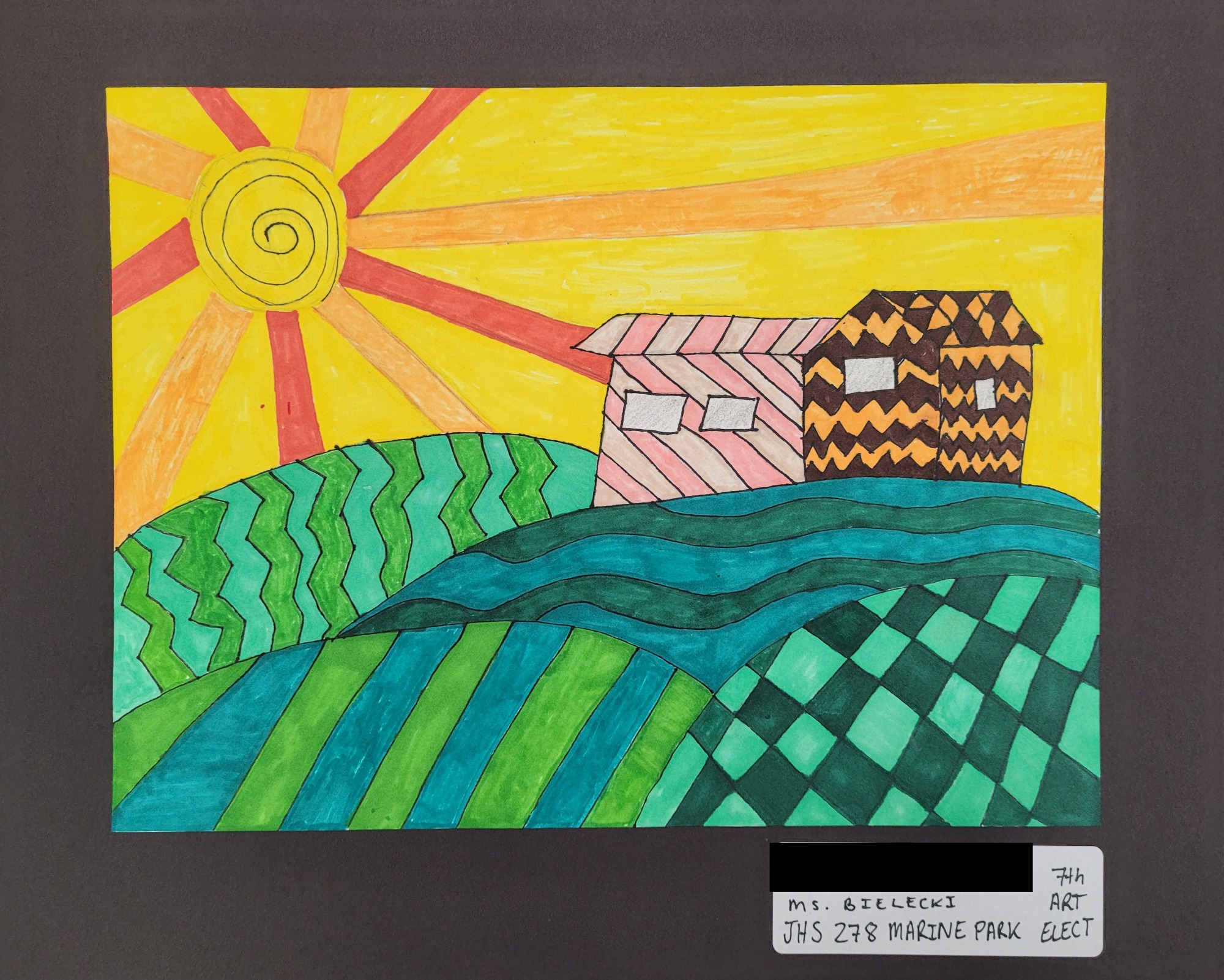
Pattern Landscape
Student F
Student F expressed in their beginning of the year survey that they only had 1 year of art previously and rated their ability as a 6 or 7. They also said that wanted to draw what they wanted and wasn’t sure what they wanted to get better at. Their preassessment portrait drawing of their classmate is very small and the head is floating above a book, lacking the rest of the body in the pose. There is another drawing on the right that shows depiction of personality through the two halves of the face depicting different emotions. I could tell from this that the student wanted the opportunity to be creative and needed assistance with technical skills. I assisted Student F with depicting value by using a tissue to smudge and apply more values to their work. The work is very expressive in the pose, face, and background. The use of sharpie helps to distinguish the snowman from the background, which was advice that Student F took. I could tell that Student F enjoyed creating the drawing as they were very absorbed in its creation. Student F struggled with drawing the initial lines for the buildings in their radial city. In their second attempt, I assisted them with aligning the lines with the vanishing point in the center. Having this one-point perspective structure in place, Student F was then able to let their imagination run wild with their building designs! There is no dull building in sight. The end result is very colorful, lively, and original, illustrative of the student’s creativity through the emerging narratives in their city.
Student F Work and Supporting Materials
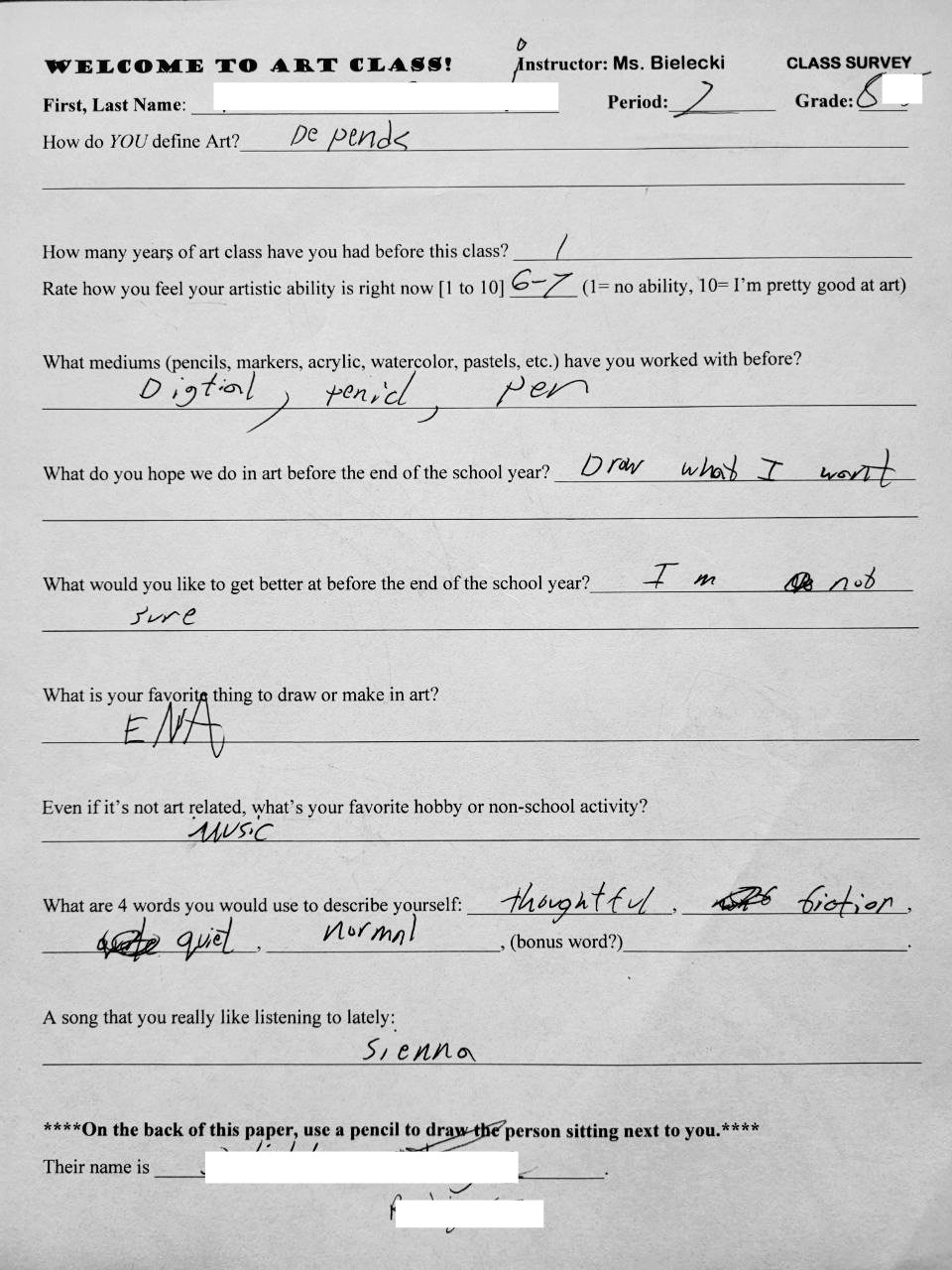
Beginning of Year Survey
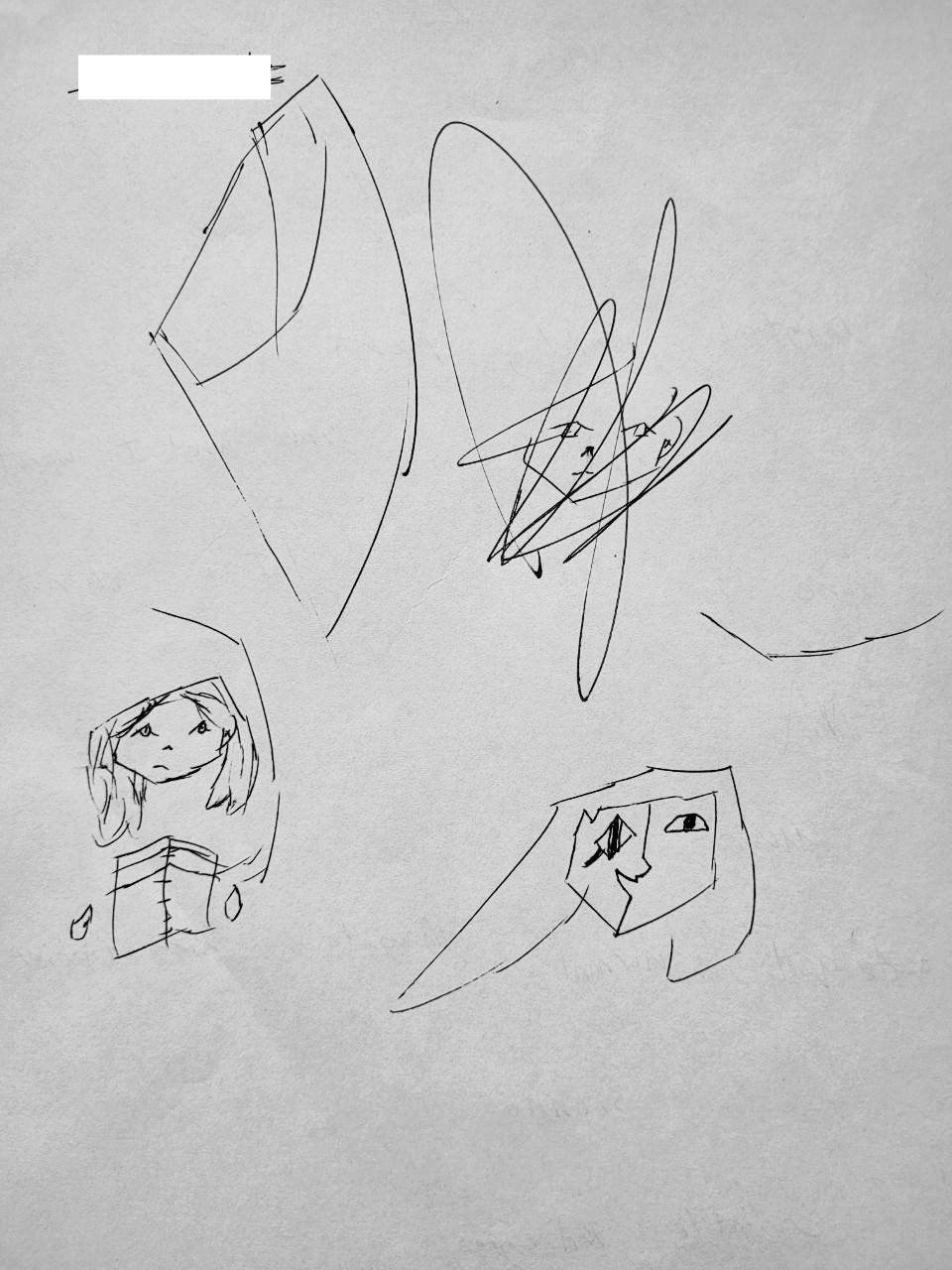
Preassessment Portrait
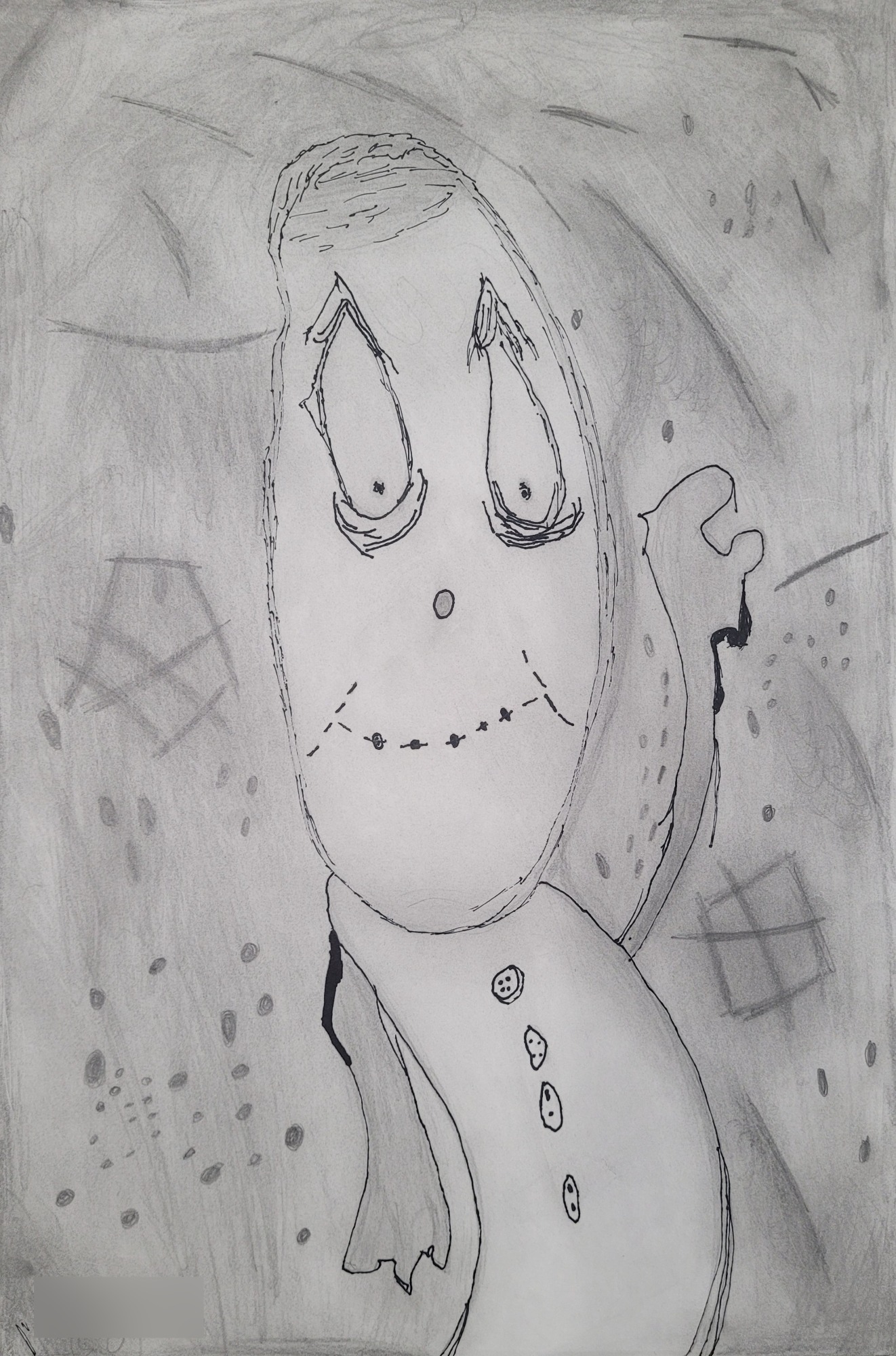
Tim Burton Snowman
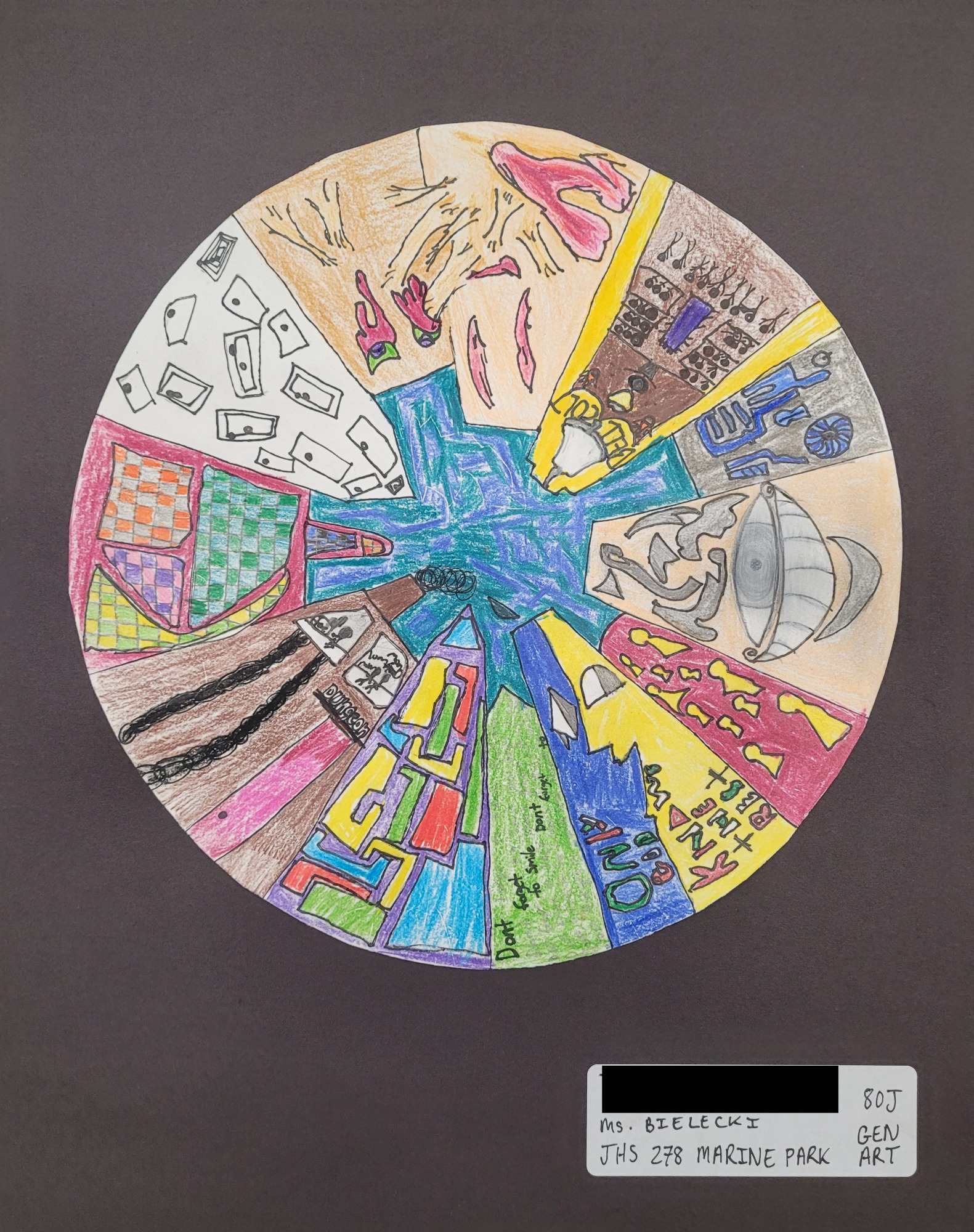
Radial City
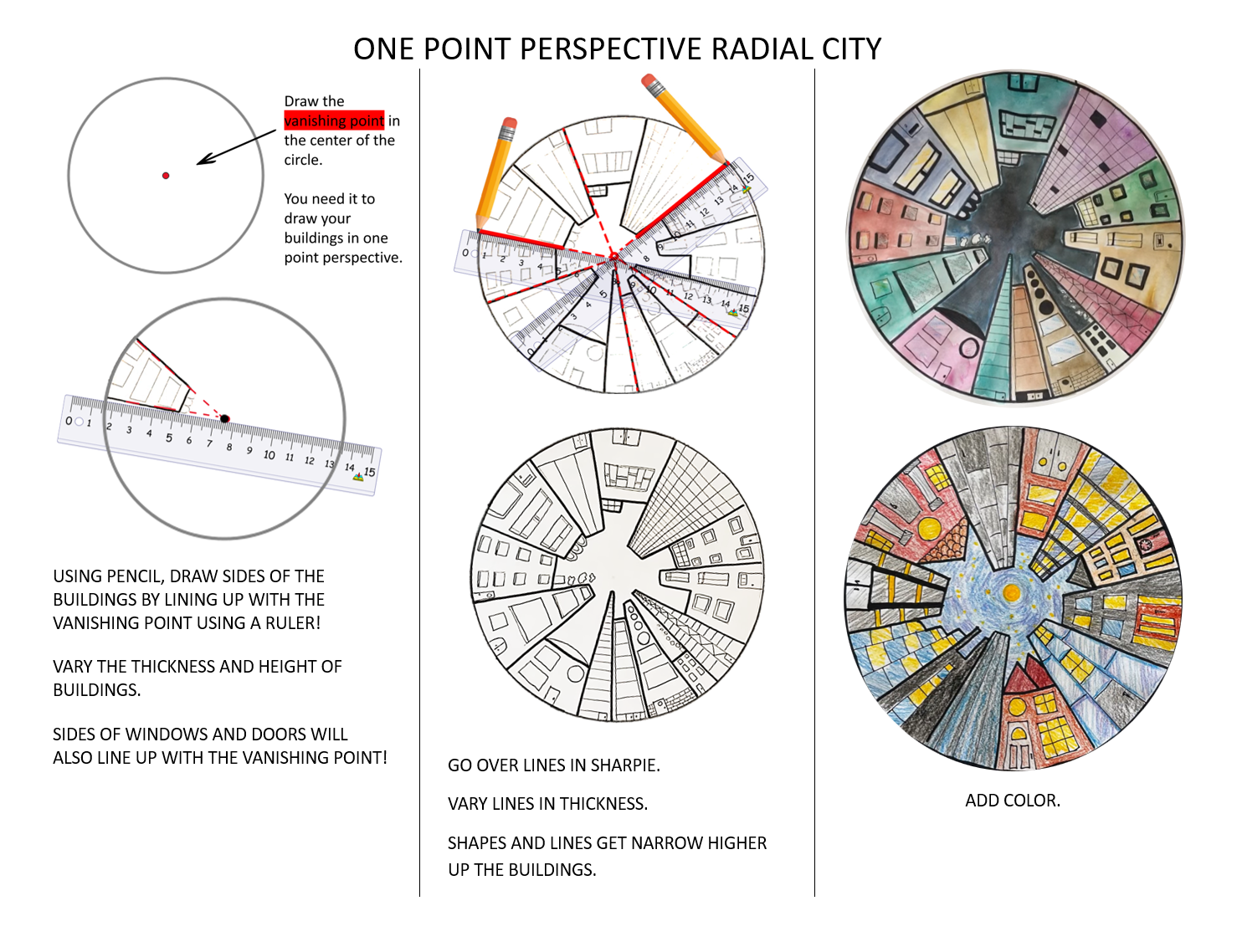
Radial City Steps Handout
Student G
Student G expressed in their beginning of the year survey that they’ve had experience in art and enjoyed it very much as it is their favorite hobby and felt that their artistic ability was a 7/10 in art. Their baseline preassessment drawing showed some hesitancy, you can see they erased their initial close-up face portrait and then went for a simplistic, cartoonish full body portrait instead. While the forms in the Floating Forms project could use improvement in the neatness in lines and cutting of the shapes, the background is very expressive and interesting to look at. A context and narrative for these floating shapes is created in the red background, indicating how this students’ creativity was sparked by the project. Then at the middle of the year Student G created the Tim Burton Snowman applying value techniques and line variety with sharpie. Student G added a shaded vignette to the background creating a Tim Burtonesque atmosphere. Again, in this project, student generated narrative emerges with the addition of the name tag. The radial was another project that when given the structure of drawing in one-point perspective, the student could then have agency in many aspects of building design. I assisted the student with some spelling in the building signage as the student struggles with this due to their dyslexia. Student G’s buildings are colorful and each unique while the lines of doors and windows align with the central vanishing point. See the creative nature and drive in this student, I suggested that they create an art piece for the school play, Alice in Wonderland. The student then came back to me with two original and artworks, one of which was chosen for the cover of the playbill! While this student had a generally quiet demeanor in class, their drawings over time are very communicative, expressive, and confident and this was made possible through the projects and some encouragement.
Student G Work and Supporting Materials
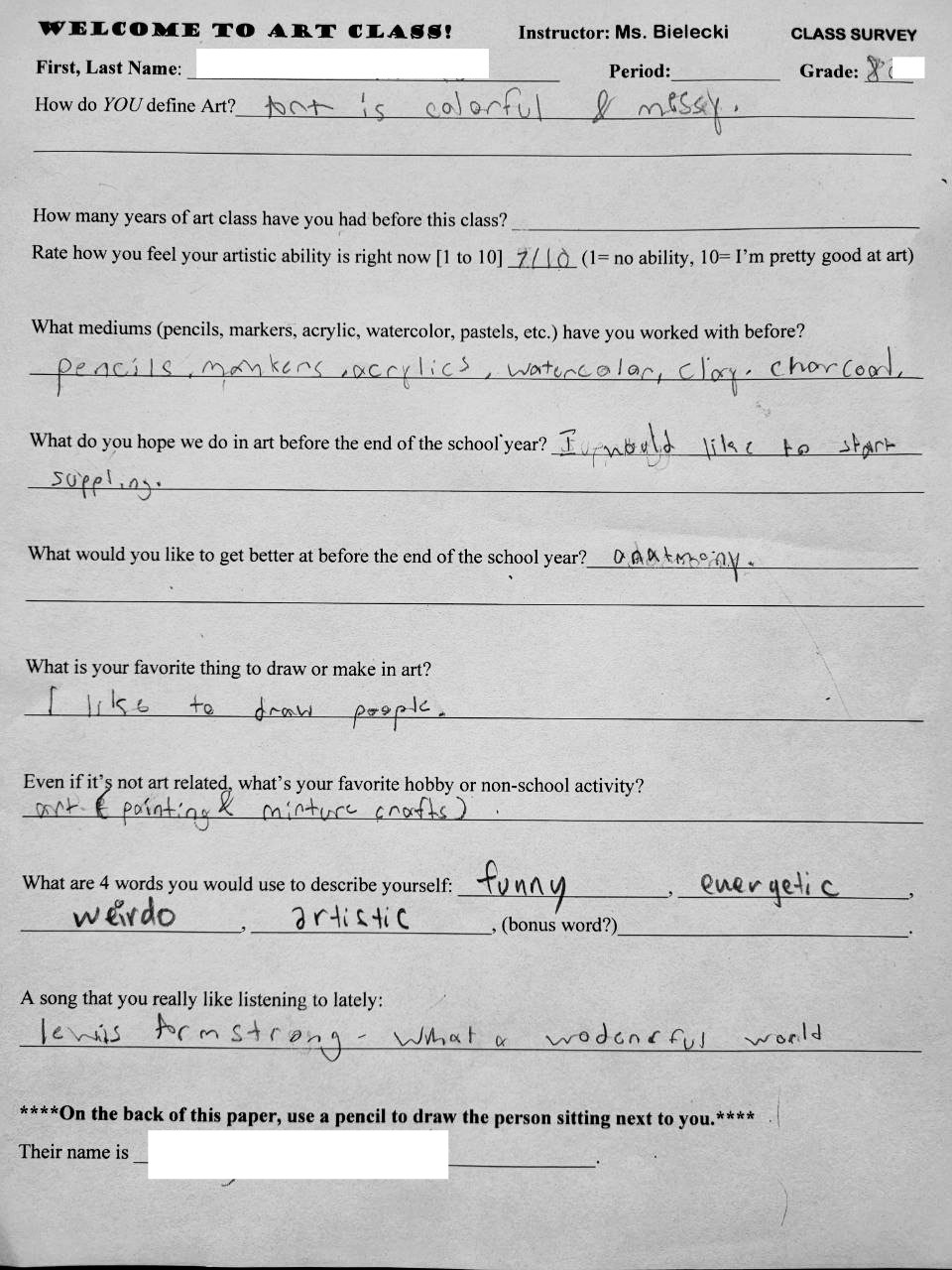
Beginning of Year Survey
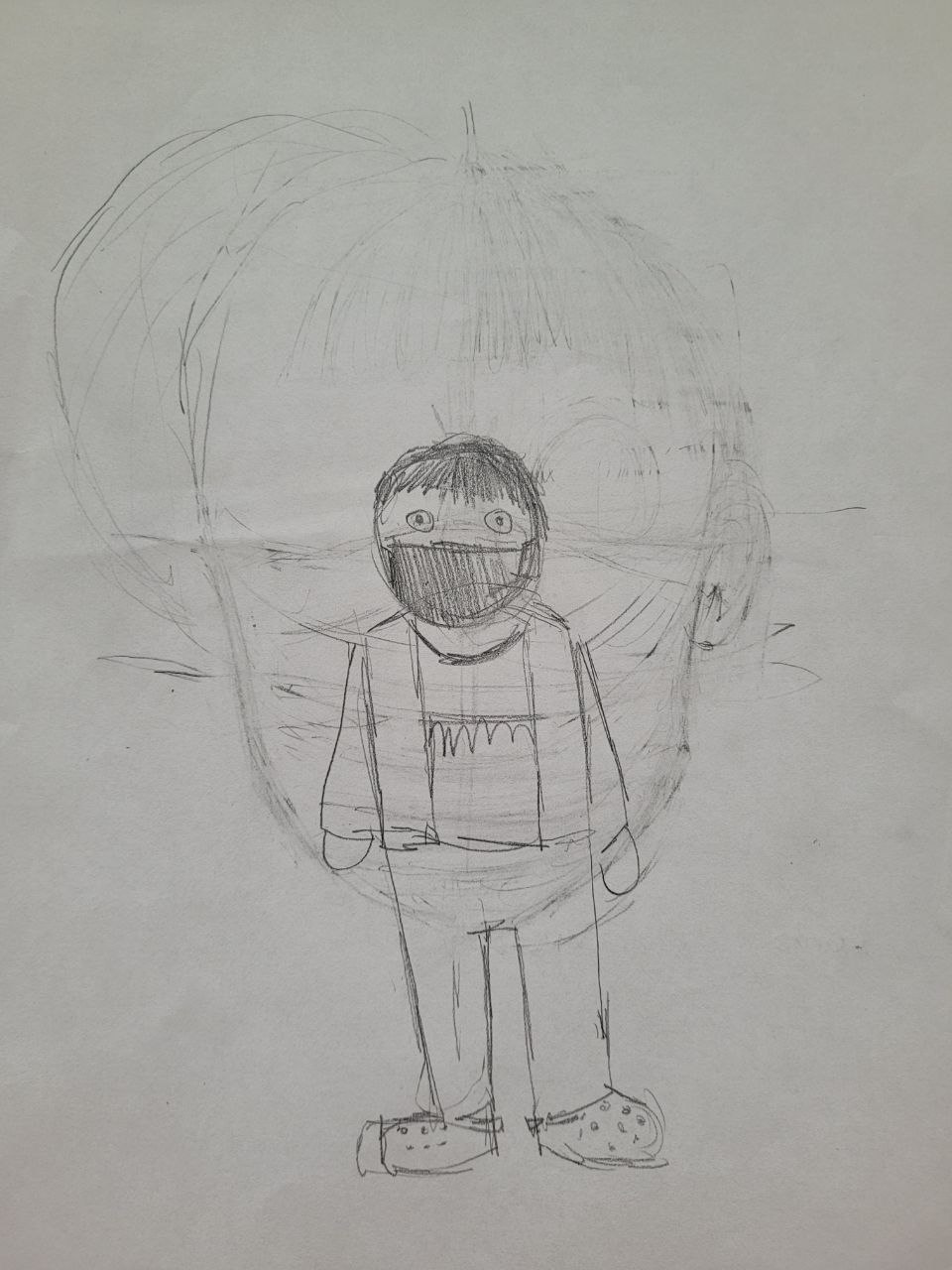
Preassessment Portrait
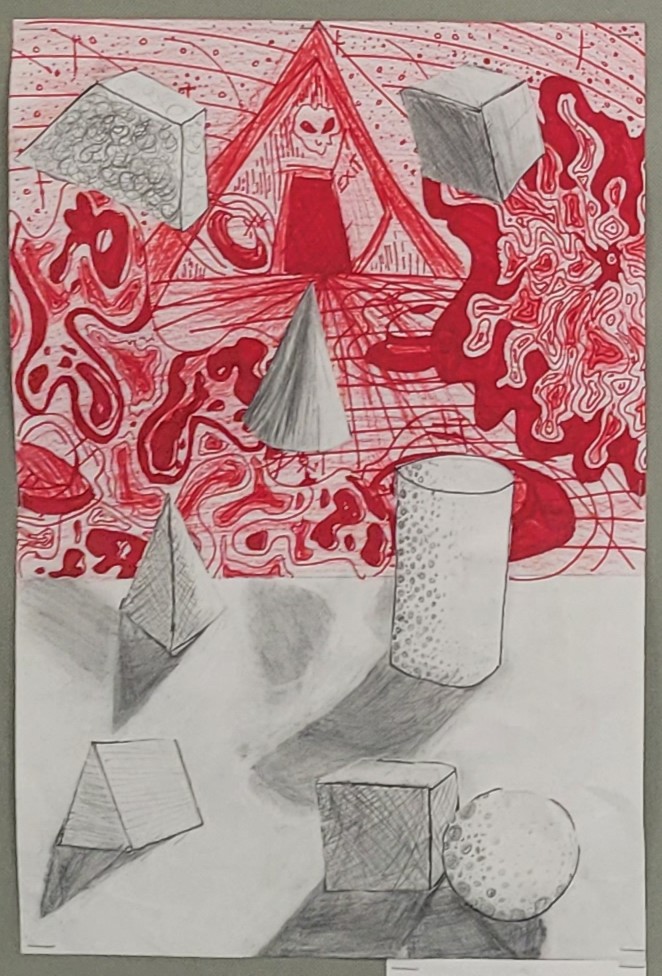
Floating Forms
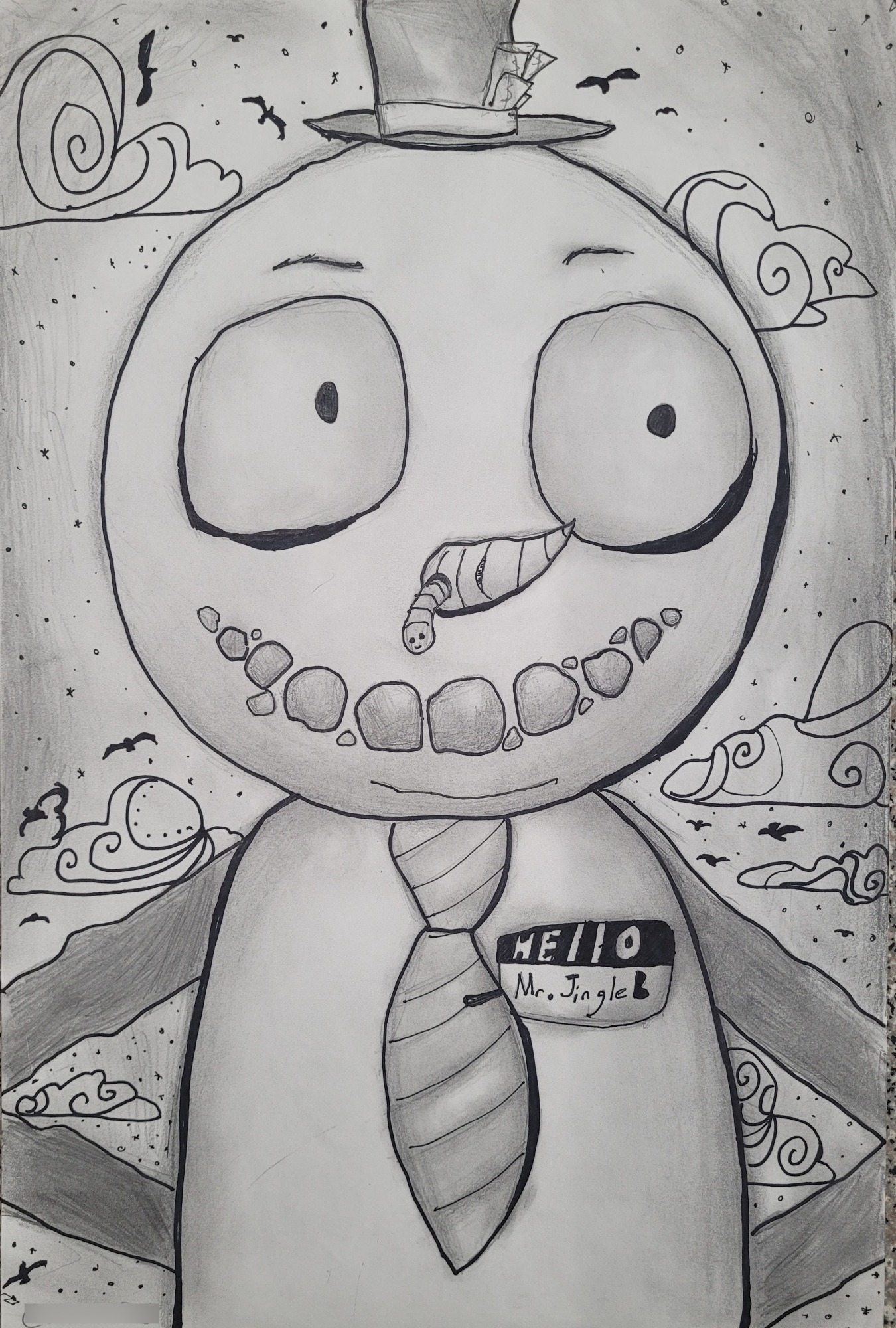
Tim Burton Snowman
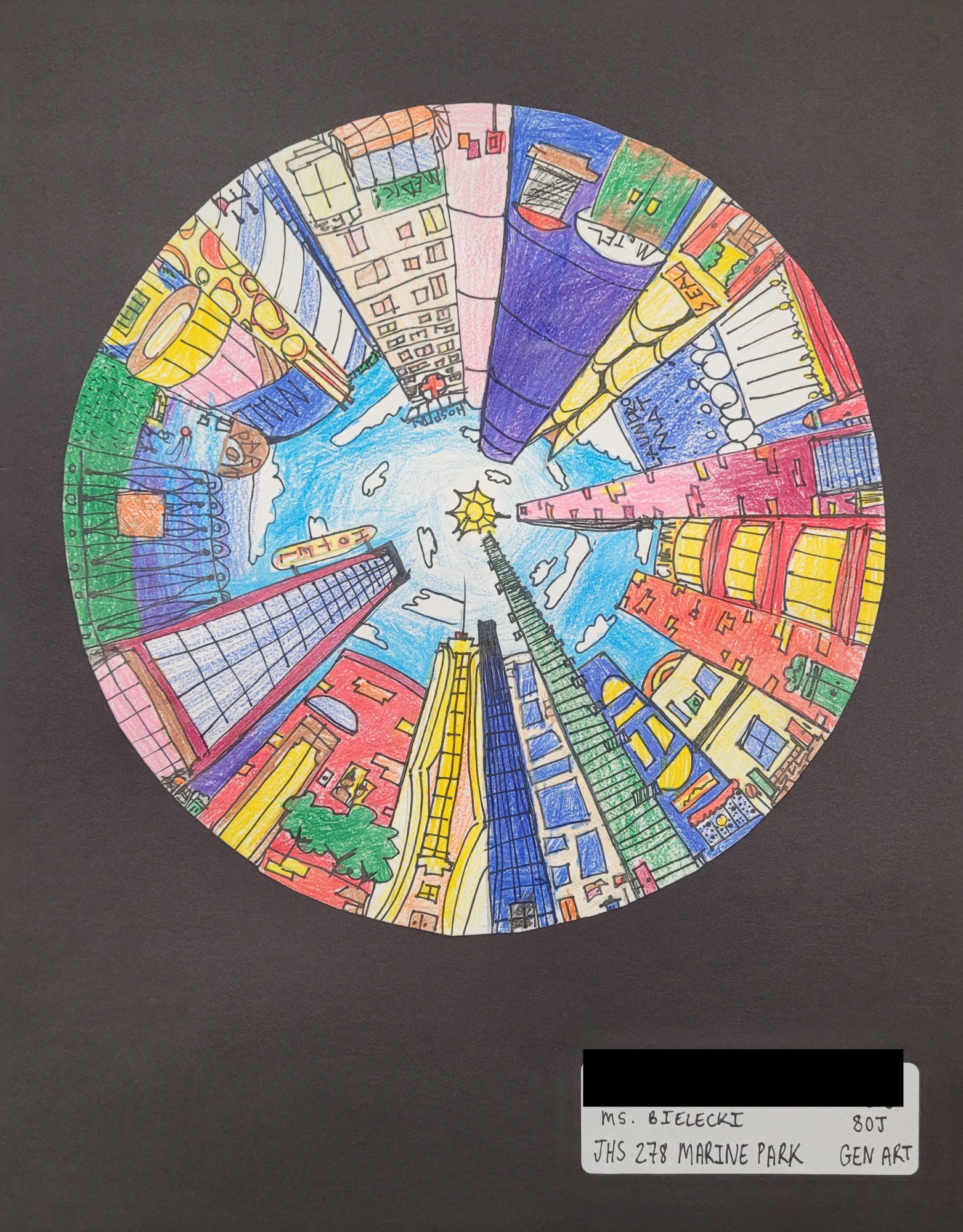
Radial City
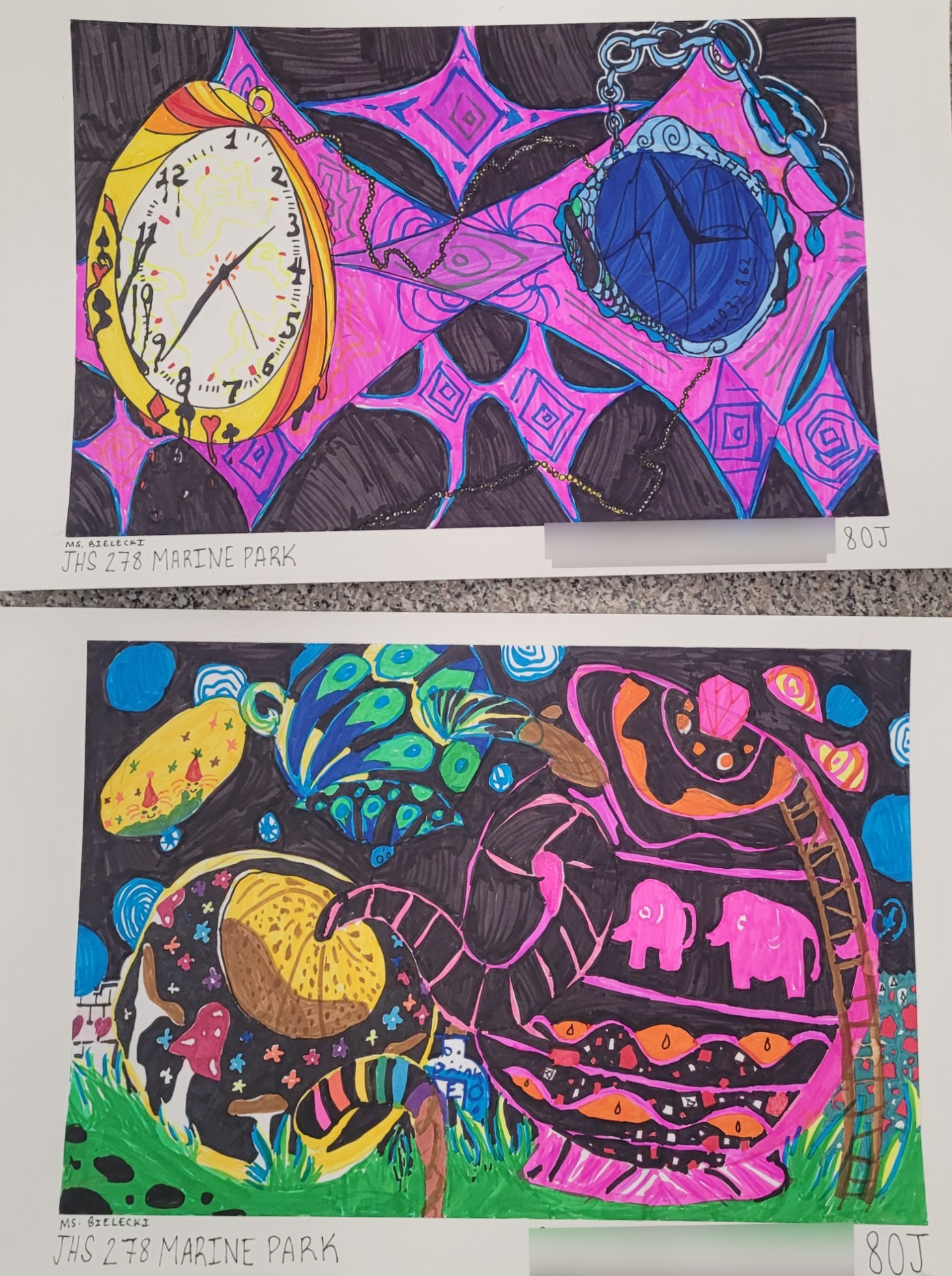
Artwork for the School Play
Student H
Student H expressed in their beginning of the year survey that they wanted to get better at “shading” and “color theory”. They rated themselves an 8/10 in their artistic ability. Their preassessment drawing was a drawing of me because they were too shy to draw people at their table. The drawing shows attention to detail in the hair, glasses, and even shows the apron that I wear. Proportionally the eyes are in the correct spot, which shows some knowledge of drawing people. As I got to know Student H, I learned that they needed to learn patience in the artistic process. This was aided by the thumbnail sketches for the nighttime landscape project which helped teach Student H how to plan for their work. Artists often try out several ideas before working on a final piece. You can see that its the third idea that they decided to draw in the end. I would often encourage Student H to slow down and go back for more details. I demonstrated for Student H on a separate paper and showed my own example for methods of depicting water with various blues, purple, and white, and to depict the reflection in the water. The trees and dolphin were lit slightly by the moon; White china marker was used for these highlights. Creativity unfolded when Student H worked on the Tim Burton Snowman project. Due to religious reasons, Student H could not depict the pupils in the eyes. However, the compromise added to the creepiness of the work in a very interesting way! For the animal eyes project, I also worked with Student H to slow down and look for details. I would prompt them to look at specifc areas in the reference, ask them the colors and shapes they see, and look for the direction of the fur and demonstrate lines to mimick fur. Overall, you can see that Student H got to express their creativity while also gaining technical skills in observational drawing and the development of patience in the artistic process.
Student H Work and Supporting Materials
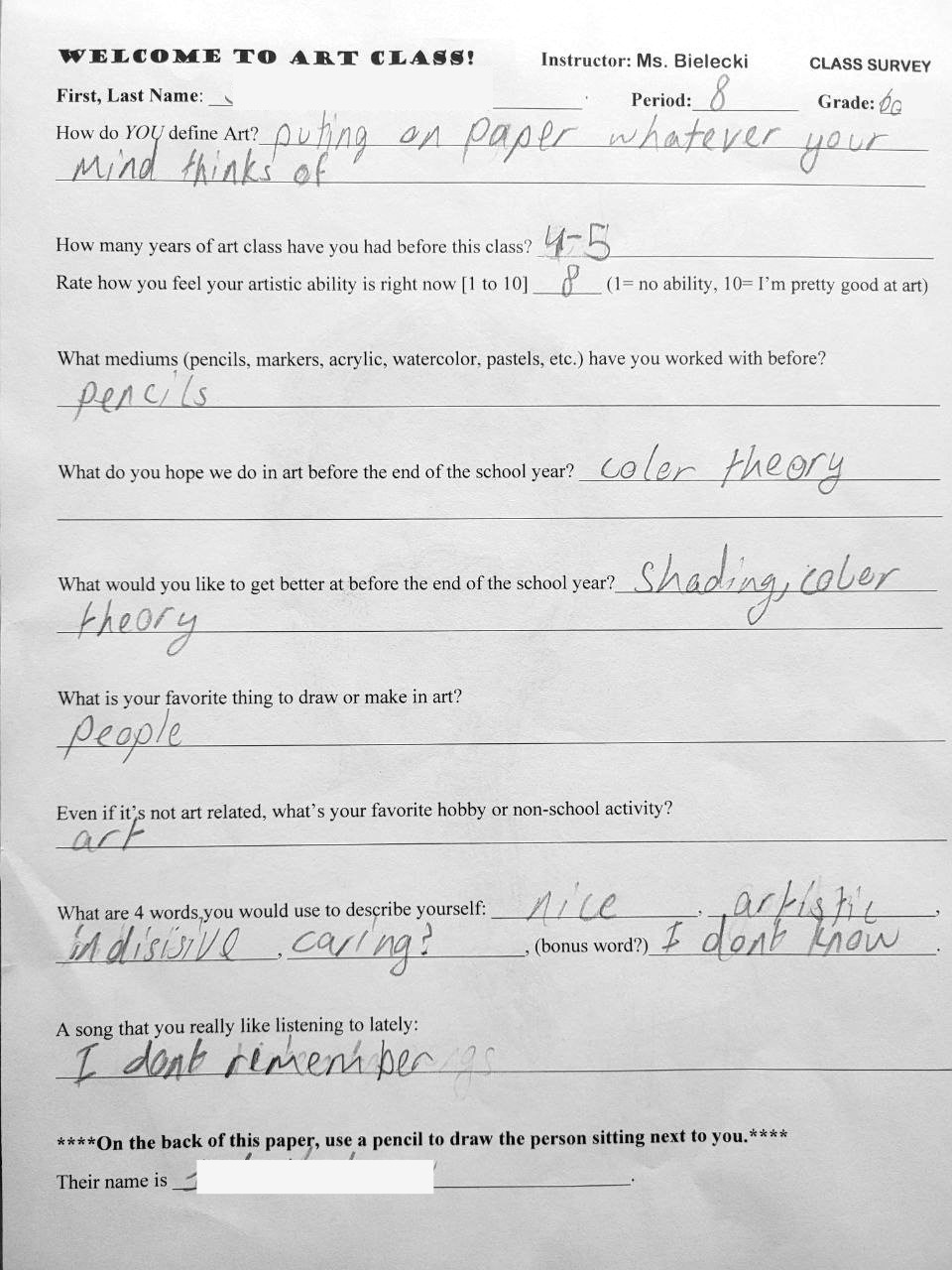
Beginning of Year Survey
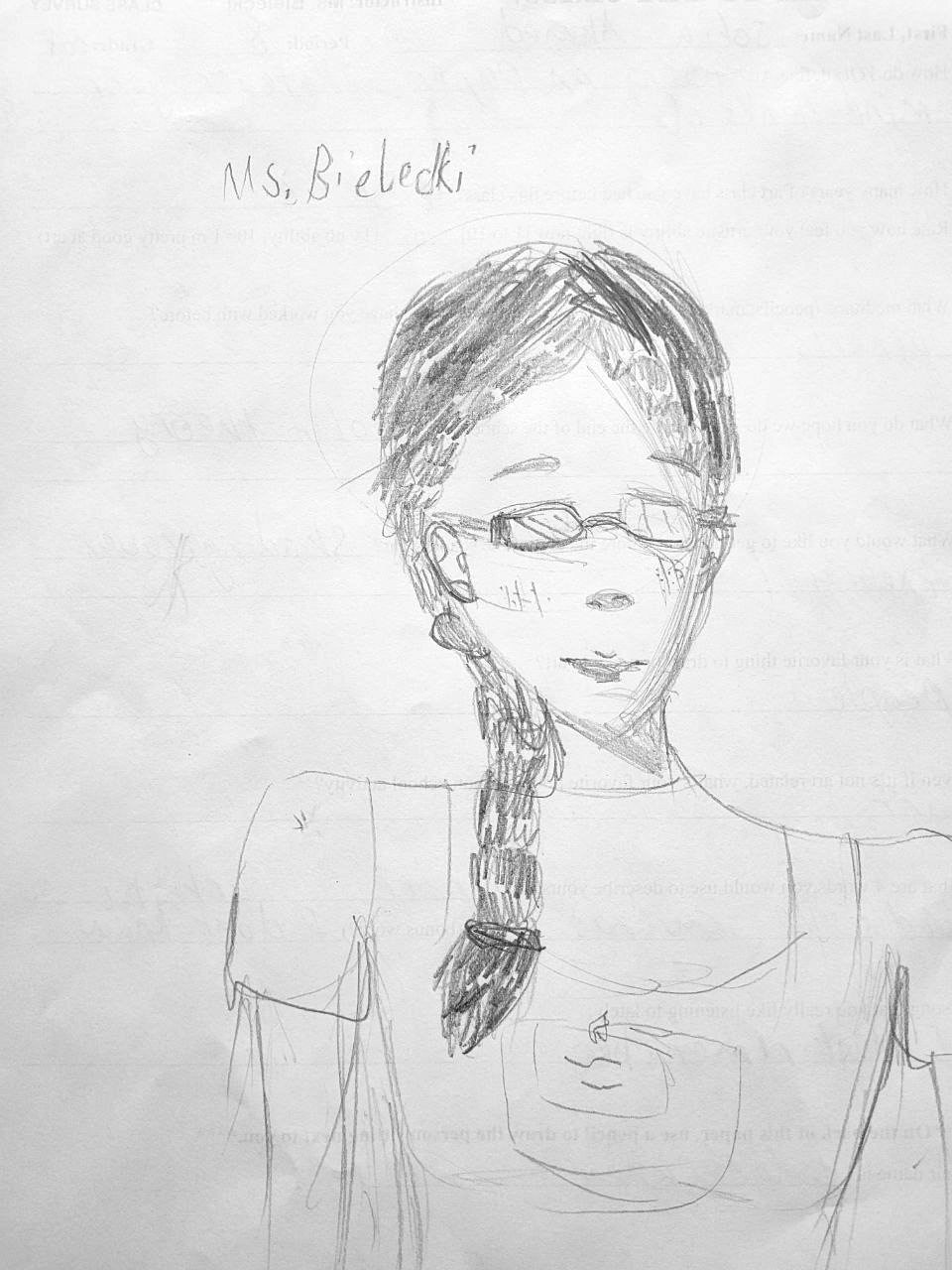
Preassessment Portrait
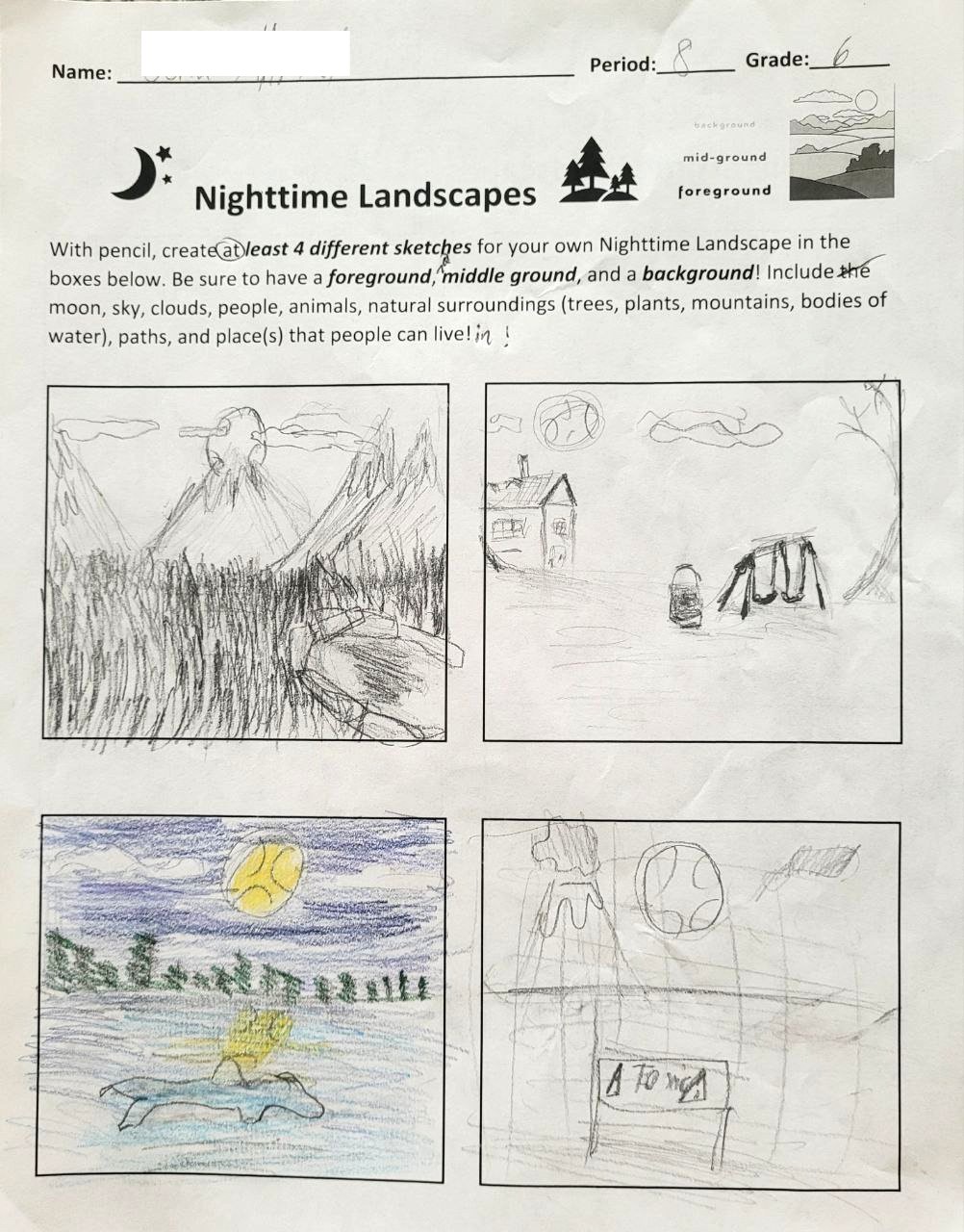
Nighttime Landscape Ideas Sketch
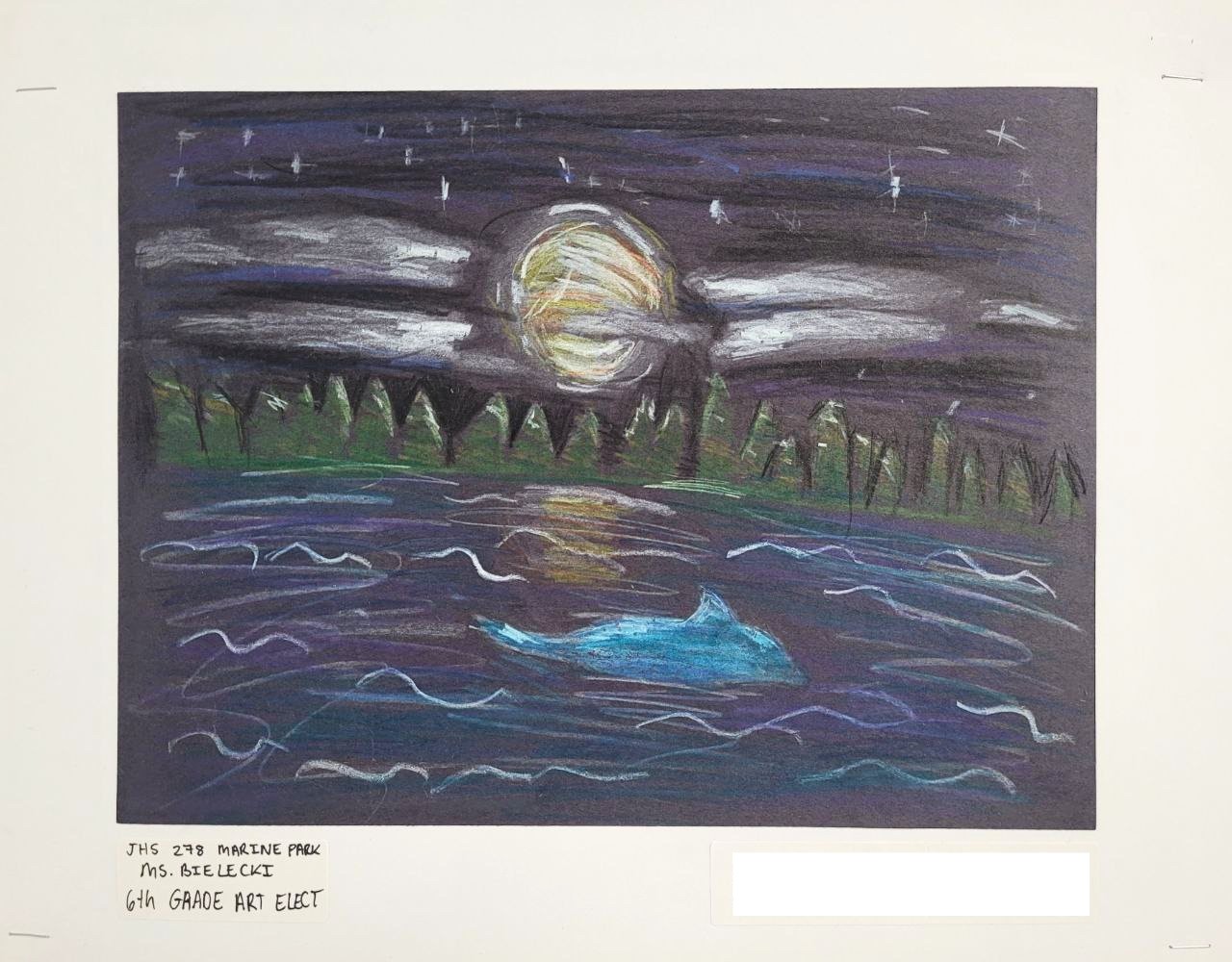
Nighttime Landscape
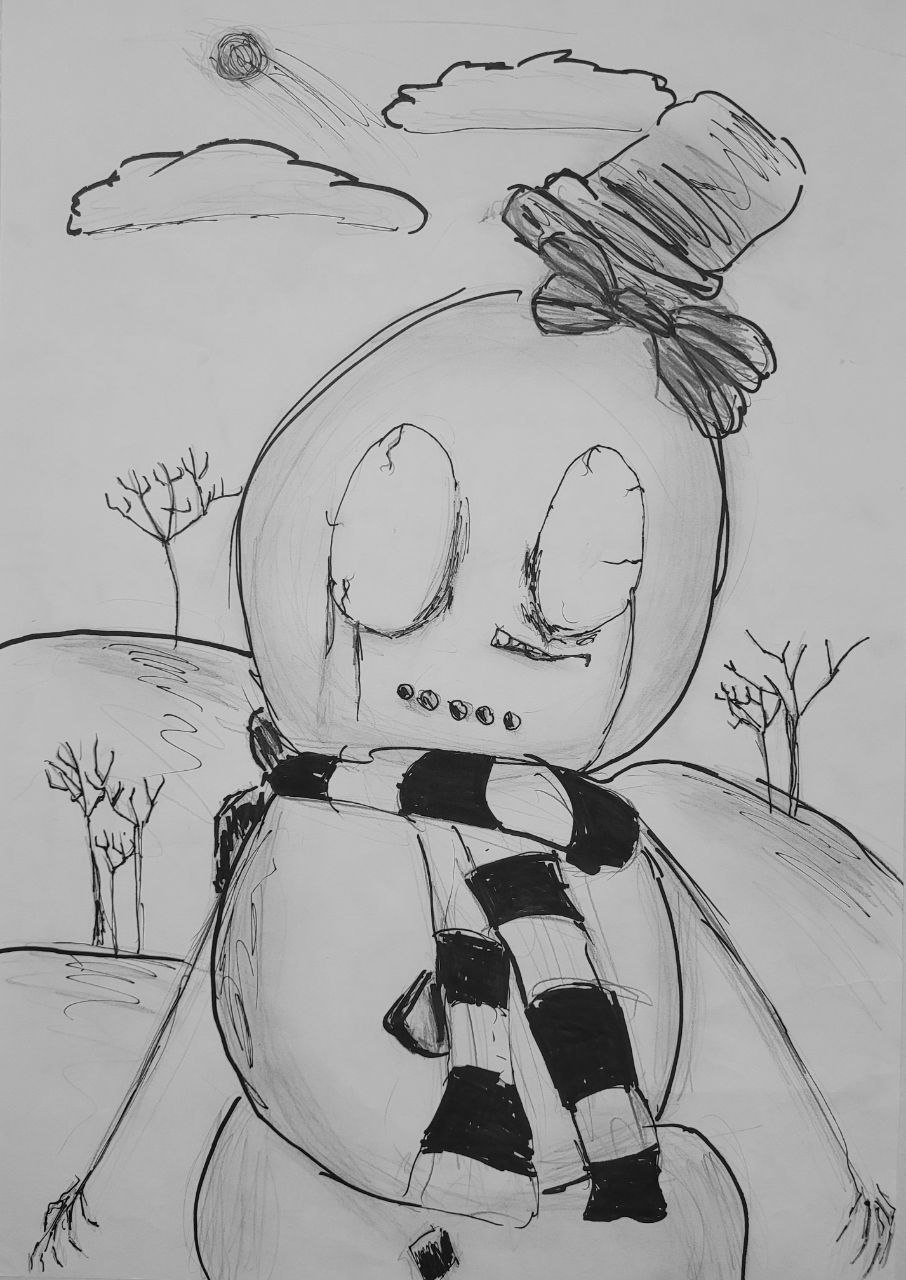
Tim Burton Snowman
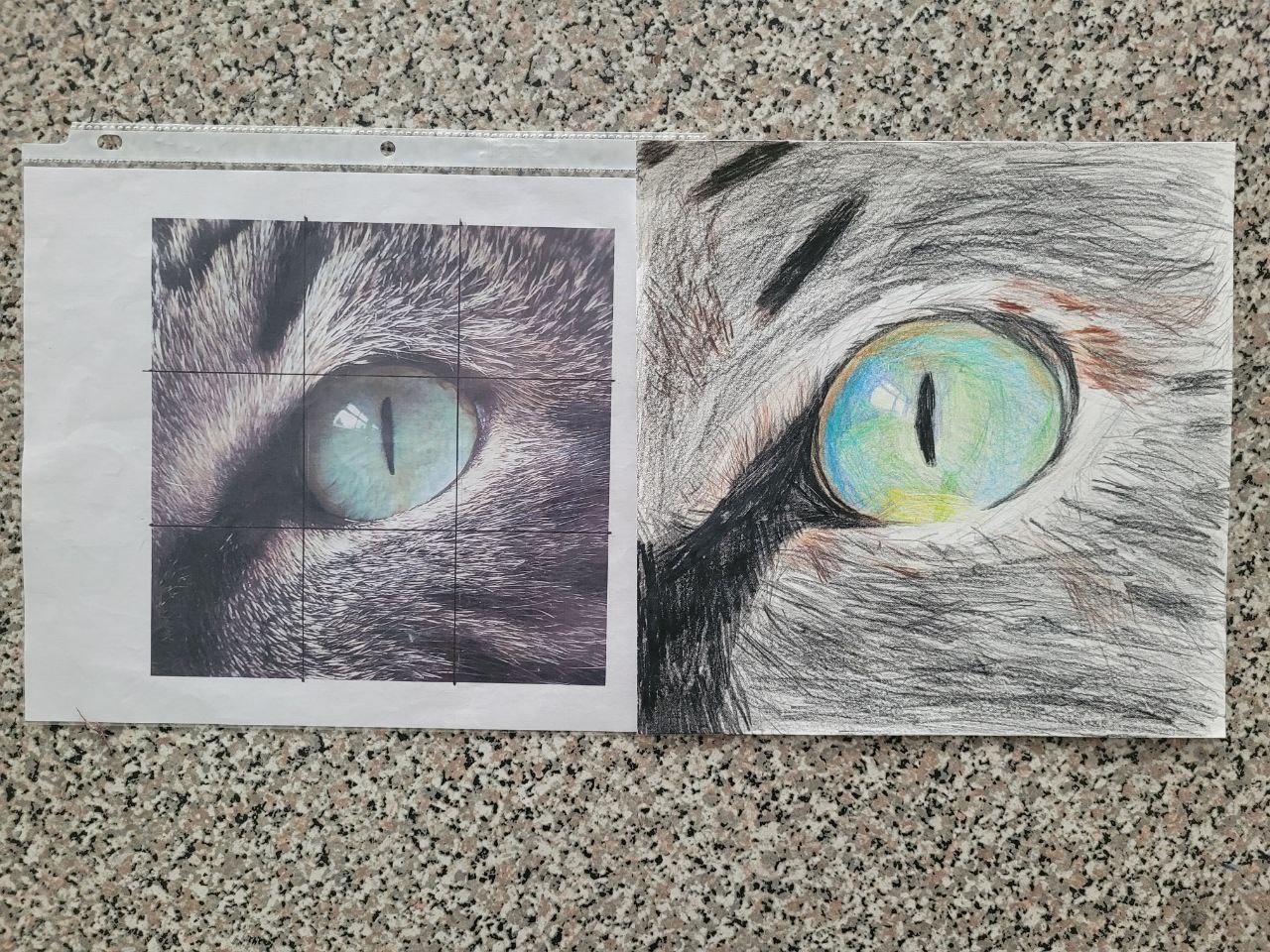
Cat Eye In-progress
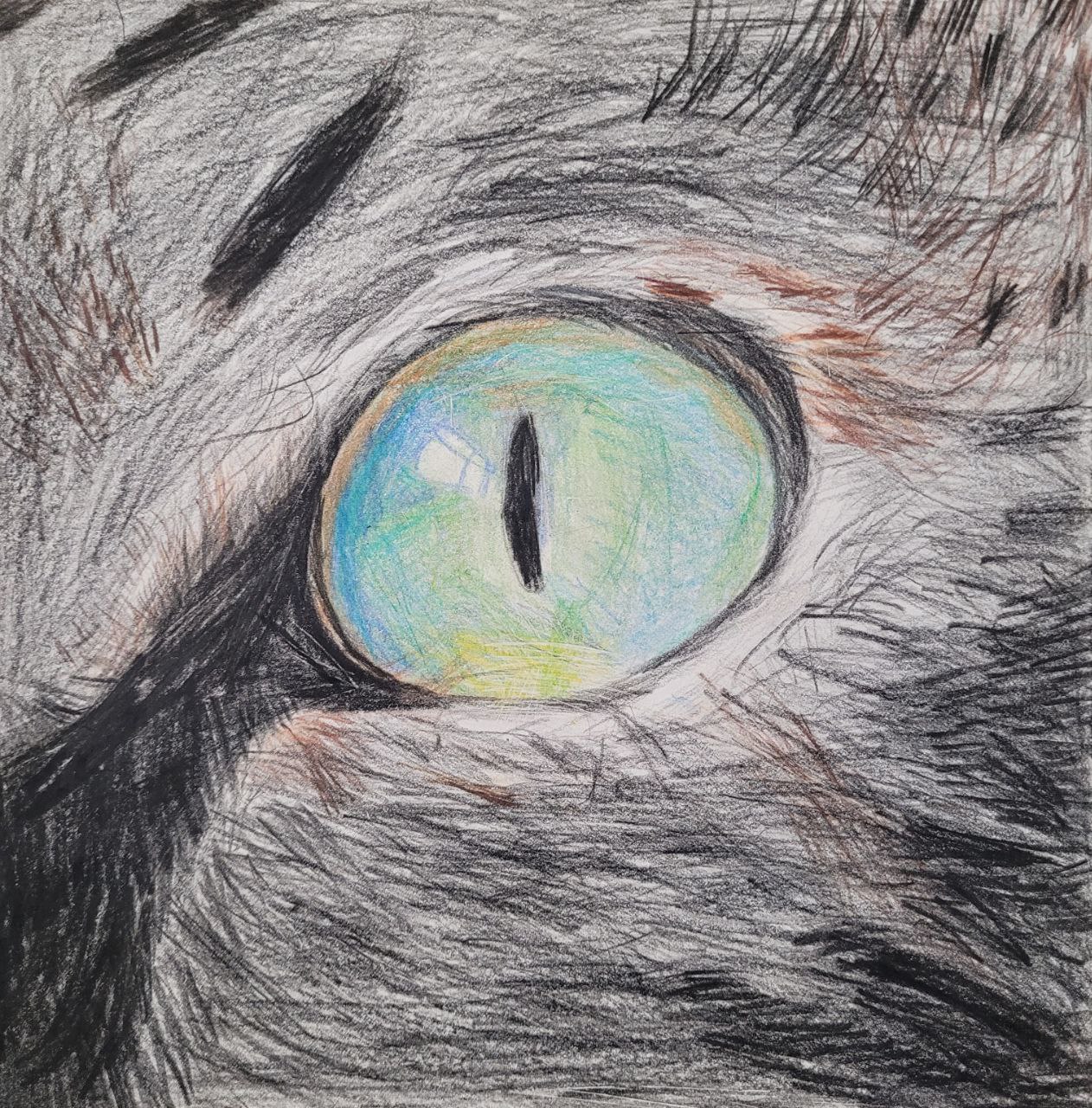
Cat Eye
Student I
Student I expressed in their beginning of the year survey that they wanted to “draw something pretty hard to challenge” themselves and they also wanted to get better at realistic art. Their preassessment portrait drawing is cartoonish, contains a bit of shading and observed attention to hair. In the middle of the year, Student I created their nighttime landscape which challenged them to think about light in a different way by drawing on black paper. You can see that tops and sides of the trees are lit by the moonlight and shadows are cast from them on the hills, shifting in angle according to the moon’s direction. These are details that I worked on with Student I, including the color gradient of the sky and the clouds in front of the moon. Next you can see Student I’s Tim Burton Snowman where they’ve included their own unique characteristics and setting. You get a sense of depth as the trees, house, and other snowmen and person are smaller than their snowman which is in the foreground. Towards the end of the year, Student I created the observational drawing of the goat eye using the grid method and color pencil. This project particularly fulfilled Student I’s need for realistic challenge as they carefully depicted many details seen in the reference. I encouraged all students to find multiple colors and undertones in the reference and apply them accordingly. There is great care shown in depicting the mixing of colors, reflection and corners in the eye, and line stroke in the fur and eyelashes.
Student I Work and Supporting Materials
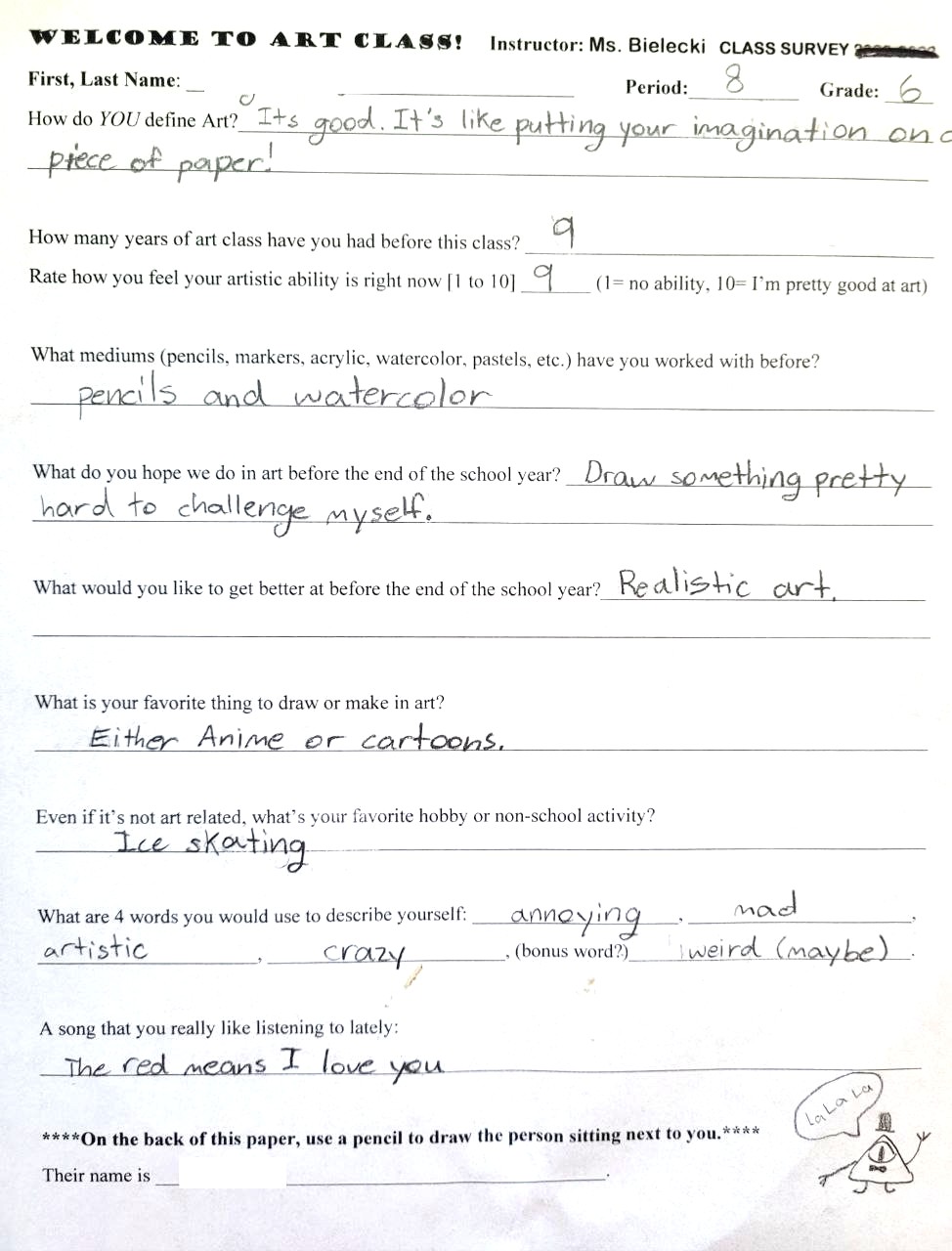
Beginning of Year Survey
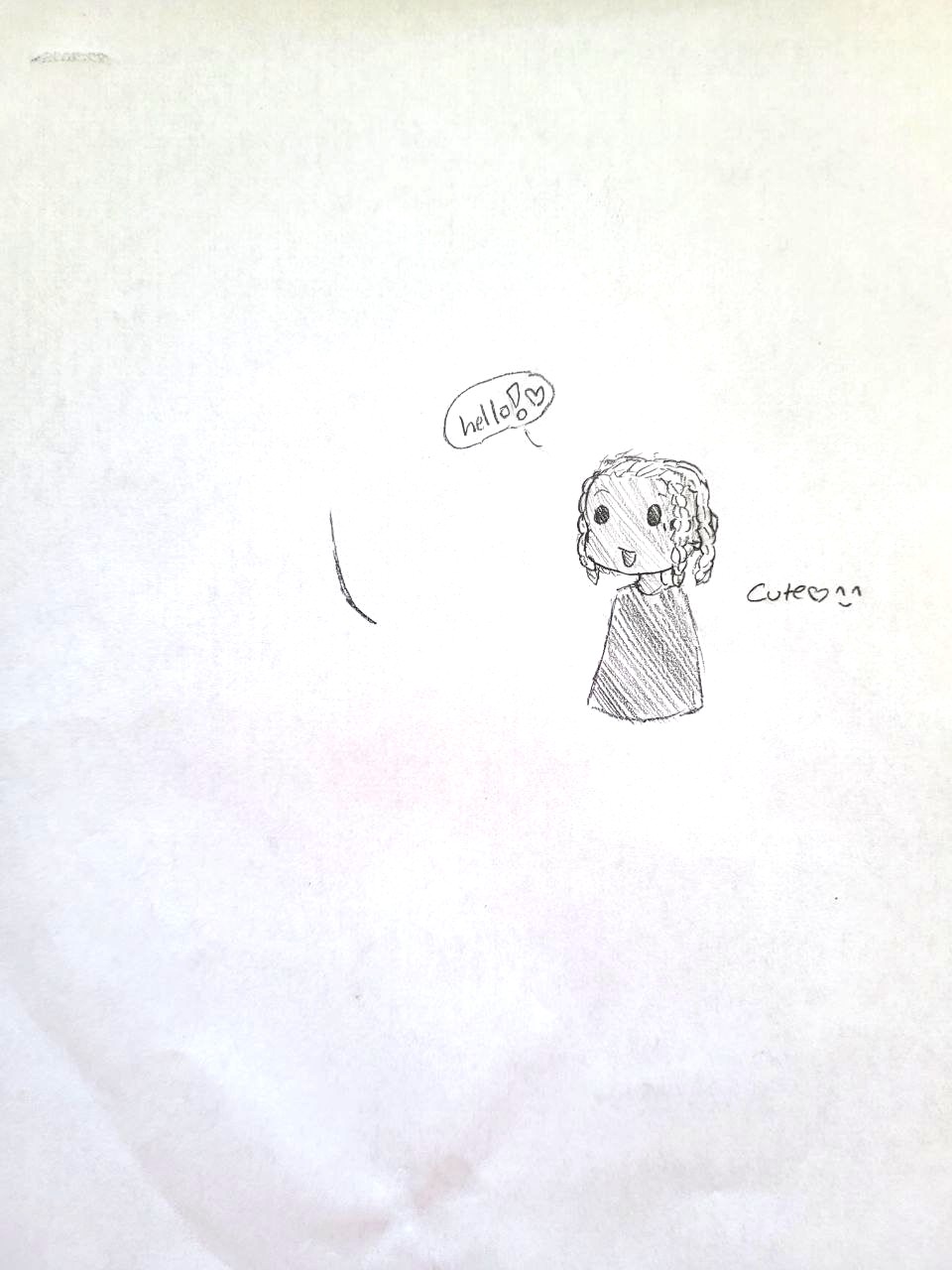
Preassessment Portrait
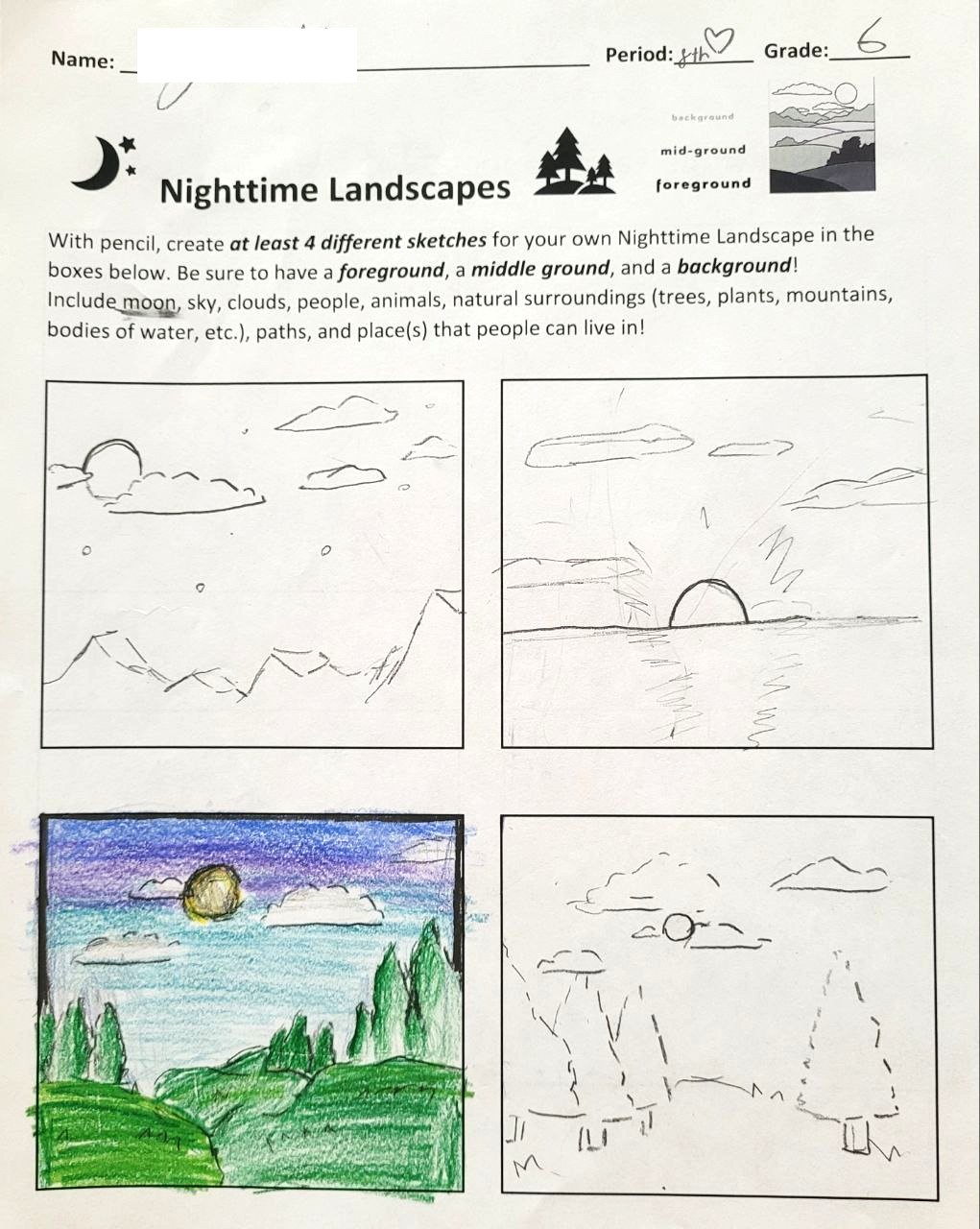
Nighttime Landscape Ideas Sketch
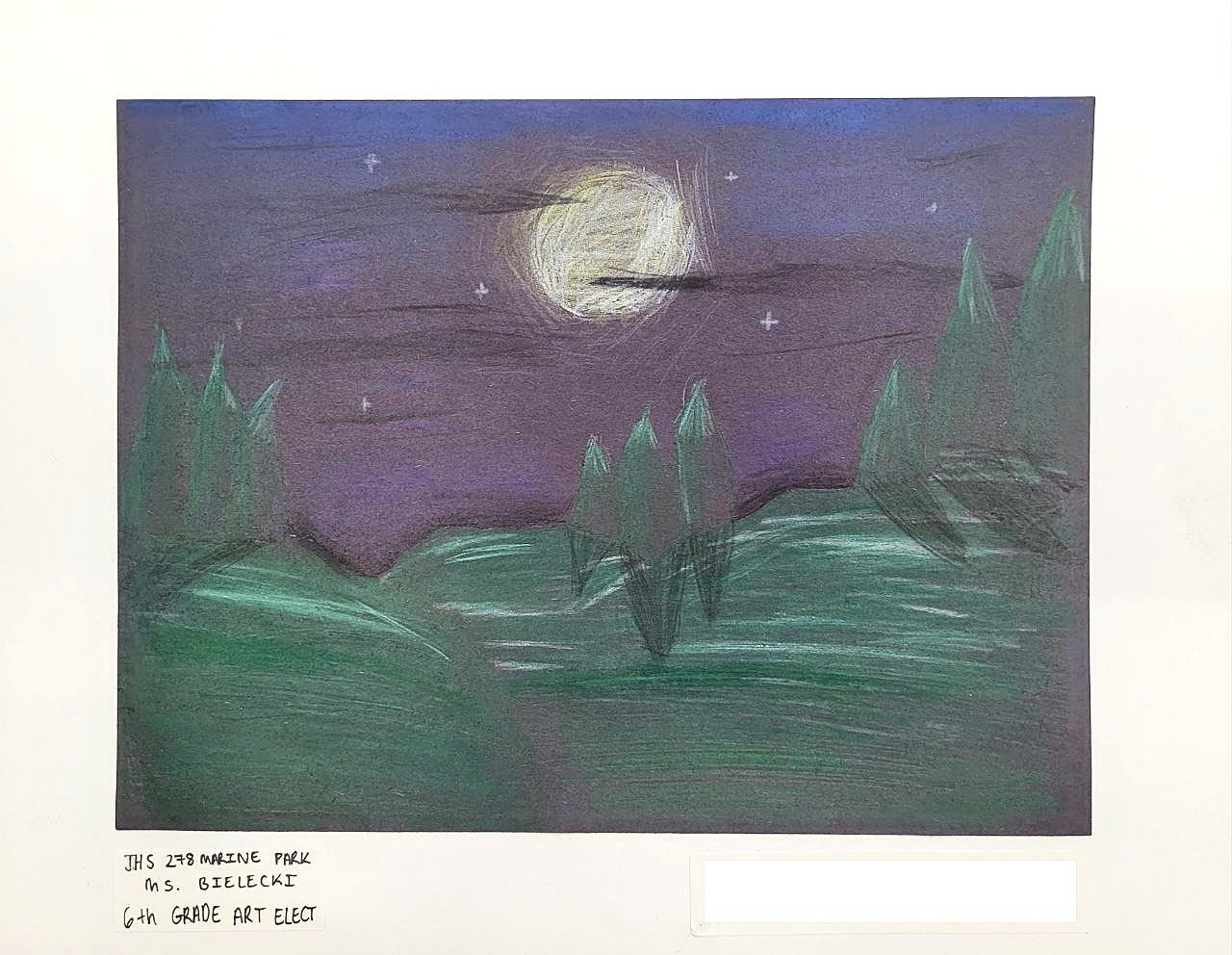
Nighttime Landscape
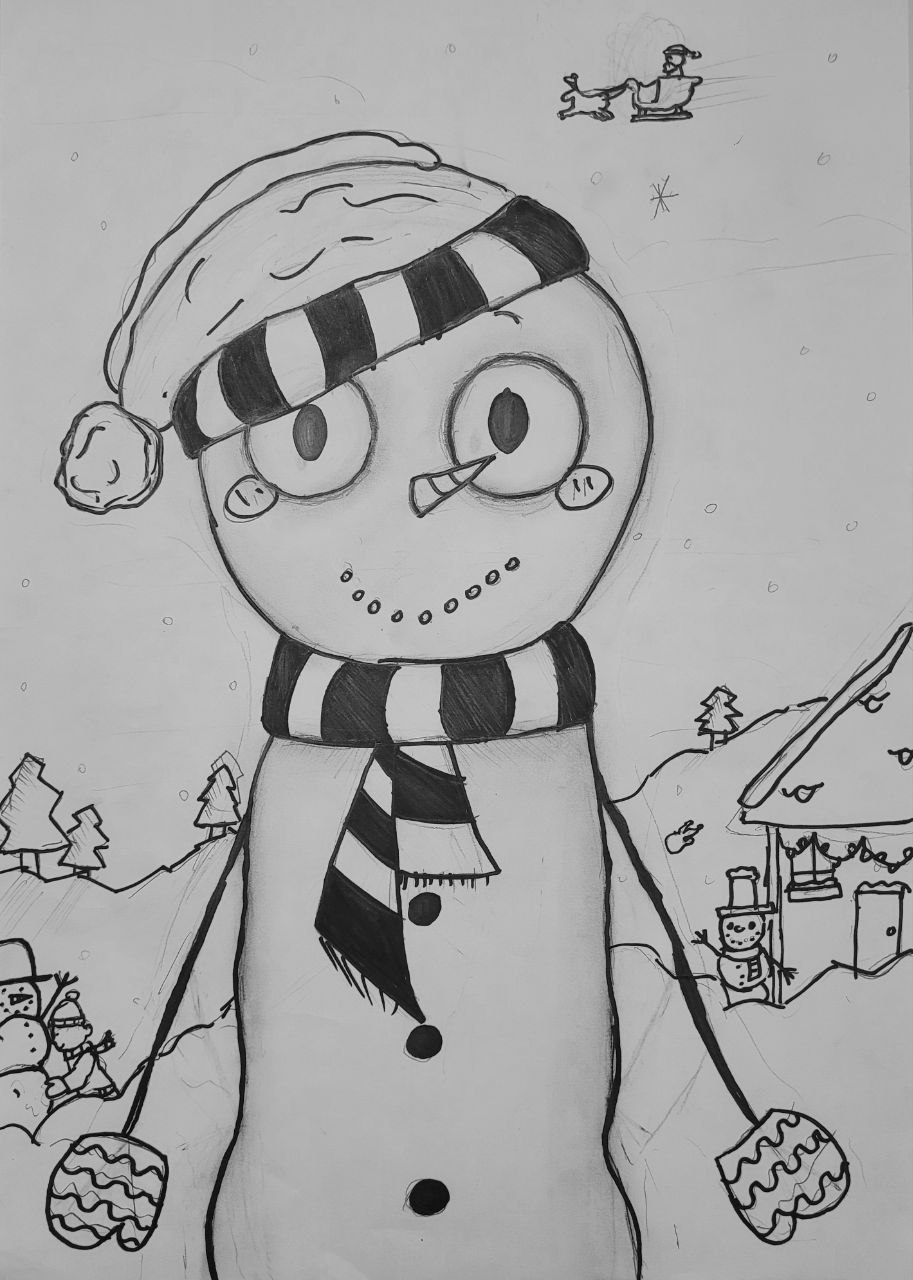
Tim Burton Snowman
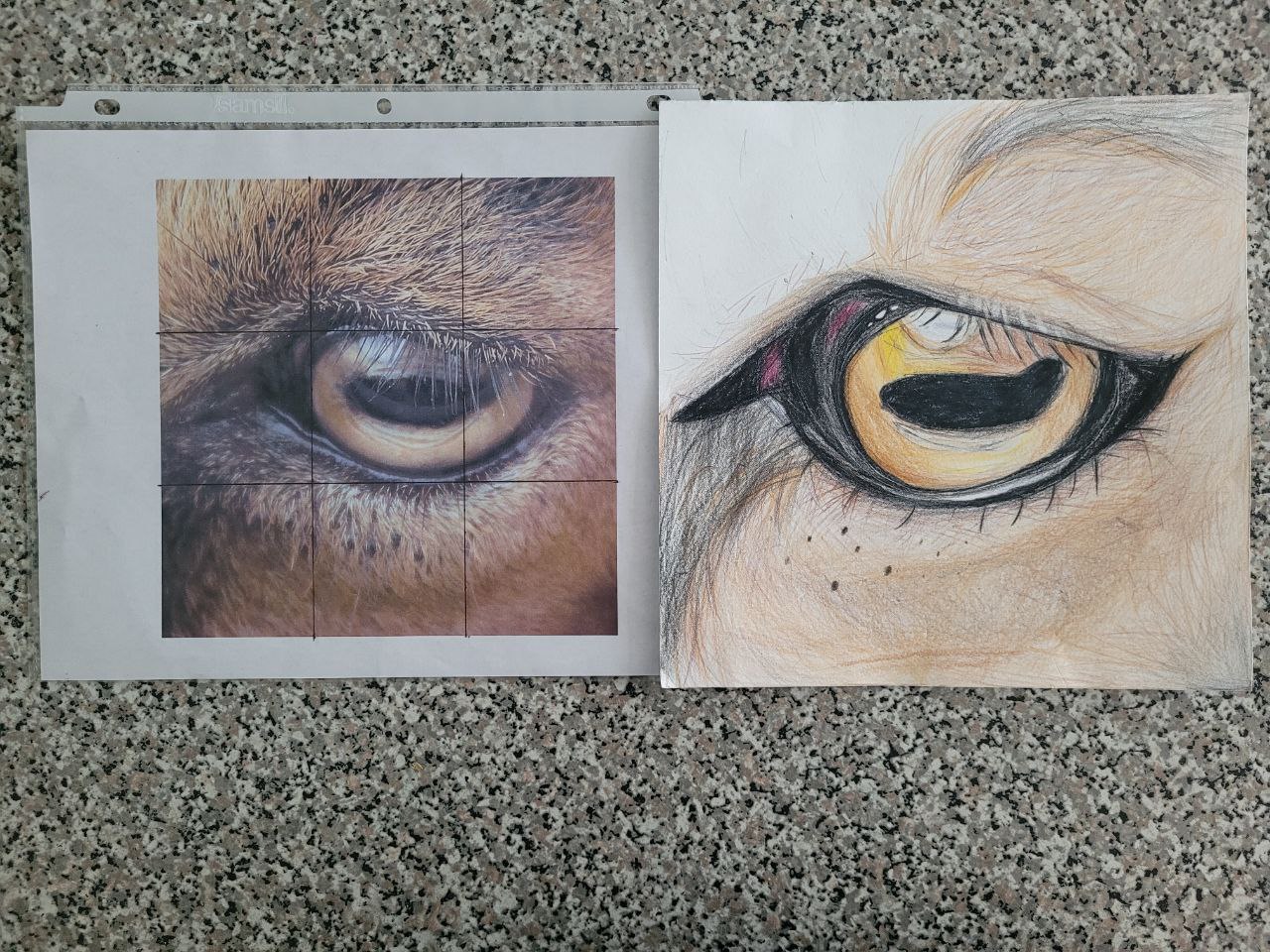
Goat Eye In-progress
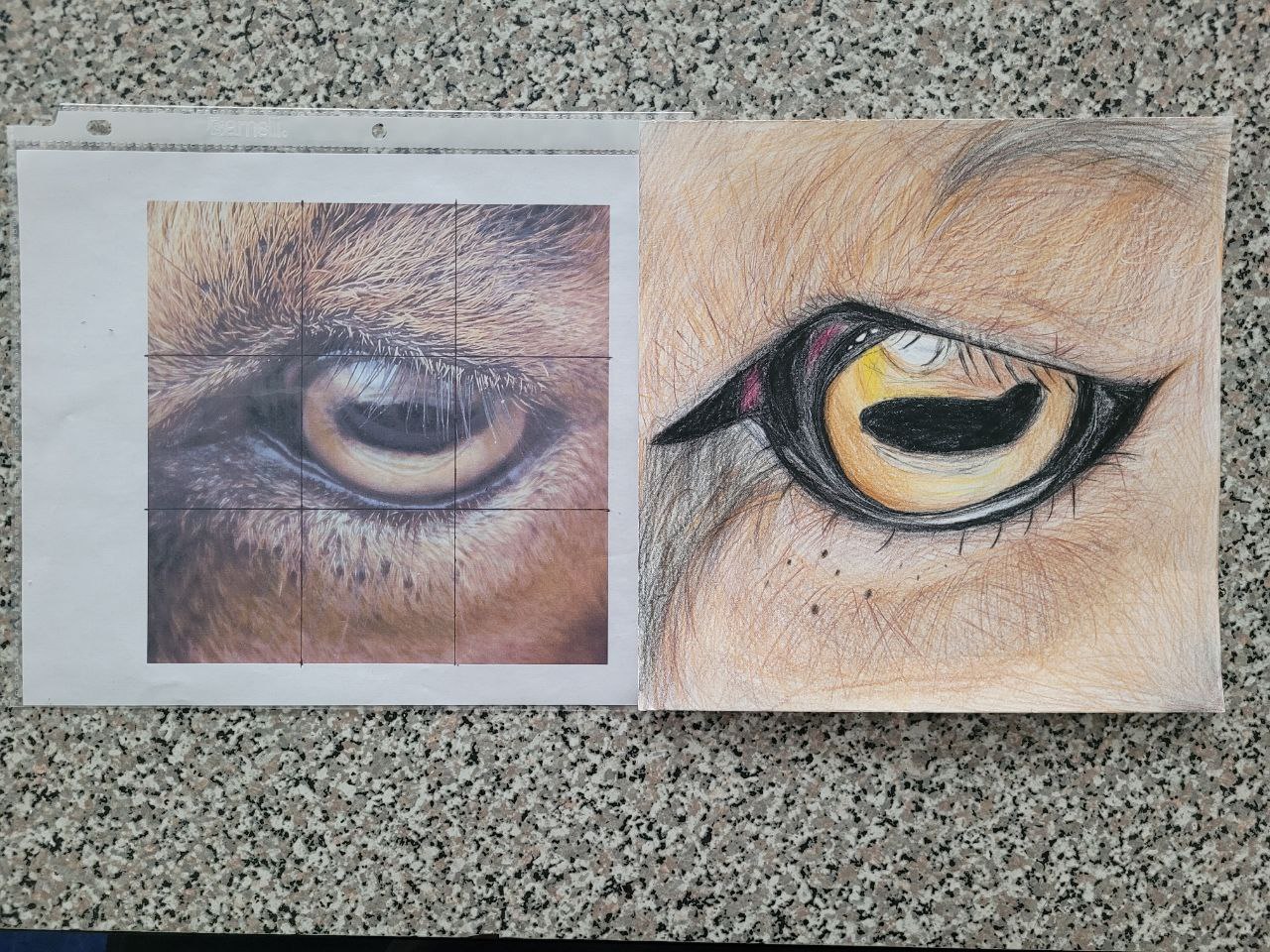
Goat Eye In-progress